
Reviewed · GOBUSTAN TOURS
Qobustan rock arts, Mud Volcanoes, Fire temple Ateshgah, Yanardag
Ancient carvings and natural flames make this a remarkable day. This private Baku excursion brings together Qobustan’s UNESCO-listed rock art and Azerbaijan’s famous fire sites, with a local guide to explain the people, beliefs, and geology behind them. I like the efficient route and the comfort of an air-conditioned vehicle, and I also like that the group can be just your party of up to seven. The main drawback is the long nine-hour day, with outdoor stops that depend on good weather.
The strongest praise goes to the guide’s friendly manner and clear explanations. I also value the private format, WiFi on board, and pickup service. Keep about $15 per person for museum tickets, since that cost is separate from the $250 group price.
In This Review
- Key points before you book
- Four sides of Azerbaijan in nine hours
- Ateshgah Fire Temple and the old power of flame
- Yanardag, a short visit to a natural flame
- Mud volcanoes and Azerbaijan’s stranger geology
- Qobustan’s petroglyphs and ancient daily life
- What the private vehicle adds
- The guide makes the difference
- Who should book this full-day outing?
- Should you book the Qobustan and fire sites tour?
- FAQ
- How long does the tour last?
- How much does the private tour cost?
- Are museum tickets included?
- What sites does the tour visit?
- Is transportation included?
- Is this a private activity?
- What happens if bad weather cancels the tour?
Key points before you book
- Four very different sights in one day: You visit Ateshgah Fire Temple, Yanardag, the mud volcanoes, and Qobustan.
- A private group for up to seven: The $250 price covers the group, not each person, which can be good value when shared.
- Qobustan is the cultural centerpiece: More than 6,000 rock drawings spread across about 1,000 rocks form part of a UNESCO World Heritage site.
- Azerbaijan’s fire story comes alive: Ateshgah reflects Zoroastrian and Hindu traditions, while Yanardag shows a natural gas flame.
- The mud volcano stop is unusual: Azerbaijan has about 350 of the world’s roughly 800 mud volcanoes.
- Plan for a full day: The tour lasts about nine hours, so it suits visitors who want a packed introduction rather than a slow outing.
Four sides of Azerbaijan in nine hours
This excursion works because it links four subjects that can otherwise feel scattered: ancient human life, Zoroastrian fire worship, natural gas, and mud volcanoes. You are not simply ticking off four photo stops. You are following the story behind Azerbaijan’s nickname, the Land of Fire.
The route is especially useful if you have only a short stay in Baku. Qobustan is about 60 kilometers from the city, and the outlying fire sites require driving as well. A private vehicle saves you from piecing together separate transport arrangements.
The day lasts about nine hours. That is a serious block of time, but it also means you can see several major sights without returning to Baku between each one. I would choose this over a shorter city-only outing if your main goal is to understand the country beyond its capital.
More Gobustan rock-art trips from Baku:
- Baku: Gobustan, Mud Volcano, Fire Mount, Temple Lunch Entry
★ 4.9 · 3,246 reviews - BEST Gobustan, Volcanoes & Absheron Fire Tour (Group or Private)
★ 5.0 · 1,254 reviews - Gobustan and Absheron tour (All inclusive)
★ 5.0 · 1,014 reviews
Ateshgah Fire Temple and the old power of flame
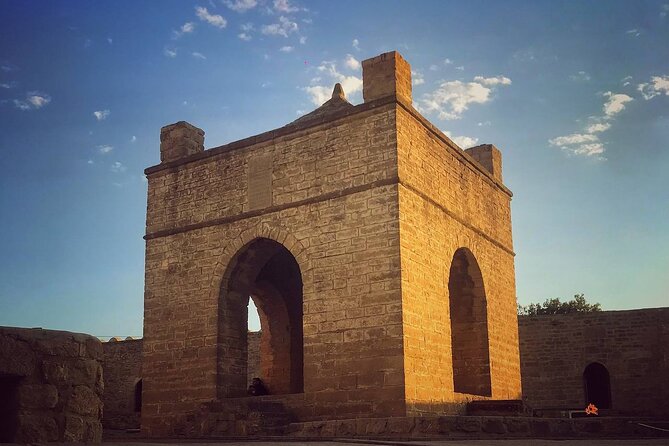
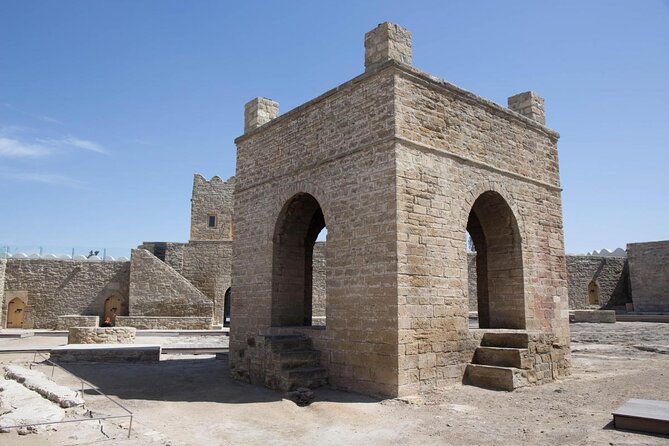
Ateshgah is a temple connected to natural gas outlets, where gas rising from below the ground can ignite when it meets oxygen. The fire gave the site its unusual religious importance and helped shape the idea of Azerbaijan as a country of eternal flames.
The building you see today dates mainly from the 17th and 18th centuries. It was built by a Hindu community based in Baku and linked to Sikhs, yet the site has an older connection with Zoroastrian fire worship. That mix gives Ateshgah more depth than a simple monument to one faith.
The stop is scheduled for about 30 minutes. That is enough time for a guided explanation and a look around, but not a leisurely museum visit. I would pay close attention to the guide here, since the religious background is the part most easily missed when you are moving quickly.
Ateshgah is also a useful reminder that ancient worship and natural science can overlap. People once treated the unfailing flame as a sign of divine power. Today, the gas source explains the fire physically, but the spiritual meaning remains central to the place.
The admission arrangement deserves a careful look. Museum tickets are not included, and the stated extra cost is about $15 per person in total. I would confirm the exact ticket amount before departure, since the tour information also describes the attraction admission as free in the stop details.
Yanardag, a short visit to a natural flame
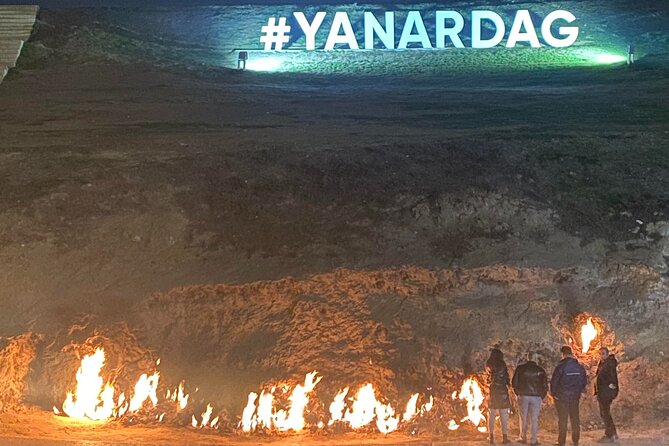
Yanardag means Burning Mountain, and it is one of Azerbaijan’s best-known eternal flame sites. Natural gas reaches the surface and burns along the mountainside, creating a flame that can continue without a conventional fuel source.
The visit lasts about 15 minutes. That is brief, so I would treat Yanardag as a striking roadside-style stop rather than a full historical site. You will have time to see the fire, hear the explanation, and take photographs, but you should not expect a long walk or an extended museum program.
The value of Yanardag comes from its simplicity. At Ateshgah, people built a sacred structure around the idea of fire. At Yanardag, you see the natural phenomenon itself. The two stops make more sense together than they would separately.
The site also connects directly to Azerbaijan’s Zoroastrian past. Fire worshippers regarded flames rising from the earth as signs of divine power, building altars and temples near these sources. That belief helps explain why fire appears so often in the country’s cultural story.
Mud volcanoes and Azerbaijan’s stranger geology
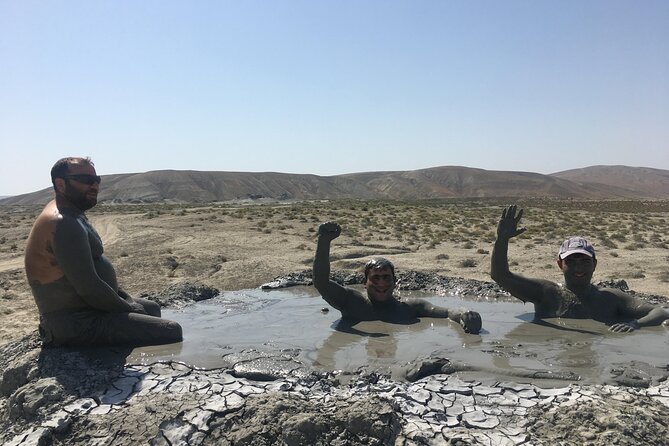
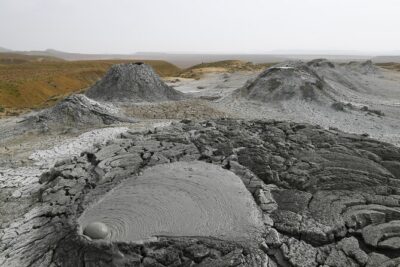
The mud volcano stop changes the mood completely. Instead of carved stone and religious buildings, you encounter low volcanic formations associated with underground mud, gas, and oil-bearing areas.
Azerbaijan has around 350 of the world’s approximately 800 mud volcanoes. That makes this one of the most distinctive natural subjects in the country, even if the setting is less polished than a conventional park.
The volcanoes first became active in Azerbaijan about 25 million years ago, according to the information provided for the tour. They are connected with oil and gas fields in areas such as Lokbatan, Garadagh, Neft Dashlari, and Mishovdagh.
You have about one hour here. The longer stop matters because the terrain and conditions can vary, and the guide has time to explain what you are seeing rather than rushing through a quick photograph. Still, this is an outdoor geological visit, so good weather matters.
The mud, lava, and liquid produced by these volcanoes have practical uses. They can serve as raw materials in chemical and construction industries, as well as in pharmacology. The connection between mud volcanoes and oil fields also helps you understand why Azerbaijan’s natural resources have shaped both its economy and its identity.
The information supplied for the experience also notes that NASA geologists have studied Azerbaijani mud volcanoes in relation to Mars research. The comparison is interesting because some mud volcano formations can help scientists think about similar geological processes beyond Earth. Your guide can add context, but do not expect a full scientific lecture during the one-hour stop.
This is the stop most likely to divide opinion. If you enjoy unusual geology, it may be the day’s most memorable sight. If you prefer grand architecture or tidy visitor facilities, the volcanoes may feel rough and underdeveloped.
Other mud volcano runs out of Baku:
- Baku:Gobustan Mud Volcanoes Temple & Entry tickets included
★ 4.8 · 178 reviews - Baku: Half-Day Gobustan and Mud Volcanoes Tour with Entry
★ 4.7 · 144 reviews - Mud Volcanoes & Gobustan tour (Group & Private)
★ 4.5 · 59 reviews - Gobustan & Mud Volcanoes Tour (tickets included)
★ 5.0 · 58 reviews
Qobustan’s petroglyphs and ancient daily life
Qobustan National Historical-Artistic Preserve is the cultural heart of the excursion. Located about 60 kilometers from Baku, it combines an indoor museum with an open-air area of rocky hills and carved stones.
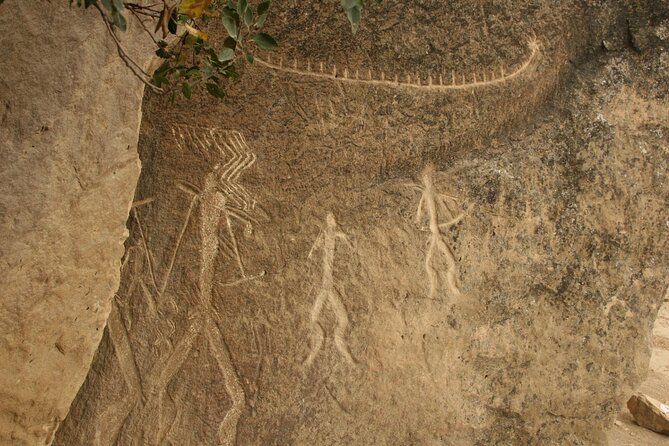
The preserve is part of the UNESCO World Heritage List because of the quality and density of its rock art. More than 6,000 drawings appear on about 1,000 rocks, with more than 100,000 artifacts connected to the area.
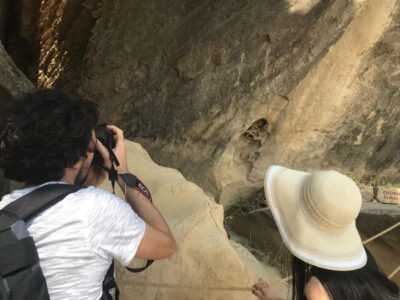
The carvings offer a direct link to ancient human life in this part of the world. You can expect the guide to explain what the figures, animals, hunting scenes, and human forms reveal about the people who lived here. The real value is not just seeing old markings, but learning how archaeologists use them to piece together daily life and belief.
The museum helps you read the outdoor site. Without context, rock carvings can look like scattered scratches on stone. With an explanation of their age, subject matter, and setting, the marks become evidence of human activity across a very long period.
About one hour is allocated to Qobustan. That is a practical introduction, but it will not cover every corner of the reserve. If ancient art is your main interest, you may wish the visit were longer. For a single-day tour from Baku, though, the time gives you a solid first look without making the entire day about one site.
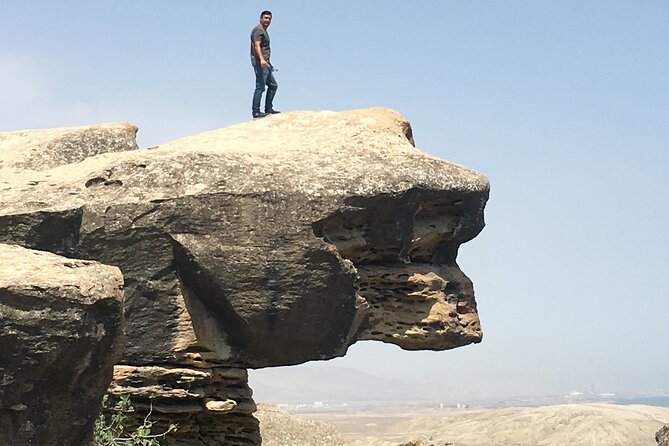
Wear sensible shoes and be prepared for outdoor walking. The tour information does not specify the exact walking distance or ground conditions, so you should expect some uneven terrain rather than a fully indoor visit. Most people can participate, and service animals are allowed.
What the private vehicle adds
The $250 price covers a private group of up to seven people. That works out to about $35.70 each for seven people, before museum tickets. For two people, the per-person price is much higher, but you still receive private transportation and a full-day route that would be awkward to arrange independently.
An air-conditioned vehicle matters in Azerbaijan’s warmer months, especially when you combine several outdoor stops with long drives. WiFi on board is another small benefit, though I would value the cooling and the ability to rest more than the internet connection.
Pickup is offered, and the tour operates from 9:00 a.m. to 6:00 p.m. during the stated operating period. The timing fits the nine-hour duration, but you should confirm the pickup point and start time when booking.
A private tour also gives your group more control over questions and pace than a large coach outing. The scheduled stops are fixed, but you can ask the guide to clarify the connection between Zoroastrianism, Hindu worship at Ateshgah, natural gas, and the ancient people of Qobustan.
Lunch is not included. Since the day is long, plan for that expense and ask the provider how the meal break fits into the route. No lunch venue is specified, so do not assume a particular restaurant or included meal.
The guide makes the difference
The guide is central to this experience. The strongest praise focuses on a kind guide who explains the sites very well, with one assessment giving the excursion a full 10 out of 10. No guide name is provided, so I would not book expecting a particular person.
That praise makes sense because the four stops need interpretation. A flame can be photographed in seconds. A petroglyph can look like a simple line. A mud volcano can seem like a patch of wet earth. Clear explanations turn each into part of a larger story.
The guide is described as professional and multilingual. That is useful for a route involving archaeology, religion, and geology, where small misunderstandings can affect the whole experience. I would use the drive time to ask questions, especially about which parts of the story are supported by archaeology and which come from religious tradition.
Who should book this full-day outing?
I would recommend it to a first-time visitor with limited time in Baku who wants more than city streets and modern architecture. It is also a good match for anyone interested in ancient art, Zoroastrianism, geology, or the way natural resources shape a country’s culture.
Families and small groups may appreciate the private vehicle and the fixed group price. A group of six or seven gets particularly good value from the $250 rate. The tour is also suitable for most participants, with service animals allowed and public transport nearby, though the outdoor nature of Qobustan and the mud volcanoes means you should be comfortable with some walking.
I would hesitate if you dislike packed schedules, outdoor conditions, or long days in the car. The short Yanardag visit and one-hour Qobustan allocation may also disappoint you if you prefer slow exploration. This is an introduction to several places, not an in-depth archaeological expedition.
The experience requires good weather. If conditions force cancellation, you are offered another date or a full refund. You can also cancel for a full refund up to 24 hours before the start time. That policy gives you useful flexibility, but last-minute cancellations or changes within 24 hours are not accepted.
Should you book the Qobustan and fire sites tour?
Book it if you want one efficient day that explains why Azerbaijan is associated with fire. The combination of Qobustan’s ancient carvings, Ateshgah’s religious traditions, Yanardag’s gas flame, and the country’s unusual mud volcanoes is hard to match with a single short outing.
The best value comes when several people share the private rate. Add the museum tickets and lunch to your budget, then decide if the convenience of a private air-conditioned vehicle is worth more than arranging separate visits.
I would choose this tour for breadth, clear guiding, and unusual sights. I would skip it only if you want a relaxed schedule or prefer to spend most of your time inside Baku.
FAQ
How long does the tour last?
The tour lasts approximately nine hours.
How much does the private tour cost?
The price is $250 per group, for up to seven people.
Are museum tickets included?
No. Museum tickets are not included, and the stated total cost is about $15 per person.
What sites does the tour visit?
The route includes Ateshgah Fire Temple, Yanardag, the mud volcanoes, and Gobustan National Historical-Artistic Preserve Museum.
Is transportation included?
Yes. The tour includes private transportation in an air-conditioned vehicle, and pickup is offered.
Is this a private activity?
Yes. Only your group participates, with a maximum group size of seven people.
What happens if bad weather cancels the tour?
If poor weather causes cancellation, you are offered a different date or a full refund. You can also cancel at least 24 hours before the start time for a full refund.
More Fire Temple & Ateshgah in Baku
- Gobustan-Mud Volcan-Fire Temple and Mountain Tour/Entrance inc
★ 5.0 · 267 reviews - Ateshgah Fire temple and Burning mountain tour
★ 4.5 · 42 reviews - Baku: Gobustan, Mud Volcanoes, Fire Temple, & Yanar Dag Tour
★ 4.8 · 36 reviews - Baku: Atashgah Fire Temple & Burning Mountain Half-Day Tour
★ 4.0 · 35 reviews
More Yanardag Burning Mountain in Baku
- Baku: Gobustan, Volcanoes, Fire Temple and Yanardag Day Trip
★ 4.7 · 433 reviews - Gobustan & Mud, Fire Temple, Burning Mountain (Group & Private)
★ 4.5 · 418 reviews - Gobustan, Mud volcanoes, Fire temple, Fire mountain PRIVATE TOUR
★ 5.0 · 47 reviews - Gobustan & Mud, Fire Temple, Burning Mountain, H.A. Center
★ 4.6 · 46 reviews
Newest Baku write-ups
- Wine Tour Baku★ 5.0 · 4 reviews
- Wine Crawl Baku★ 5.0 · 2 reviews
- Traditional Azerbaijani Cuisine Workshop★ 5.0 · 5 reviews
- The Magnificent Baku Night Tour★ 5.0 · 3 reviews
- Small-Group Day Trip to Gobustan, Mud Volcanoes, Ateshgah & Yanar Dagh★ 4.5 · 3 reviews
- 2 days tour to Sheki★ 5.0 · 2 reviews
- Sheki tour with overnight★ 5.0 · 5 reviews
- Azerbaijan tour in 2 days/Sheki+Lahij+Gabala up to Georgia Border★ 4.5 · 6 reviews
Gobustan Tours, compared.
Gobustan, Mud Volcano, Fire Mount, Temple Lunch Entry
Read our review →
BEST Gobustan, Volcanoes & Absheron Fire Tour (Group or Private)
Read our review →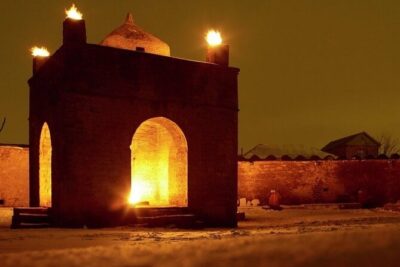
Gobustan, Volcanoes, Fire Temple and Yanardag Day Trip
Read our review →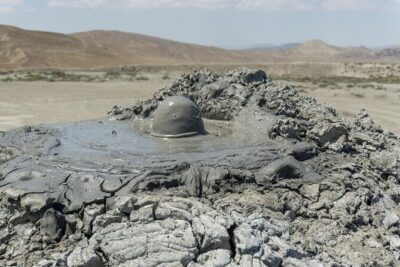
Gobustan & Mud, Fire Temple, Burning Mountain (Group & Private)
Read our review →
Mud Volcan-Fire Temple and Mountain Tour/Entrance inc
Read our review →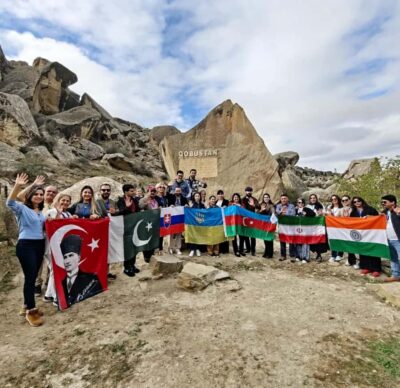
Gobustan Mud Volcanoes Temple & Entry tickets included
Read our review →Browse the lists this tour appears in