
Reviewed · FIRE TEMPLE & ATESHGAH
Baku: Atashgah Fire Temple & Burning Mountain Half-Day Tour
Fire still burns beneath Baku. This three-hour outing takes you east of the city to Ateshgah Fire Temple and Yanardag, two of Absheron’s most unusual sights. I like the ancient fire-worship traditions and the easy minivan transport, especially at just $23 per person. I also like that entry tickets are included, so the price is simple to understand.
The main concern is organization. Several bookings joined a longer day tour, leading to lunch waits and delays of up to two and a half hours. That can eat up most of a half-day tour, so you should confirm the meeting time and pickup plan before setting off.
In This Review
- Key points to know before booking
- Why Baku’s fire sites matter
- Entering Ateshgah Fire Temple
- What makes the temple more than a photo stop
- The ride to Yanardag and the timing issue
- Watching the flames at Yanardag
- The guide can make or break the visit
- Is $23 good value?
- Who will enjoy this half-day outing?
- Practical ways to make the trip better
- Should you book Ateshgah and Yanardag?
- FAQ
- Where is Ateshgah Fire Temple?
- What is Yanardag?
- How long does the tour last?
- What languages are available?
- Is transportation included?
- Are entry tickets included?
- Is the tour wheelchair accessible?
- Can I book a private group?
- Can I cancel for a full refund?
Key points to know before booking
- Ateshgah is a compact stone temple: Its fortress-like courtyard holds small cells, a central fire area, and rooftop corner flames.
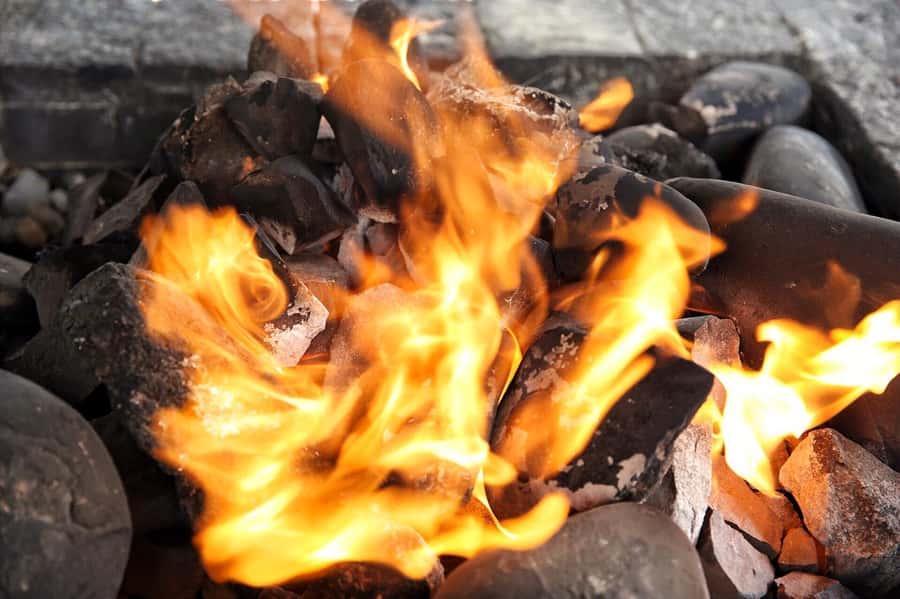
- Yanardag is a natural gas fire: Flames burn from a hillside where gas escapes through rocks and volcanic material below.
- The drive takes you beyond central Baku: Ateshgah lies about 21 kilometers east of the city, while Yanardag takes roughly 35 to 40 minutes to reach from the temple.
- The guide adds useful context: Tours are offered in English or Russian, and the best guide experiences have been friendly, clear, and informative.
- The three-hour schedule needs careful handling: An unexpected lunch stop or group transfer can turn a short visit into a much longer outing.
- The price is strong if the timing holds: At $23, transport, a guide, and advertised entry tickets make this a useful introduction to Absheron.
Why Baku’s fire sites matter
Baku is famous for oil, gas, and flames rising from the ground. The Absheron Peninsula has long been shaped by underground gas, and these two stops show different sides of that natural story.
Ateshgah is a human-made place of worship built around a gas-fed flame. Yanardag is a natural fire on a hillside. Seeing both in one trip helps you understand why fire became such a powerful part of local religious and cultural life.
I would not book this as a grand archaeological tour. The sites are fairly compact, and the total sightseeing time may feel short. But the subject is unusual, the journey is easy, and the two stops are unlike the usual city-center sights.
More trips out to the burning hillside:
- Baku: Gobustan, Volcanoes, Fire Temple and Yanardag Day Trip
★ 4.7 · 433 reviews - Gobustan & Mud, Fire Temple, Burning Mountain (Group & Private)
★ 4.5 · 418 reviews - Gobustan, Mud volcanoes, Fire temple, Fire mountain PRIVATE TOUR
★ 5.0 · 47 reviews
Entering Ateshgah Fire Temple
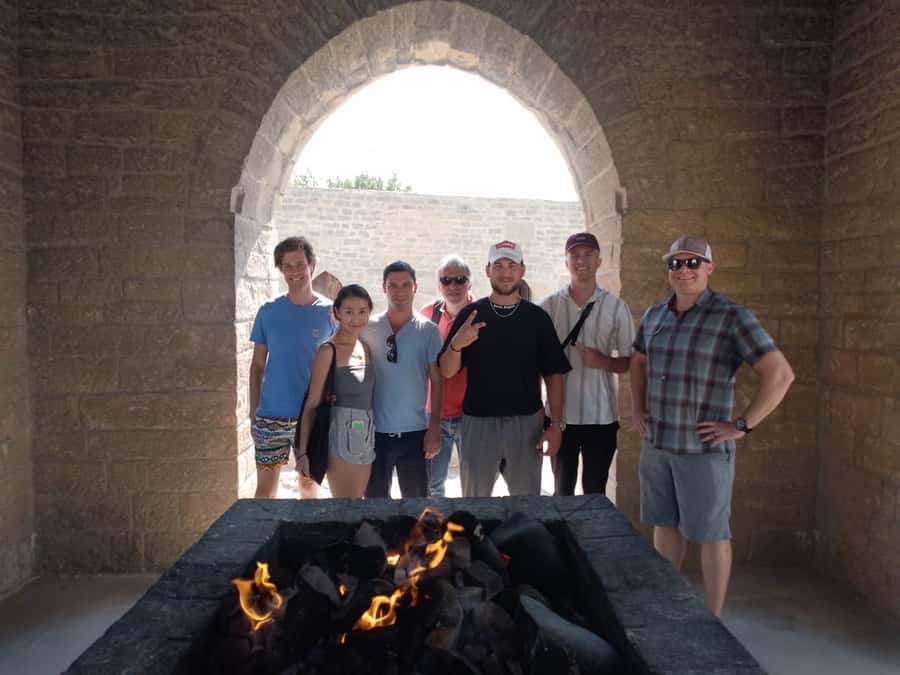
The first scheduled stop is Ateshgah Fire Temple, about 21 kilometers east of Baku. The complex resembles a small fortress, with a stone wall surrounding a central courtyard and a series of small rooms around the edges.
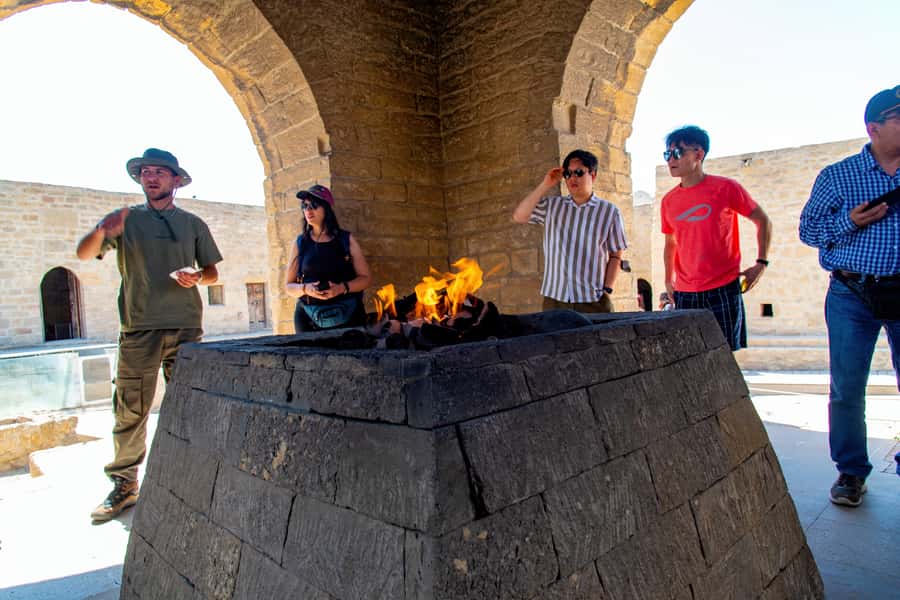
The design is easy to grasp as you walk through it. The courtyard leads your eye toward the temple fireplace, while the surrounding cells show how pilgrims and ascetic believers once used the site. These small chambers give the place a human scale. You are not simply looking at a flame behind glass. You are seeing the setting built around a sacred fire.
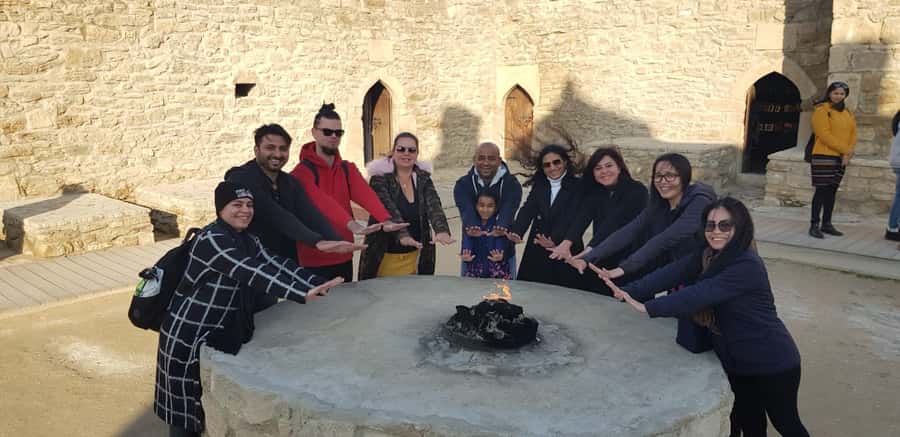
Natural gas once flowed from below the ground and fed the flames. The central fire area was designed around that supply, with a larger flame in the middle and four smaller fires at the pavilion’s rooftop corners. The sight connects the building to the ground beneath it.
Your guide should explain the fire-worship practices associated with the temple. The tour description links the site to rituals dating from medieval times and identifies it as a place connected with one of the world’s oldest fire-worship traditions. Indian merchants built the temple in the 18th century, which adds an important detail often missed on a quick independent visit.
That detail also keeps the story from becoming too simple. Ateshgah is not just an ancient flame surviving unchanged for thousands of years. The current temple complex reflects later construction, trade, pilgrimage, and religious practice around a much older natural phenomenon.
Allow yourself time to look at the individual cells rather than rushing straight to the fireplace. Their arrangement helps you picture pilgrims staying close to the sacred center. If your group moves quickly, ask the guide for a few minutes to explore the courtyard on your own.
What makes the temple more than a photo stop
The fire is the obvious attraction, but the architecture gives the visit its meaning. A flame on its own is a natural curiosity. A stone courtyard built around that flame shows how people organized daily life, worship, and travel around it.
I especially like the way Ateshgah combines a modest scale with a large subject. You do not need several hours to understand the layout, yet the place raises questions about trade routes, religious exchange, and the role of natural gas in local culture.
The setting also suits visitors who prefer a focused historical stop. You can see the main structure, hear the explanation, and move on without spending an entire day in a museum. The tradeoff is that anyone wanting a long, quiet exploration may find the standard visit too brief.
The ride to Yanardag and the timing issue
The next stop is Yanardag State Historical, Cultural and Natural Reserve, described as taking around 35 to 40 minutes to reach from Ateshgah. The vehicle is a minivan or van, and transport is included.
That drive matters because the two sites are outside central Baku. You avoid arranging separate taxis and do not need to work out the route across the Absheron Peninsula yourself. An English-speaking or Russian-speaking guide travels with the group.
The schedule, however, needs attention. This experience has sometimes been combined with a full-day outing. In that arrangement, the half-day participants may wait while the longer group has lunch. One booking involved about an hour and 20 minutes of waiting before the sightseeing began. Another described a total delay of about two and a half hours.
That is not a minor nuisance on a three-hour tour. It can change the outing from a neat afternoon plan into a much longer commitment. One person also expected a 1 p.m. start but did not receive the final pickup information until the last minute.
I would confirm three things before leaving your hotel: the exact meeting point, the actual pickup time, and whether you are joining a longer group that includes lunch. The operator is Baku City Tours, and the experience allows private groups, but you should make sure the booking you choose is handled as a true half-day trip if time matters.
Other fire temple visits near Baku:
- Gobustan-Mud Volcan-Fire Temple and Mountain Tour/Entrance inc
★ 5.0 · 267 reviews - Gobustan & Mud, Fire Temple, Burning Mountain, H.A. Center
★ 4.6 · 46 reviews - Ateshgah Fire temple and Burning mountain tour
★ 4.5 · 42 reviews - Baku: Gobustan, Mud Volcanoes, Fire Temple, & Yanar Dag Tour
★ 4.8 · 36 reviews
Watching the flames at Yanardag
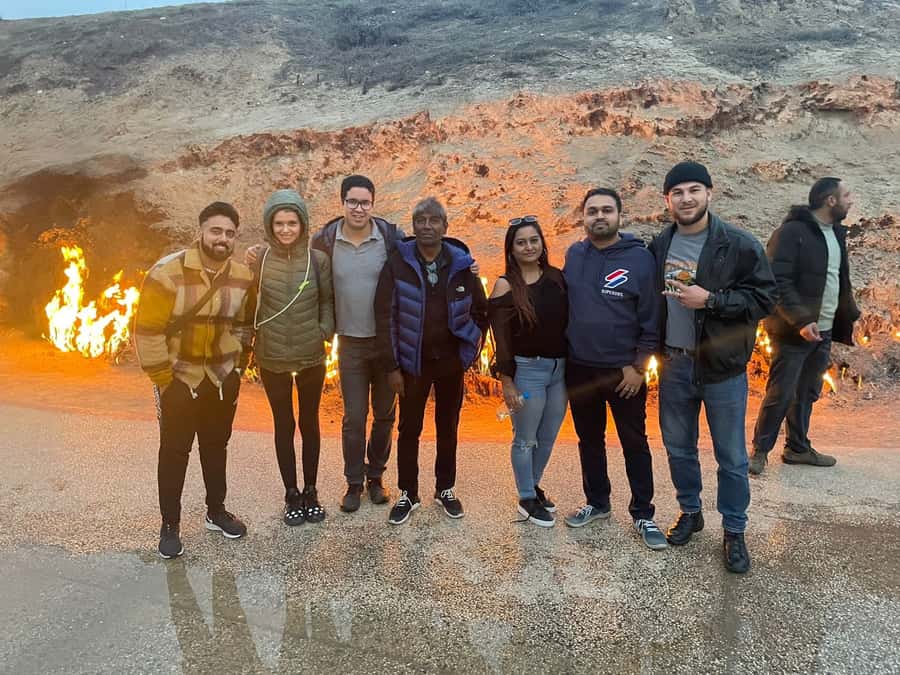
Yanardag means burning mountain, though you should picture a burning section of hillside rather than a huge mountain covered in fire. The main attraction is a wall of flames that burns where natural gas escapes from the rocks.
The gas comes from underground sources linked to tectonic shifts and volcanic material below the surface. The result is one of those rare places where geology becomes visible without a museum display or scientific equipment. You watch the flames rise directly from the hillside.
The fire has attracted attention for centuries. Marco Polo wrote about flames in and around Baku during his travels, and the fire at Yanardag is believed to have burned for a very long time. The exact age is not given, so I would enjoy the sense of continuity without treating a precise number as established fact.
Yanardag offers a different experience from Ateshgah. At the temple, people built a religious complex around a gas-fed fire. At Yanardag, the fire is the natural event itself. Your guide can help connect the two, but the contrast is clear even without a long explanation.
Do not expect a huge reserve with hours of walking. The attraction is concentrated around the burning hillside, which makes it manageable on a short tour. That also means the visit may feel quick if you prefer long walks or broad natural areas.
The flame can look especially striking when the surrounding light is lower, but the tour data does not promise a particular time of day. Check the departure options and season when booking if the visual effect matters to you.
The guide can make or break the visit
The strongest feedback about this experience centers on the guide. A January booking described the guide as excellent, informative, and friendly, with the fire temples making a particularly strong impression. That is exactly where a guide earns the fee.
Ateshgah contains details that are easy to miss, such as the small cells, the rooftop corner fires, and the connection between the building and Indian merchants in the 18th century. At Yanardag, the guide can explain why gas emerges from the rocks and how the natural site differs from the temple.
The language choices are English and Russian. Private groups are available, which may suit you if you want more control over the pace or have limited time.
The guide cannot fully solve poor scheduling, though. A warm and informative explanation is valuable, but it does not make a long unexplained wait acceptable. Treat the guide quality and the company’s coordination as two separate parts of the experience.
Is $23 good value?
At $23 per person, the tour is priced well for a short outing beyond Baku. You receive guided transport in a van or minivan, an English or Russian-speaking guide, and advertised entry tickets. If the tour runs close to its stated three-hour length, the package removes several practical chores at a modest cost.
The value drops sharply if you spend one or two hours waiting for another group. This is particularly important because the tour itself is short. On a full-day trip, a delayed lunch is irritating. On a three-hour trip, it can take over the entire schedule.
The price works best for you if:
- You want both fire sites in one simple booking.
- You do not want to arrange taxis outside central Baku.
- You value a guide’s explanation of the temple and geology.
- You have a flexible afternoon.
- You are comfortable confirming the pickup details in advance.
It may not suit you if you have a fixed dinner reservation, a flight, or only a narrow window before another activity. In that case, a private group could be worth considering, though the available information does not state a separate private-group price.
The stated rating is 4 out of 5 from 35 reviews, which fits the overall picture. The sights and guides earn strong praise, while the main weakness is coordination.
Who will enjoy this half-day outing?
I would recommend it to first-time visitors who want to see an unusual side of Azerbaijan without spending a full day outside Baku. It is also a good choice if you enjoy religious history, unusual geology, or places where natural forces shaped human customs.
Solo visitors may find the organized transport useful. One booking specifically found the trip smooth and suitable for solo travel, though the same person wished there had been more free time to explore.
The tour also works for people who prefer compact sightseeing stops. Neither location requires an all-day commitment, and the route gives you two distinct subjects in one outing.
Families and older visitors may appreciate the vehicle transport and the limited walking implied by the compact sites. The activity is listed as wheelchair accessible, though the available details do not describe the exact surfaces, ramps, or restroom arrangements. If access needs are important, confirm those points with Baku City Tours before booking.
I would be more cautious for photographers or independent explorers. You may want longer at each site than the group schedule allows. The reported delays create a strange combination: sometimes too little free time at the attractions, and too much unwanted time waiting before departure.
Practical ways to make the trip better
Start by checking the final meeting details. Do not rely only on the original start time if the operator sends an update later. Ask if the afternoon outing is attached to a morning or full-day tour.
Next, ask directly about lunch. One of the most serious complaints came from an unadvertised lunch stop for people on the longer tour. You should know in advance if you will be waiting while another group eats.
Keep the rest of your day flexible. The advertised duration is three hours, but the reported experience shows that the total outing can run much longer when groups are combined.
During the temple visit, focus on the courtyard layout, the central fireplace, the four rooftop fires, and the small surrounding cells. At Yanardag, pay attention to the point where the flames emerge from the rock and listen for the explanation of underground gas.
If you want more time, ask whether a private group is available. A private booking may offer better control, but the information provided does not guarantee a longer visit or a faster route, so confirm those details rather than assuming.
The activity offers free cancellation up to 24 hours before departure and a reserve-now, pay-later option. Those terms are useful if your Baku schedule is still moving, but they do not remove the need to verify the meeting point and timing.
Should you book Ateshgah and Yanardag?
Book this tour if you want a low-cost, guided introduction to two distinctive Absheron sights and can keep your schedule flexible. The Ateshgah courtyard gives you a clear look at fire worship and 18th-century temple building, while Yanardag’s hillside flames provide the natural counterpart.
I would not book it blindly for a tightly planned afternoon. The reported delays are too serious to ignore, especially when the advertised tour lasts only three hours. Confirm that you will not be folded into a longer lunch tour, and consider the private-group option if timing is important.
With that check completed, $23 is a fair price for the route, transport, guide, and advertised entry tickets. The sights are compact but genuinely unusual, and the best guides make the visit far more meaningful than a quick taxi ride and a few photographs.
FAQ
Where is Ateshgah Fire Temple?
Ateshgah Fire Temple is about 21 kilometers east of Baku on the Absheron Peninsula.
What is Yanardag?
Yanardag is a natural burning hillside where gas escapes through rocks and creates a constantly burning wall of flames.
How long does the tour last?
The advertised duration is three hours.
What languages are available?
Live guiding is available in English and Russian.
Is transportation included?
Yes. Transportation is provided by minivan or van.
Are entry tickets included?
The experience is described as including entry tickets for Ateshgah and Yanardag.
Is the tour wheelchair accessible?
Yes, the activity is listed as wheelchair accessible. The available information does not provide details about surfaces or facilities at each site.
Can I book a private group?
Yes. A private-group option is available.
Can I cancel for a full refund?
Yes. You can cancel up to 24 hours in advance for a full refund.
Newest Baku write-ups
- Wine Tour Baku★ 5.0 · 4 reviews
- Wine Crawl Baku★ 5.0 · 2 reviews
- Traditional Azerbaijani Cuisine Workshop★ 5.0 · 5 reviews
- The Magnificent Baku Night Tour★ 5.0 · 3 reviews
- Small-Group Day Trip to Gobustan, Mud Volcanoes, Ateshgah & Yanar Dagh★ 4.5 · 3 reviews
- 2 days tour to Sheki★ 5.0 · 2 reviews
- Sheki tour with overnight★ 5.0 · 5 reviews
- Azerbaijan tour in 2 days/Sheki+Lahij+Gabala up to Georgia Border★ 4.5 · 6 reviews
Fire Temple & Ateshgah, compared.
Gobustan, Volcanoes, Fire Temple and Yanardag Day Trip
Read our review →
Gobustan & Mud, Fire Temple, Burning Mountain (Group & Private)
Read our review →
Mud Volcan-Fire Temple and Mountain Tour/Entrance inc
Read our review →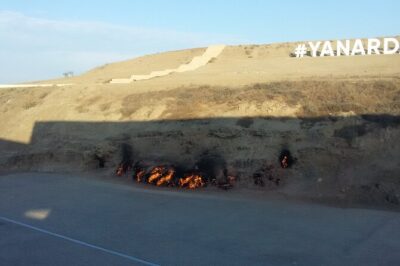
Gobustan, Mud volcanoes, Fire temple, Fire mountain PRIVATE TOUR
Read our review →
Gobustan & Mud, Fire Temple, Burning Mountain, H.A. Center
Read our review →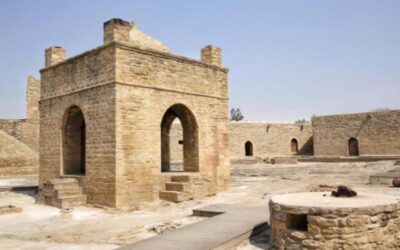
Gobustan, Mud Volcanoes, Fire Temple, & Yanar Dag Tour
Read our review →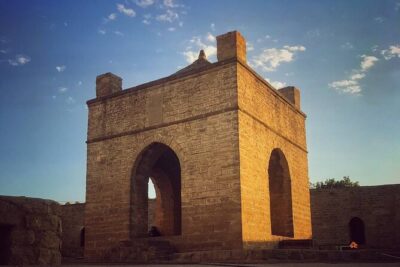
Qobustan rock arts, Mud Volcanoes, Fire temple Ateshgah, Yanardag
Read our review →Browse the lists this tour appears in