
Reviewed · GOBUSTAN TOURS
Gobustan and Absheron tour (All inclusive)
A full day of strange sights awaits. I like this tour because it links Azerbaijan’s most unusual natural attractions with its oldest cultural sites, from Gobustan’s bubbling mud craters to the fire temple at Ateshgah. I also like that the $85 price includes transport, entrance tickets, a guide, and lunch, so you are not constantly reaching for your wallet.
The main caution is the pace. You cover long distances in eight to nine hours, and the route can feel rushed. The quality of the day also depends heavily on your guide, driver, vehicle, and whether the mud volcano stop is operating as planned.
Guides such as Sayid, Saiyyed, Zeyneb, Vusala, Nazperi, and Fidah have been praised for making the history lively and looking after the group. Other departures have suffered from late pickup, weak explanations, cramped transport, or disappointing food. I would confirm the meeting details and ask specifically about the mud volcano visit before setting out.
In This Review
- Key points to know before booking
- Starting south from Baku
- Mud volcanoes and the old Lada ride
- Gobustan’s museum and prehistoric petroglyphs
- Bibi-Heybat Mosque and the Caspian view
- Lunch in Baku’s Narimanov area
- Ateshgah, the fire worshippers’ temple
- Yanardag and the final flames
- Transport, group size, and guide quality
- Is $85 a fair price?
- Who should book this day trip?
- Final verdict: book it with one important check
- FAQ
- How long does the Gobustan and Absheron tour last?
- What is included in the $85 price?
- Is lunch included?
- What places does the tour visit?
- How large is the group?
- Is transportation provided from Baku?
- What languages does the guide speak?
- Are entrance tickets included?
- Can I cancel for a full refund?
Key points to know before booking
- The mud volcano ride is the day’s wildest moment: Reaching the craters can involve an off-road trip in an old Soviet Lada, which some people find thrilling and others find rough.
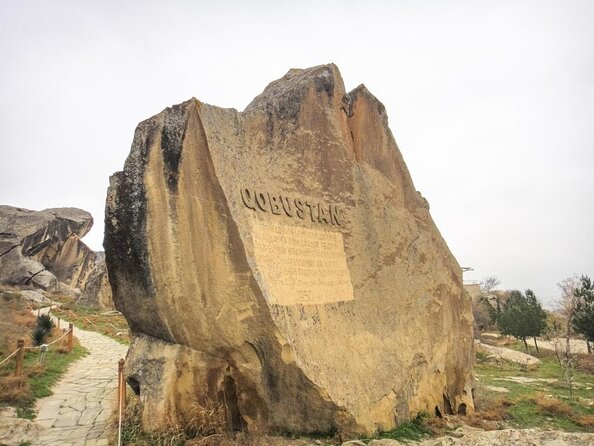
- Gobustan combines science, archaeology, and open-air scenery: You visit a modern exhibition before walking among prehistoric petroglyphs near the Caspian coast.
- The route covers two separate areas: Gobustan lies south of Baku, while Ateshgah and Yanardag are on the Absheron Peninsula, so expect plenty of road time.
- Lunch and entrance fees are included: The meal is meant to cover qutabs, kebabs, pilaf, salad, a drink, and tea, though food quality has not been consistent.
- The group is capped at 17 people: That is small enough for a more personal outing, but the experience can still feel crowded if the vehicle is poorly matched to the group.
- This is a strong first-day orientation to the region: You see several headline sights, but you give up the freedom and slower pace of a private outing.
Starting south from Baku
The day begins in Baku, with the group heading roughly 70 kilometers south toward Gobustan. The exact pickup arrangement deserves attention: the experience includes round-trip transfer, but the stated meeting point is at 1 Azərbaycan Prospekti, Baku 1005.
I would not wait until the last minute to sort this out. One poor departure involved a pickup scheduled for 7:50 a.m. that arrived at 8:30, while another departure had excellent communication and a clean, comfortable vehicle. Those differences show why the operator’s confirmation matters as much as the printed start time.
The first drive is part of the price you are paying for. Gobustan is not a quick hop from central Baku, and the full route later doubles back toward the city before heading out to Absheron. You should see this as a busy regional circuit, not a relaxed countryside day.
More Gobustan rock-art trips from Baku:
- Baku: Gobustan, Mud Volcano, Fire Mount, Temple Lunch Entry
★ 4.9 · 3,246 reviews - BEST Gobustan, Volcanoes & Absheron Fire Tour (Group or Private)
★ 5.0 · 1,254 reviews - Baku: Gobustan, Volcanoes, Fire Temple and Yanardag Day Trip
★ 4.7 · 433 reviews
Mud volcanoes and the old Lada ride
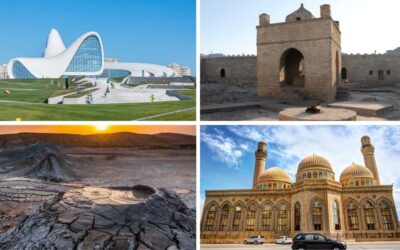
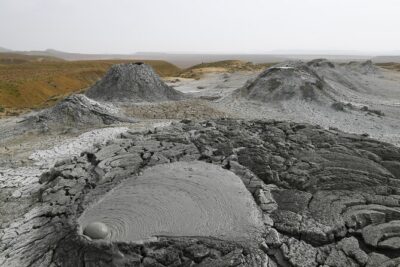
The mud volcanoes are the main reason many people choose this outing. Gobustan and the surrounding region are known for their many mud craters, where cold mud and gases rise from below the ground. The result is an odd, gray-blue setting that can look more like another planet than a place beside the Caspian Sea.
Getting there may be the most memorable part. The access road is rough, and the local transfer can use old Russian Lada cars. I would expect a bumpy, off-road ride rather than a polished sightseeing transfer. Some people describe it as high-adrenaline fun, while others have objected to squeezing four adults into a car suited to fewer passengers.
The stop is scheduled for about an hour, including the transfer and time around the craters. That is enough to see the site and take photographs, but it is not a long geological field trip. If mud volcanoes are your priority, ask before departure how much time will be spent at the craters and if road conditions could change the stop.
This point matters because the experience has varied. Some departures have reached the volcanoes and found the ride unforgettable. Others have skipped the site or seen only a limited area. Since the volcanoes are the tour’s most distinctive attraction, I would treat confirmation of this stop as essential.
Gobustan’s museum and prehistoric petroglyphs
The Gobustan visit continues at a modern museum and natural history exhibition. It provides useful background before you walk among the rocks. Exhibits explain the region and prehistoric life, and the displays include material such as animal remains and an elephant skeleton.
The museum gives the outdoor stop a clearer meaning. Without an introduction, the rock drawings can seem like scattered markings on stone. With some context, you begin to notice scenes linked to hunting, animals, people, movement, and daily life.
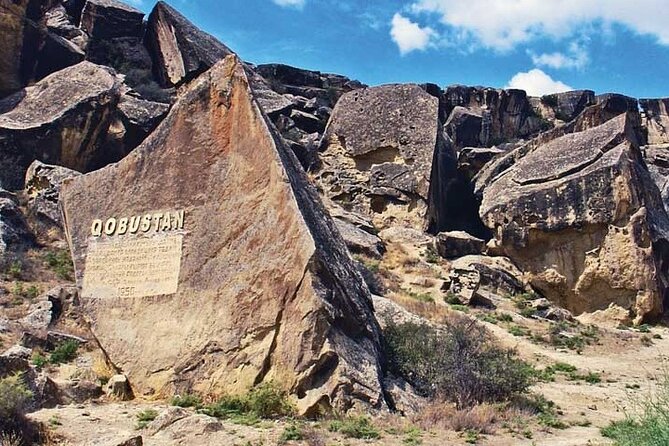
The open-air petroglyph area is the more important part for most people. A marked trail leads between rocky outcrops, with views toward the Caspian coast. The drawings are the visible record of people who lived here long before written history, and your guide’s interpretation can help connect the images to survival, social life, and ritual.
You should expect walking on uneven ground and exposure to the elements. The scheduled time is about an hour at the museum and another hour at the rock art area, although the actual balance can depend on the guide. One weak departure skipped the museum and kept the outdoor visit very brief, while strong guides used the stops to explain Azerbaijan’s past in an engaging way.
If you care about archaeology, Gobustan deserves your full attention. If you mainly want dramatic scenery, the petroglyphs may feel less immediate than the volcanoes or Yanardag. The value comes from the story, not from a large monument or a single spectacular viewpoint.
Bibi-Heybat Mosque and the Caspian view
On the return toward Baku, the route can include Bibi-Heybat Mosque. The mosque is associated with Shirvanshah Abu-l-Fath Farrukhzad and dates in the tour description to the 13th century.
The stop also offers views toward the Caspian Sea and the cargo port cranes nearby. That combination is useful: you see a religious monument while also getting a sense of the working coast around Baku. The mosque is not listed with a separate timed stop, so the time available may be short.
I would treat Bibi-Heybat as an added sight rather than the central purpose of the excursion. If you want a slow visit focused on the mosque’s architecture or religious importance, a separate stop may suit you better. On this day, the main emphasis remains Gobustan and Absheron’s fire sites.
More of the Absheron peninsula:
- Baku: Gobustan Absheron Tour Entry Tickets included
★ 4.9 · 329 reviews - Baku: Gobustan-Absheron Tour with Hotel PICK UP and DROP OFF
★ 4.8 · 170 reviews - Baku: Gobustan/Absheron guided tour with lunch and tickets
★ 4.8 · 158 reviews - Gobustan and Absheron peninsula ( Group or Private ) TOUR ( All inclusive )
★ 5.0 · 130 reviews
Lunch in Baku’s Narimanov area
Lunch comes after the Gobustan section, in a central park area at a Baku restaurant. The included menu is substantial on paper: two qutabs, one filled with greens and one with meat, assorted chicken, lamb, and lula kebab, pilaf, choban salad, ayran or cola, and tea.
This is a practical feature of the tour. You do not need to search for a restaurant during a tightly timed day, and the meal introduces several familiar Azerbaijani foods. The three-course setup also helps you avoid paying extra for the main meal.
Food quality, however, has been uneven. Some departures had plentiful, good-quality food, while others received undercooked rice, cold kebabs, or portions that felt too small. One complaint focused less on the menu than on the rushed service and poor restaurant facilities.
I would keep expectations sensible. This is a group meal built into a long sightseeing circuit, not a carefully paced food experience. If you have dietary restrictions, the supplied information does not specify alternatives, so ask the operator before booking.
Ateshgah, the fire worshippers’ temple
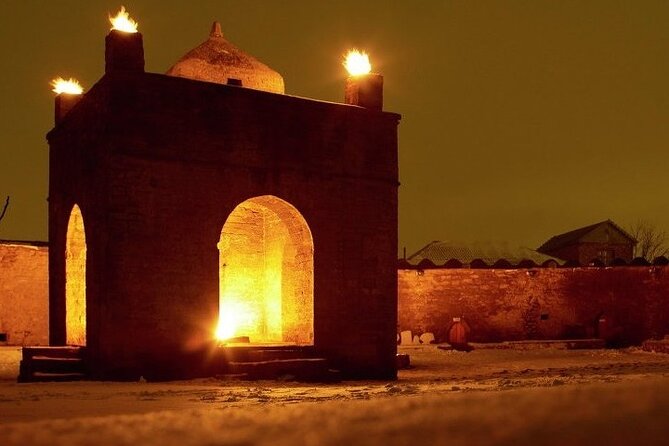
After lunch, the route crosses to the Absheron Peninsula and visits Ateshgah in Surakhany Village. This walled temple complex is tied to the area’s natural gas flames and to fire-worshipping traditions linked with Zoroastrians and Hindu Brahmanites.
The site makes more sense when you understand its position along old trade routes. Ateshgah included a caravanserai, where merchants could stay, as well as spaces associated with fire-worshipping hermits. The complex’s installations help explain both religious practice and the daily life surrounding the temple.
Allow about 90 minutes here. That is enough time to walk through the complex and listen to the guide, especially if the explanation is strong. The temple is restored and arranged for visitors, so it is not a wild archaeological site. Its value lies in the mixture of faith, commerce, natural gas, and regional history.
This is one of the stops where the guide matters most. A good explanation connects the courtyard, cells, fire rituals, and Silk Road setting. A thin explanation can leave you looking at a series of rooms without much sense of why the place mattered.
Yanardag and the final flames
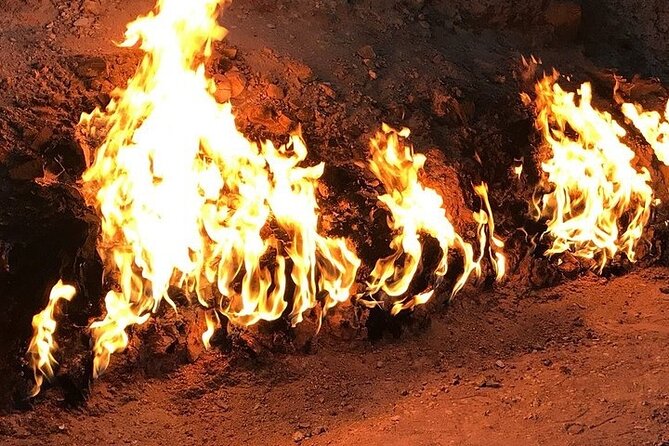
The last major stop is Yanardag, or Burning Mountain, in the Yanardag Reserve. Natural gas rises through the ground here and feeds flames that burn along the mountain. The site is more controlled and visitor-ready than the mud volcanoes, with an observation area from which you can view the fire and part of the Absheron Peninsula.
Yanardag is visually simple but memorable. You are not looking at a huge volcano or a broad field of fire. You are seeing flames coming directly from the ground, which gives the stop its force.
The visit lasts about an hour. The observation area provides a wider view, while the burning slope supplies the close-up spectacle. The flames may feel less impressive in bright daylight than you expect, but the natural phenomenon is unusual enough to justify the stop.
Some people find Yanardag less compelling than Gobustan. I think the two work well together: Gobustan shows the region’s strange geology through mud, while Yanardag shows it through fire.
Transport, group size, and guide quality
The tour uses an air-conditioned vehicle and allows a maximum of 17 people. A small group can make it easier to hear explanations and ask questions, especially when the guide is engaged. It also keeps the day less impersonal than a large coach outing.
Vehicle quality has not been uniform. Some departures had clean, comfortable transport with strong air conditioning. Others involved a cramped van, loud music, poor cleanliness, or insufficient cooling. Since the day includes long drives, vehicle condition is not a minor detail.
The guide is the biggest variable. Guides named Sayid, Saiyyed, Zeyneb, Vusala, Nazperi, and Fidah have been praised for clear storytelling, warmth, enthusiasm, and care for older members of the group. One guide was especially appreciated for keeping everyone on schedule while making Azerbaijani culture understandable.
At the other end, some departures had late starts, little commentary, unclear time limits, smoking by the guide, and poor control of the group. One group waited in the vehicle for around 45 minutes after a five-minute break turned into a much longer stop. That kind of delay matters when the route already takes most of a day.
English and Russian guiding is included. If you need detailed interpretation in another language, this experience may not be suitable.
Is $85 a fair price?
At $85 per person, the tour offers solid value if every advertised element goes ahead. You receive round-trip transport, the mud volcano transfer, entrance tickets to the volcano complex, Gobustan’s museum and exhibition, Ateshgah, and Yanardag, plus lunch and a professional guide.
Buying these parts separately would take more planning and could cost more once transport is added. The all-inclusive setup is especially useful if you have only a few days in Baku and want to see sites spread across two directions from the city.
The tradeoff is time. You spend much of the day on the road, and the group schedule leaves little room for lingering. A private tour might cost more but would give you better control over stops, meal timing, and the amount of time at the volcanoes.
The tour also offers group discounts and a mobile ticket. Free cancellation is available up to 24 hours before the start time. If the minimum number of participants is not reached and the operator cancels, you should be offered another date or a full refund.
Who should book this day trip?
I would recommend it to first-time visitors who want a broad introduction to the sights outside Baku. It suits you if you enjoy unusual geology, archaeology, religious sites, and a full schedule more than slow meals or long periods of free time.
It is also a good fit for people who prefer one organized payment. Lunch, admission fees, transport, and the off-road transfer are handled together.
I would be more cautious if you dislike bumpy roads, crowded vehicles, uncertain timing, or long days. Families with older relatives should ask about seating and the walking pace. People with a flight soon after the tour should leave a large buffer, since some departures have returned later than planned.
Final verdict: book it with one important check
This is a worthwhile Baku excursion when the mud volcanoes are operating, the vehicle is comfortable, and the guide takes the job seriously. The combination of Gobustan’s petroglyphs, strange mud craters, Ateshgah’s fire-worshipping past, and Yanardag’s flames gives you a memorable picture of the Absheron region.
I would book it for the convenience and range, but I would confirm the pickup time, ask if the mud volcano stop is guaranteed, and clarify the lunch arrangement. If those answers are reassuring, $85 is a fair price for a packed introduction to Azerbaijan beyond the capital. If you want more time at each site, choose a private or slower itinerary instead.
FAQ
How long does the Gobustan and Absheron tour last?
The tour lasts approximately eight to nine hours, from morning until the group returns to Baku.
What is included in the $85 price?
The price includes an air-conditioned vehicle, professional guiding in English and Russian, entrance tickets, the mud volcano transfer, and lunch.
Is lunch included?
Yes. The included meal lists two qutabs, assorted chicken, lamb and lula kebab, pilaf, choban salad, ayran or cola, and tea.
What places does the tour visit?
The route includes the Gobustan mud volcanoes, Gobustan’s museum and natural history exhibition, the Gobustan petroglyphs, Bibi-Heybat Mosque on the way back, Ateshgah Fire Temple, and Yanardag Burning Mountain.
How large is the group?
The maximum group size is 17 people.
Is transportation provided from Baku?
Yes. Round-trip transfer is included, and the activity ends back at the stated Baku meeting point.
What languages does the guide speak?
Professional guide service is provided in English and Russian.
Are entrance tickets included?
Yes. Tickets are included for the Mud Volcanoes Complex, open-air museum, Fire Temple, Yanardag, and Natural History Exhibition.
Can I cancel for a full refund?
You can cancel at least 24 hours before the experience starts for a full refund. Cancellations or changes made less than 24 hours before the start time are not accepted for a refund.
Newest Baku write-ups
- Wine Tour Baku★ 5.0 · 4 reviews
- Wine Crawl Baku★ 5.0 · 2 reviews
- Traditional Azerbaijani Cuisine Workshop★ 5.0 · 5 reviews
- The Magnificent Baku Night Tour★ 5.0 · 3 reviews
- Small-Group Day Trip to Gobustan, Mud Volcanoes, Ateshgah & Yanar Dagh★ 4.5 · 3 reviews
- 2 days tour to Sheki★ 5.0 · 2 reviews
- Sheki tour with overnight★ 5.0 · 5 reviews
- Azerbaijan tour in 2 days/Sheki+Lahij+Gabala up to Georgia Border★ 4.5 · 6 reviews
Gobustan Tours, compared.
Gobustan, Mud Volcano, Fire Mount, Temple Lunch Entry
Read our review →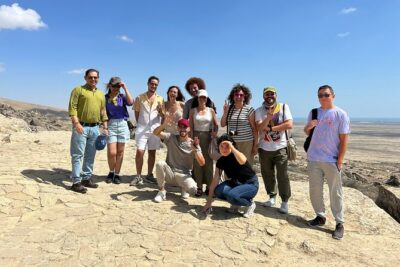
BEST Gobustan, Volcanoes & Absheron Fire Tour (Group or Private)
Read our review →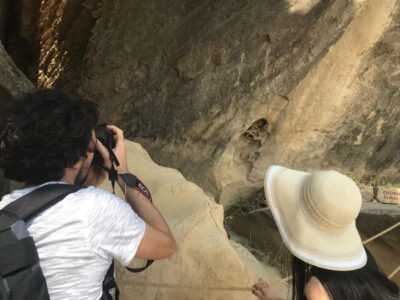
Gobustan, Volcanoes, Fire Temple and Yanardag Day Trip
Read our review →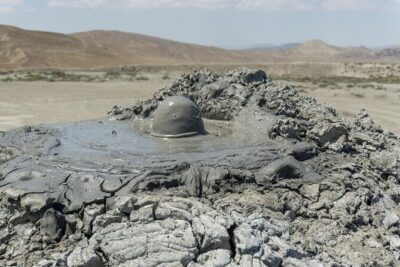
Gobustan & Mud, Fire Temple, Burning Mountain (Group & Private)
Read our review →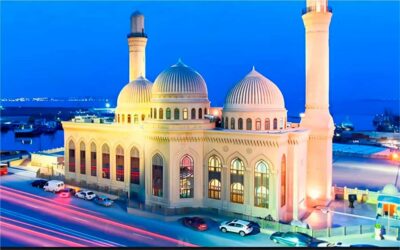
Mud Volcan-Fire Temple and Mountain Tour/Entrance inc
Read our review →
Gobustan Mud Volcanoes Temple & Entry tickets included
Read our review →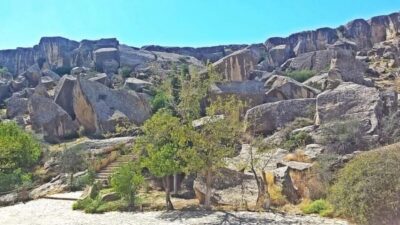
Gobustan-Absheron Tour with Hotel PICK UP and DROP OFF
Read our review →Browse the lists this tour appears in