
Reviewed · WALKING TOURS
Baku Soviet Architecutre Gudied Walking Tour
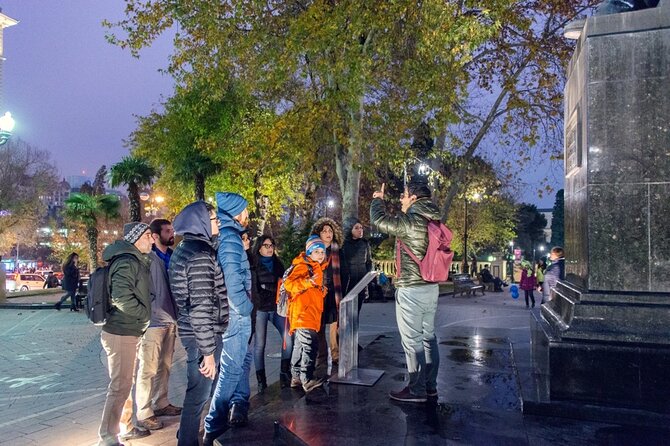
Baku tells its story in layers. This 2.5-hour walk connects oil-boom mansions, Soviet landmarks, modern shopping streets, and Caspian waterfront views, giving you a useful first look at how the city changed over the last century. Guide Gani is frequently praised for his clear English, humor, patience, and warm, friendly manner.
I especially like the small-group format, capped at 15 people, because it leaves room for questions and lets the guide adjust the pace. I also like the way the route links buildings to Azerbaijani culture, music, language, and daily life instead of treating architecture as a parade of façades. The main drawback is value: at $60 per person, this is a fairly costly walking tour, and admission tickets, lunch, and transportation are not included.
- Fountain Square begins and ends the walk, making it easy to find your bearings in central Baku.
- Soviet and modern architecture share the same route, from Stalinist buildings to the Government House and Baku Boulevard.
- Gani receives especially strong praise for his English, local stories, humor, and careful answers to questions.
- The tour explains culture as well as buildings, including music, literature, Russian influence, myths, and nightlife.
- A local tea or coffee-shop stop is included at the end, a pleasant way to wind down.
- The 1 p.m. start leaves your morning free, though summer heat can make a long city walk tiring.
In This Review
- Why This Baku Walk Is More Than an Architecture Tour
- Fountain Square and Nizami Street: Baku’s Easy Starting Point
- Nasimi Monument and Stalinist Architecture
- Nizami Cinema and the Meaning of Independence
- Baku’s Cultural Corridor: Theater, Library, and Opera
- Khagani Street and Baku’s Russian Connection
- Taghiyev’s Mansion and the Story Behind the History Museum
- Government House: A Monumental Soviet Statement
- Baku Boulevard and the Caspian Waterfront
- The Guide, Group Size, and Overall Atmosphere
- Is $60 a Fair Price for Two and a Half Hours?
- Practical Advice Before You Book
- Who Will Get the Most From This Walking Tour?
- Should You Book the Baku Soviet Architecture Walking Tour?
- FAQ
- Where does the Baku Soviet Architecture Guided Walking Tour begin?
- What time does the tour start?
- How long does the walking tour last?
- Where does the tour finish?
- How many people can join the group?
- Is food or drink included?
- What happens if the weather is bad?
Why This Baku Walk Is More Than an Architecture Tour
The name points you toward Soviet architecture, but the route covers far more than the Soviet period. You begin in the heart of present-day Baku, pass through streets shaped by the first oil boom, examine Soviet-era buildings, and finish beside the Caspian Sea.
That broad time span is the strongest reason to consider the experience. Baku can look polished and modern at first glance, with grand avenues, designer shops, and carefully maintained public spaces. A good guide helps you see the older forces underneath: oil wealth, imperial Russian influence, Soviet planning, national independence, and the city’s current pop culture.
I would use this walk early in a Baku visit. It gives you names, neighborhoods, and historical links that make later independent exploring easier. The route also includes places you might pass without understanding, especially the Government House, the former Molokanskaya area, and the cultural stretch around Nizami Street.
The experience is not built around entering a long list of monuments. Most stops are viewed from outside, and admission is free. Its value comes from the explanation, the route, and the chance to ask questions while the city is right in front of you.
Fountain Square and Nizami Street: Baku’s Easy Starting Point
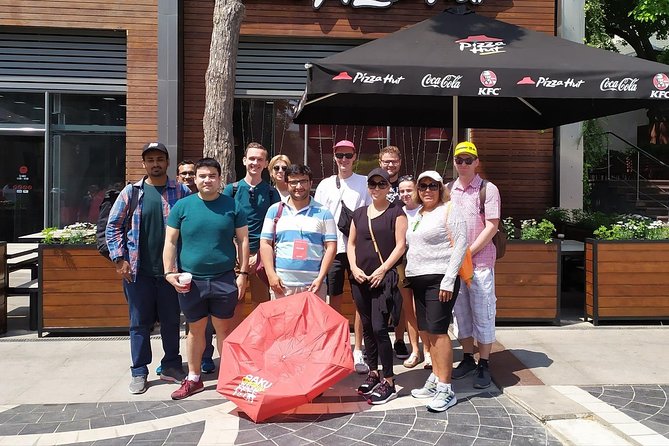
The meeting point is at Karnaval, 353 Istiglaliyyat, with the walk beginning at 1 p.m. The tour then reaches Fountain Square, one of central Baku’s main places for leisure and entertainment.
Fountain Square is not simply a pleasant urban plaza. Its setting developed during Baku’s first oil boom in the late 19th and early 20th centuries, when the city was changing from a trading center into an industrial power. That background gives the opening stop some weight. You are standing in a place that reflects both present-day city life and the wealth that reshaped Baku more than a century ago.
The short stop is useful for orientation. You can see how close many central sights are to one another, and the guide establishes the story of Baku before moving into the denser city center.
From there, Nizami Street provides a sharp contrast. About 800 meters of this long street is pedestrian-only, with shops, restaurants, concert halls, and theaters. It is one of the city’s main places for people to meet after work and spend time outdoors.
I like this part because it shows Baku as a living city rather than a museum. The guide connects shopping and nightlife with social habits, local hangouts, and modern popular culture. If you want suggestions for places where residents spend their evenings, this is a good time to ask.
One practical point: the central streets can be busy, and you will be walking at a steady pace between stops. Wear comfortable shoes and expect hard paved surfaces rather than a park stroll.
Other Baku walks with a guide:
- Baku: Stunning Walking Tour of Historical and Modern City
★ 4.9 · 270 reviews - Baku Oil Heritage & Old Town Walking Tour
★ 5.0 · 232 reviews - Baku Walking Tour (Old City)
★ 5.0 · 127 reviews
Nasimi Monument and Stalinist Architecture
At the intersection of Samad Vurgun and Nizami streets, the tour pauses near the Nasimi Monument. This is one of Baku’s busy central junctions, with views toward grand Stalinist architecture dating from the 1950s.
The stop is a useful lesson in how public buildings communicate power. Soviet architecture in Baku is not presented as an isolated style lesson. It is tied to the city’s political past and to the way Baku was shaped during the Soviet period.
The Nasimi Monument also adds a literary and cultural note. Imadaddin Nasimi was a major Azerbaijani poet, and placing his monument in a central public setting says something about national memory and identity.
This is one of the stops where a guide matters more than a ticket. There is no entry visit, but the explanation can help you notice scale, placement, and the contrast between older oil-era buildings and later Soviet construction.
Because the stop is at a busy intersection, it may be less calm than the square or boulevard. Still, it offers a good visual pause and a clear example of the city’s 1950s public architecture.
Nizami Cinema and the Meaning of Independence
The route continues toward 28 May Street, a commemorative street associated with Azerbaijan’s first independence in 1918. Here, the Nizami Cinema and the statue of composer Qara Qarayev provide a way to discuss music, literature, cinema, and the work of building a national identity.
This is one of the more distinctive parts of the walk. Many city tours focus on rulers, wars, and buildings. This one also asks how a nation expresses itself through composers, writers, theaters, and public monuments.
Qara Qarayev’s presence helps connect the city’s physical spaces to Azerbaijan’s classical music tradition. The discussion also broadens the idea of architecture. A cinema, a concert venue, a statue, and a library can all show how a society presents its cultural priorities.
If you are interested in the arts, this stop may be more rewarding than a quick photograph outside another landmark. If your main goal is a detailed survey of Soviet construction methods, it may feel less directly tied to the tour’s title.
Baku’s Cultural Corridor: Theater, Library, and Opera
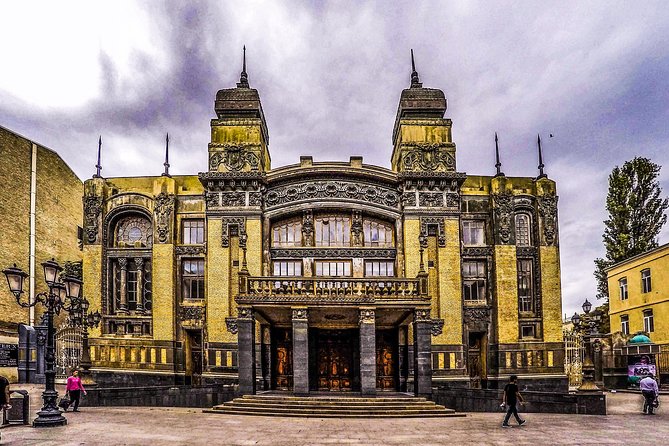
A longer walking section follows along the cultural parts of Nizami Street. The route includes Song Theatre, the National Library, and the Azerbaijan State Academic Opera and Ballet Theater.
This stretch helps explain why central Baku feels more than commercial. The theaters and library form a cultural corridor, and the guide uses them to discuss the city’s artistic life and its links to national identity.
The Opera and Ballet Theater is an important visual stop. It gives you a chance to consider how European-style cultural institutions became part of Baku’s public life. The route also mentions Lev Landau, the Nobel Prize-winning physicist, adding science to the discussion of the city’s intellectual traditions.
I appreciate the range here. You are not only hearing about oil and Soviet politics. You are also getting music, literature, theater, and science, which produces a more rounded picture of Baku.
The pace matters. The published schedule assigns about 15 minutes to each listed stop, but the route includes walking between them. Do not expect a long interior visit at every cultural building. This is an outdoor city walk with commentary, not a collection of museum tours.
A few more Baku trips worth lining up next to this one
- Baku: Gobustan, Mud Volcano, Fire Mount, Temple Lunch Entry
★ 4.9 · 3,246 reviews - Baku: Guba, Shahdag, Laza & Lunch w/ Free City & Night Tour
★ 4.8 · 1,455 reviews - BEST Gobustan, Volcanoes & Absheron Fire Tour (Group or Private)
★ 5.0 · 1,254 reviews - Gobustan and Absheron tour (All inclusive)
★ 5.0 · 1,014 reviews
Khagani Street and Baku’s Russian Connection
Khagani Street was historically known as Molokanskaya, a name linked to Molokans, spiritual Christians exiled from Russia to Azerbaijan. The area includes Khagani Park, formerly Molokan Park, and the Russian Drama Theatre.
This is a particularly useful stop for understanding Baku’s multicultural past. The conversation turns to Russian residents, the Russian language, and the place of Russian culture in Azerbaijani society.
For you, the value is in the nuance. Baku’s story is not only Azerbaijani, Persian, Soviet, or oil-related. Different communities and languages have shaped the city, and the Russian connection remains part of its urban character.
The park offers a change from the main commercial streets, while the theater reinforces the area’s cultural role. The stop is short, but it gives the guide a chance to explain social history that would be easy to miss if you explored only the headline sights.
This is also a good moment to ask questions about language and daily life. Several participants praised Gani for answering questions in a patient, good-natured way. That personal exchange is one of the tour’s stronger features.
Taghiyev’s Mansion and the Story Behind the History Museum
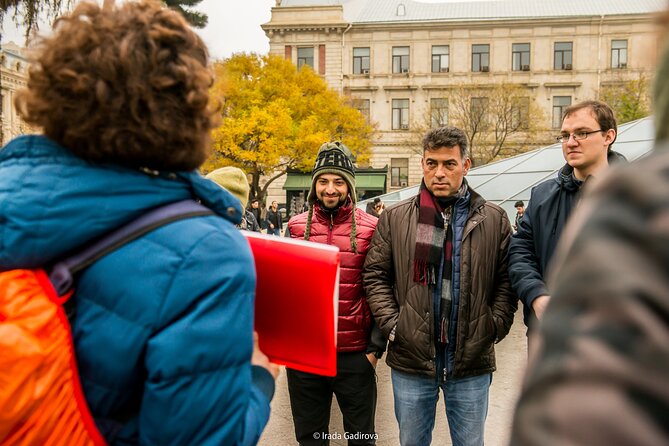
The National Museum of History of Azerbaijan occupies the former private residence of Haji Zeynalabdin Taghiyev, often called the father of the nation. The building’s ornate interior and spatial design reflect the wealth accumulated during Baku’s oil boom.
The stop is built around Taghiyev’s rise from poverty to immense wealth. That story gives the oil era a human face. Instead of hearing only about production and industrial growth, you hear about the person whose fortune helped shape an important Baku residence and wider public life.
The museum is also linked with major events in the country’s modern story. Even if the walk does not include a full museum visit, seeing the former residence helps explain the scale of Baku’s transformation.
I would not treat this stop as a substitute for visiting the museum itself. The tour provides context from outside and tells the story of the house, while an independent museum visit would be needed for a fuller look at the collections and interiors. Since no admission is included, plan that separately if it interests you.
Government House: A Monumental Soviet Statement
The Government House is described as a gigantic and iconic Soviet landmark. It is one of the clearest places on the walk to confront the scale of Soviet public architecture in Baku.
The building is not subtle. Its size and formal design communicate authority, administration, and the central role of the state. After the more intimate cultural stops, it provides a powerful change of scale.
This is likely one of the tour’s best photo stops, but the guide’s interpretation is what makes it worthwhile. You can ask how Soviet planning affected the city, how the building fits into Baku’s later development, and how the city now presents its Soviet past alongside newer national imagery.
The drawback is simple: the tour does not include an interior visit. You are seeing the building as part of the urban setting, so the experience suits visitors who enjoy city form and historical explanation more than those seeking access inside every landmark.
Baku Boulevard and the Caspian Waterfront
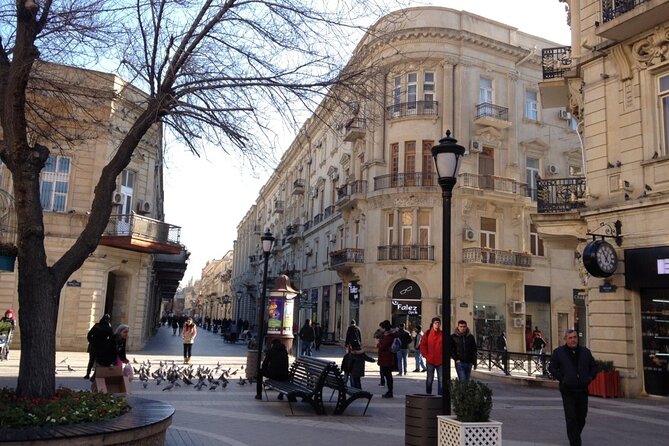
The final major stop is Baku Boulevard, also called the National Park. The promenade runs along the Caspian shore and dates back to 1909.
Its history reaches into the period when Baku’s oil barons built mansions along the coast and the waterfront was gradually constructed and improved. The shoreline you see today is therefore not just natural scenery. It is also the result of long-term urban engineering and investment.
This closing section changes the mood. After central streets, monuments, theaters, and Soviet buildings, you reach open waterfront space. The walk finishes with about 20 minutes here, enough to take in the setting and connect Baku’s oil wealth with its coastal identity.
You will probably appreciate the timing. A 1 p.m. start means the walk reaches the boulevard later in the afternoon, though the exact comfort depends on the weather. Baku can be sunny and exposed, so bring water, wear sun protection, and consider the season before booking.
The tour returns to the original meeting point. It ends with a cup of local tea at a coffee shop, which adds a relaxed, social finish rather than ending abruptly beside a monument.
The Guide, Group Size, and Overall Atmosphere
The strongest praise is directed toward Gani. His English, humor, patience, and ability to explain Baku’s past century of development receive repeated approval. The comments also describe him as kind and approachable, with the manner of a friendly local rather than a distant lecturer.
That matters on a route covering politics, culture, language, religion, architecture, and nightlife. These subjects can become dry if presented as dates alone. Gani’s approach appears to rely on stories about residents, legends, myths, and modern life, which gives the walk a more personal tone.
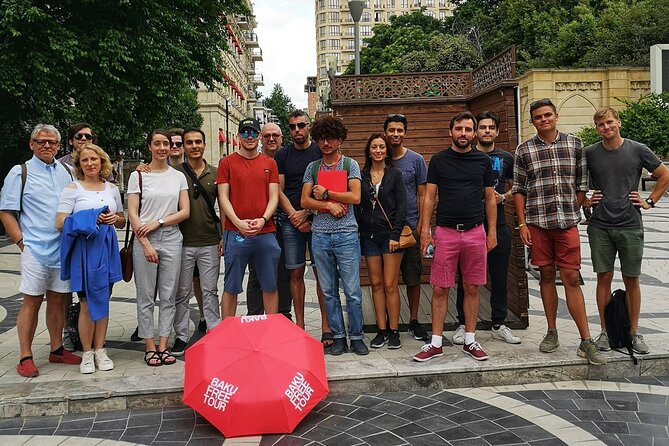
The group limit is 15 people. That is small enough to make questions realistic, though it is not a private tour. If the group reaches its maximum, you may still need to stay close to the guide at busy intersections.
The tour is designed for most people who can manage a city walk. Service animals are allowed, and the meeting point is near public transportation. Private transportation is not included, so you will need to reach the starting point on your own.
Is $60 a Fair Price for Two and a Half Hours?
At $60 per person, this is not the cheapest way to see central Baku. The main sights are viewed without admission fees, and you pay for the guide’s time, local interpretation, small-group setting, route planning, and final tea stop.
I think the price can make sense if you have limited time or want cultural context rather than a simple orientation walk. The tour covers many themes in a compact period, and the ability to ask questions adds value that a self-guided route cannot easily match.
Still, you should be clear about what you are buying. Lunch, private transportation, and attraction tickets are not included. You are paying for a guided walk, not a package of entries and transfers.
For a first afternoon in Baku, the cost may be worthwhile, especially if Gani is leading your group and you use the opportunity to ask about local restaurants, nightlife, language, and neighborhoods. If your budget is tight, you may prefer to walk these central streets independently and spend the money on museum admission or another paid attraction.
Practical Advice Before You Book
The tour begins at 1 p.m. and lasts about two and a half hours, so keep the morning free for another activity. Since the walk includes several streets and waterfront sections, comfortable shoes are more important than dressy clothes.
Bring water and prepare for sun, particularly in warm weather. The experience requires good weather, and a cancellation caused by poor conditions comes with the choice of another date or a full refund.
The tour is generally suitable for most people, but the description does not promise a completely step-free or specially adapted route. If you have mobility concerns, ask the provider before booking.
Free cancellation is available up to 24 hours before the start time. A cancellation inside that window is not refundable, and changes are not accepted within 24 hours.
Who Will Get the Most From This Walking Tour?
I would recommend it to first-time visitors who want a clear introduction to Baku’s central streets. It is also a good fit if you enjoy architecture but want more than building dates and construction labels.
You will get the most from it if you like asking questions. The route touches on Russian influence, Azerbaijani identity, arts, Soviet life, local myths, and modern nightlife, so a curious attitude improves the experience.
It may be less suitable if you want extensive indoor sightseeing, a private guide, or transportation between every stop. It also may not suit you if a long afternoon walk in potentially warm weather sounds unpleasant.
Should You Book the Baku Soviet Architecture Walking Tour?
Book it if you want Baku explained through its streets, public buildings, artists, languages, and people. The route is well chosen, the group remains fairly small, and Gani’s praised style appears to add humor and warmth to a subject that could otherwise feel formal.
I would book this near the start of your stay, then return independently to the History Museum, Boulevard, or any cultural building that catches your interest. Skip it if $60 feels too high for an outdoor walk with no included admissions, or if you prefer exploring without a guide.
For many first visits, the tour offers a useful answer to a basic question: how did Baku become the city you see today? That is a worthwhile question to have answered while you are actually walking through it.
FAQ
Where does the Baku Soviet Architecture Guided Walking Tour begin?
The tour begins at Karnaval, 353 Istiglaliyyat, Baku 1005, Azerbaijan.
What time does the tour start?
The scheduled start time is 1 p.m.
How long does the walking tour last?
The tour lasts approximately two hours and 30 minutes.
Where does the tour finish?
The activity ends back at the original meeting point.
How many people can join the group?
The tour has a maximum group size of 15 people.
Is food or drink included?
A cup of local tea at a local coffee shop is included. Lunch is not included.
What happens if the weather is bad?
The experience requires good weather. If it is canceled because of poor weather, you can choose another date or receive a full refund.
Newest Baku write-ups
- Wine Tour Baku★ 5.0 · 4 reviews
- Wine Crawl Baku★ 5.0 · 2 reviews
- Traditional Azerbaijani Cuisine Workshop★ 5.0 · 5 reviews
- The Magnificent Baku Night Tour★ 5.0 · 3 reviews
- Small-Group Day Trip to Gobustan, Mud Volcanoes, Ateshgah & Yanar Dagh★ 4.5 · 3 reviews
- 2 days tour to Sheki★ 5.0 · 2 reviews
- Sheki tour with overnight★ 5.0 · 5 reviews
- Azerbaijan tour in 2 days/Sheki+Lahij+Gabala up to Georgia Border★ 4.5 · 6 reviews
Walking Tours, compared.
Stunning Walking Tour of Historical and Modern City
Read our review →
Baku Old City Wonders: A Walking Tour Through Time
Read our review →
Browse the lists this tour appears in