
Reviewed · OLD CITY TOURS
Baku Old City Wonders: A Walking Tour Through Time
Baku’s oldest streets tell the best stories. This two-hour walk through the UNESCO-listed Old City brings together the Maiden Tower, Shirvanshah’s Palace, miniature books, stone alleys, and wide views of modern Baku. I like the clear route and the small-group format, which leaves room for questions and personal attention. I also like that the guide adds local customs, present-day life, and practical advice instead of reciting dates like a museum audio track.
The main consideration is time. Two hours is enough for a strong introduction, but not enough for a slow visit to every major monument. Some stops are short, and the narrow lanes can tempt you to pause for photographs when the group needs to keep moving. If you want a careful palace visit or a long look inside every site, you may need to return on your own.
In This Review
- Key points to know before you book
- Starting at Baku’s Double Gates
- Wandering through the old lanes
- Shirvanshah’s Palace and royal Baku
- The Miniature Book Museum’s tiny surprise
- Aliaga Vahid, poetry, and a quieter corner
- The Maiden Tower and Baku’s oldest mystery
- Caravansarai, the Silk Road, and trade
- Juma Mosque and the spiritual side of Icherisheher
- City walls and the modern skyline
- What makes the guide important
- Is $30 good value for two hours?
- Practical details before you go
- Who should book Baku Old City Wonders?
- FAQ
- How long does Baku Old City Wonders last?
- How much does the tour cost?
- Where does the tour meet?
- Where does the tour finish?
- Which landmarks are included?
- What languages are available?
- Is this a private tour?
- Is the tour wheelchair accessible?
- Can I cancel for a refund?
- Do I have to pay when I book?
Key points to know before you book
- Start at the Double Gates: The tour meets at Gosha Gala Gapysy, the main entrance to Baku’s Old City.
- See the essential landmarks: The route includes Shirvanshah’s Palace, the Maiden Tower, the Miniature Book Museum, and the Aliaga Vahid monument.
- Expect a lively guide: Magsud receives especially strong praise for his stories, humor, local insight, singing, and ability to answer questions.
- Allow for more than architecture: The walk covers Persian, Ottoman, and Russian influences, Silk Road trade, religion, customs, and Baku’s modern growth.
- Bring water and comfortable shoes: One guest specifically appreciated receiving a bottle of water, but you should still arrive prepared for a walking tour.
- Good value at $30: For a small-group, two-hour introduction with a local guide and skyline views, the price is reasonable, especially at the start of a Baku stay.
Starting at Baku’s Double Gates
You begin at Gosha Gala Gapysy, known as the Double Gates, at the main entrance to the Old City. This is a practical meeting point because it is easy to identify and puts you right beside the walls that once protected Baku.
I like starting here rather than meeting beside a hotel or a modern shopping street. The gates immediately set the tone. You are not simply walking into an old quarter. You are entering the walled core of Icherisheher, where the street plan, stone buildings, and defensive remains help explain how Baku developed.
Your guide introduces Baku and the Old City before leading you into the lanes. The first part lasts about 15 minutes, so expect orientation rather than a long formal lecture. This is useful if you have just arrived and want to understand how the historic center fits into the wider city.
The small-group format matters here. The Old City has narrow passages, corners, courtyards, and side streets that are easy to miss when you walk alone. A guide can point out details that would otherwise blend into the pale stone walls.
Other walks inside the walled old city:
- Baku Oil Heritage & Old Town Walking Tour
★ 5.0 · 232 reviews - Guba Khinalug & Candy Cane Mountains tour (by Old City Tours)
★ 4.5 · 208 reviews - Gabala + Shamakhi tour (by Old City Tours)
★ 4.5 · 198 reviews
Wandering through the old lanes
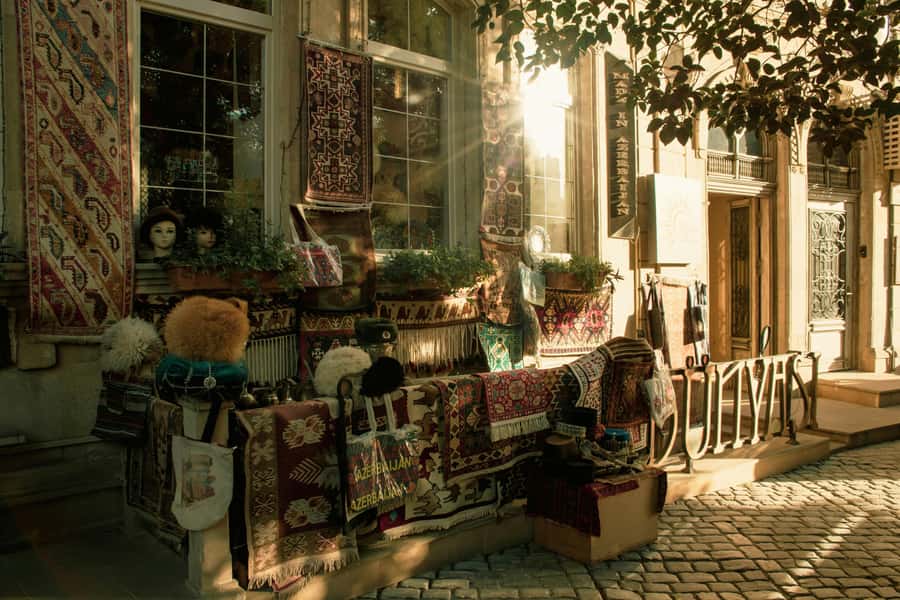
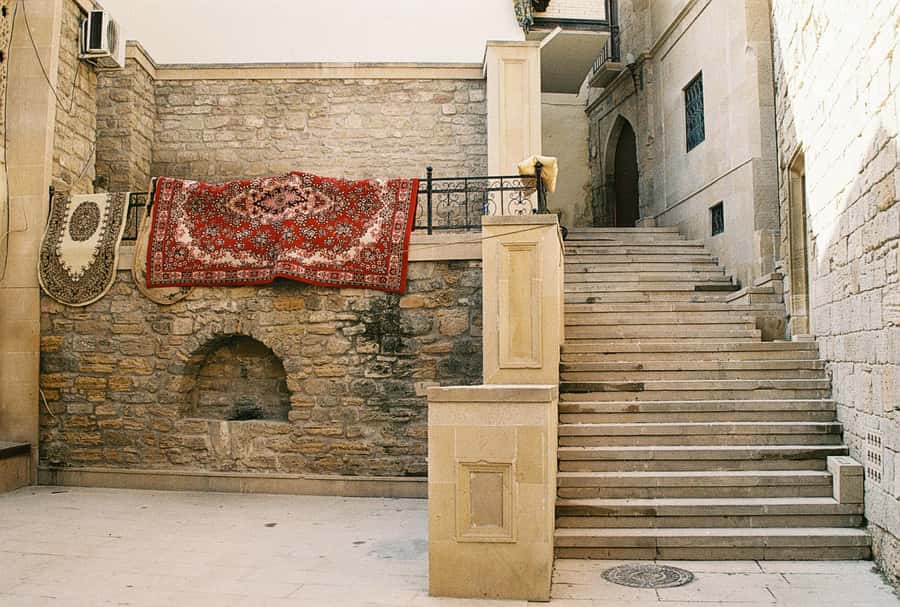
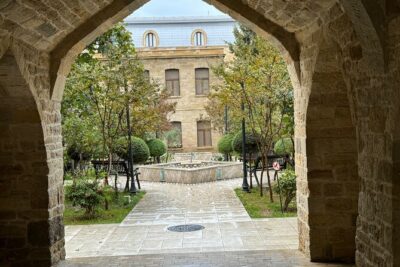
The walk between the major monuments is part of the experience, not just a way to get from one ticketed sight to the next. You pass ancient stone buildings, tucked-away courtyards, local craft shops, and alleys that show the Old City as a lived-in district rather than a collection of monuments.
I appreciate this slower, street-level view of Baku. Grand palaces explain power, but ordinary doorways and working lanes explain daily life. Your guide also talks about local customs and the people of Azerbaijan, giving the tour a present-day side.
The route includes stories about Persian, Ottoman, and Russian influence. That mix helps you place Baku within the wider Caspian region. The city was shaped by different rulers, faiths, and trading connections, and the guide uses the buildings around you to make those changes easier to follow.
The walking pace appears to be one of the tour’s strong points. It is designed to cover the main sights without racing from one photo stop to another. Several people praised the balance, describing the pace as neither too fast nor too slow. You should still wear comfortable shoes, since the experience is entirely on foot and the old streets can be uneven.
Shirvanshah’s Palace and royal Baku
Shirvanshah’s Palace is the most substantial historical stop on the route. You spend about 30 minutes here, making it the longest scheduled visit.
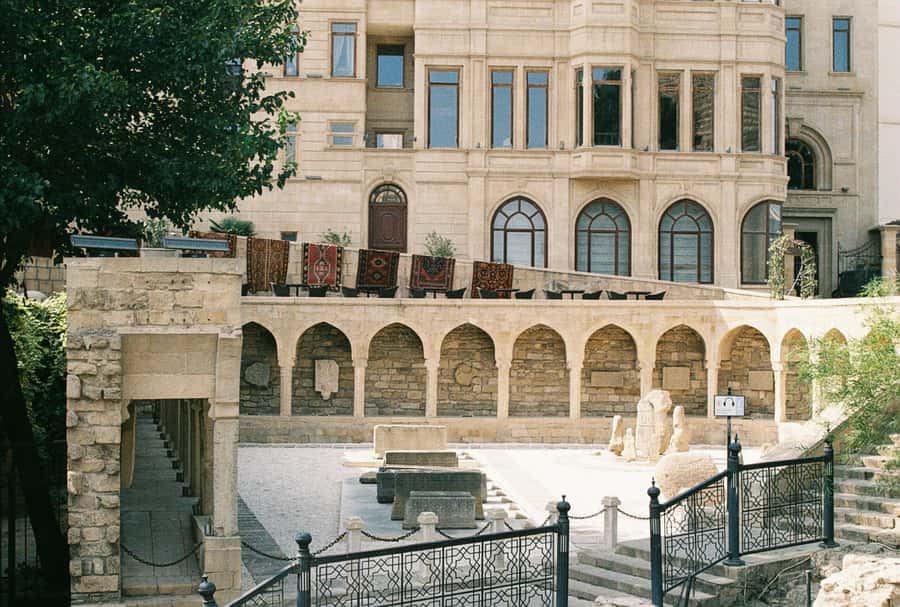
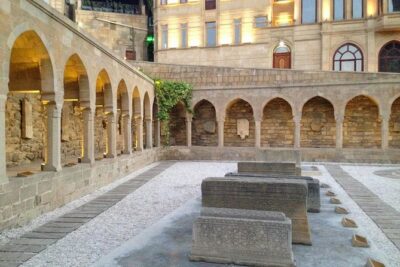
The palace complex gives you a chance to move beyond general street impressions and see the center of Shirvan royal power. The visit includes royal chambers, gardens, and the mausoleum of the Shirvanshahs. The setting helps you understand how rulers, religion, ceremony, and burial traditions were tied together in the medieval city.
I like that the palace receives more time than the shorter stops. It is the place where the tour’s history becomes easiest to picture. Stone walls and courtyards can seem abstract until a guide explains who used them and why the complex mattered.
Your guide also points out views along the way, so the approach is part of the visit. You may want to ask questions here, especially if you are interested in architecture or the political story of Azerbaijan.
The time is still limited. Thirty minutes gives you a useful overview, but it is not a full museum-style examination of every room and decorative detail. If the palace becomes your main interest, note what you see and plan a separate return visit if admission and opening arrangements allow.
The Miniature Book Museum’s tiny surprise
The Miniature Book Museum is a charming change of pace after the palace. The stop lasts about 15 minutes and includes time for photographs, a guided visit, and sightseeing.
The collection contains tiny, carefully made books from around the world. This is not the grandest building on the route, but it adds variety and a little humor to the morning. You move from royal architecture and dynastic history to an unusual collection that rewards close attention.
I like this stop because it prevents the walk from becoming a string of fortifications and religious buildings. It also gives you something specific to remember beyond the usual Baku landmarks.
Do not expect a long museum visit. Fifteen minutes is enough to see the collection and hear its basic story, but you will need to keep moving with the group. This is best treated as a delightful short stop rather than a major cultural institution requiring an hour.
Other Baku walks with a guide:
- Baku: Stunning Walking Tour of Historical and Modern City
★ 4.9 · 270 reviews - Baku Walking Tour (Old City)
★ 5.0 · 127 reviews - Baku Old Town Walking Tour with a Local
★ 5.0 · 64 reviews - Baku Downtown Original Walking Tour
★ 5.0 · 36 reviews
Aliaga Vahid, poetry, and a quieter corner
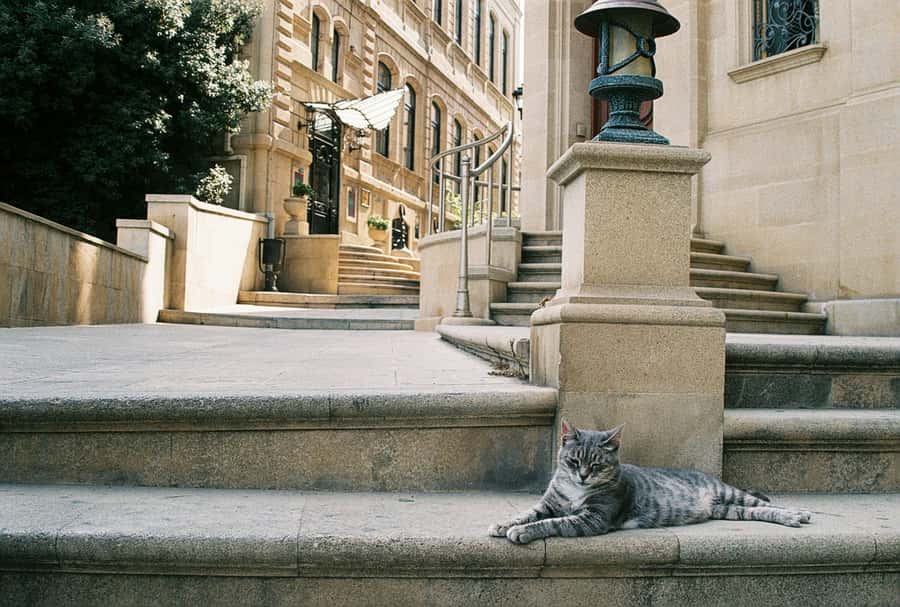
The tour also stops at the park and monument dedicated to poet Aliaga Vahid, created by Ragib Hasanov. This is another 15-minute photo and sightseeing stop.
The monument gives the walk a literary angle. It reminds you that Baku’s cultural identity is not only found in old walls and royal buildings. Poetry, public art, and local memory also shape how the city presents itself.
A short stop here works well because it breaks up the architecture-heavy route. You can listen, take photographs, and look at how a public monument fits into the older quarter.
The supplied details do not promise a full literary lecture, so I would treat this as a brief introduction. If Aliaga Vahid’s work interests you, ask the guide for more context and note the name for further reading.
The Maiden Tower and Baku’s oldest mystery
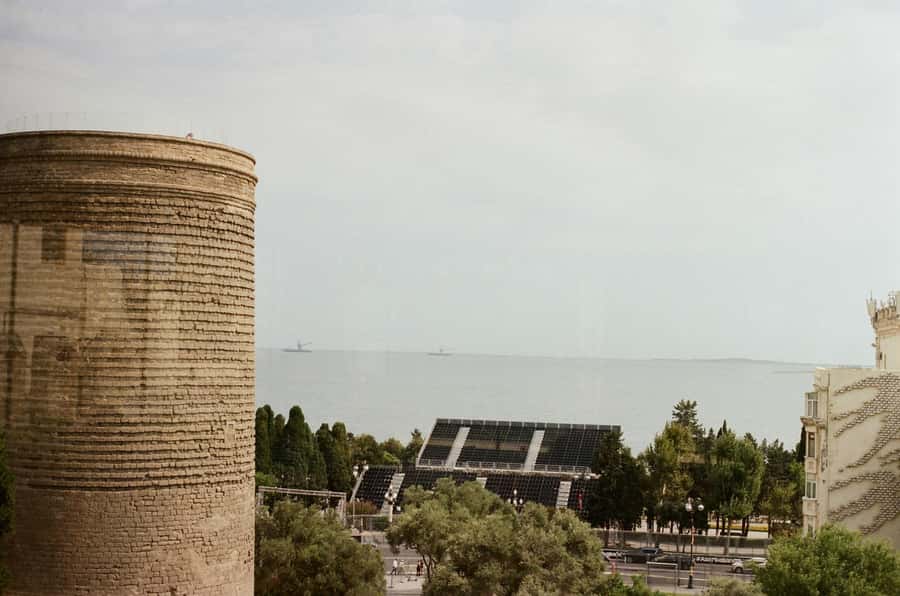
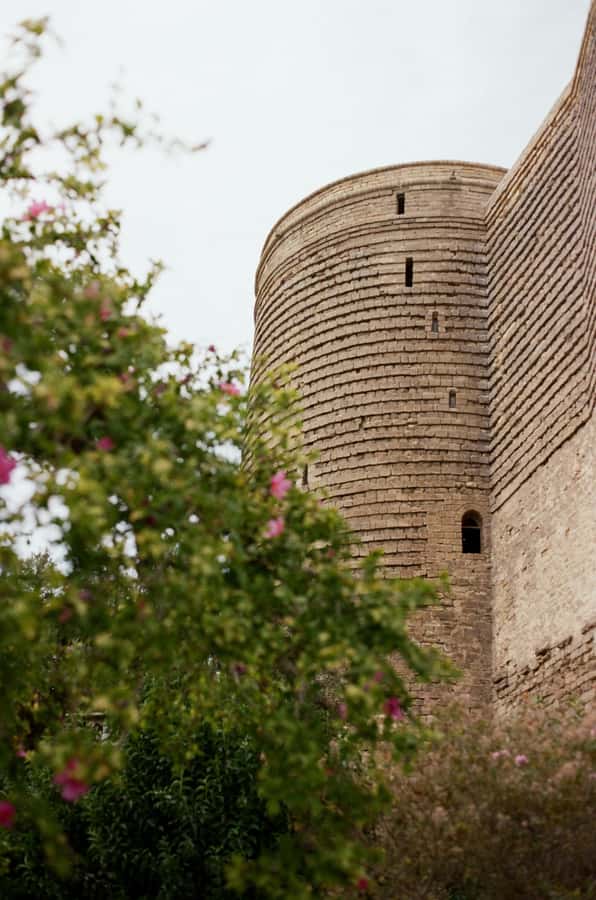
The Maiden Tower is one of Baku’s defining sights and the tour’s most famous landmark. Its origins are said to reach back more than 2,000 years, though its purpose and early history remain subjects of debate.
That uncertainty is part of the appeal. The tower has inspired many explanations and stories, and your guide uses it to discuss Baku’s distant past. Rather than presenting it as a simple monument with one neat answer, the stop gives you a sense of how layers of history can survive without a complete record.
The scheduled stop is about 15 minutes and includes guided sightseeing and photographs. You should expect a concise explanation and time to appreciate the tower from outside. The details provided for this experience do not confirm a climb or a full interior visit, so do not book it assuming you will spend a long time inside.
I find the Maiden Tower most useful when paired with the surrounding streets. On its own, it is a striking stone structure. In context, it helps explain the Old City’s defensive position, its age, and the way legend and archaeology overlap in Baku.
Caravansarai, the Silk Road, and trade
The route also takes in a centuries-old caravansarai, an inn where Silk Road traders once rested. This stop gives the city a commercial story.
Baku was not only a royal center or a fortified settlement. It also sat at a crossroads where merchants and goods moved between wider regions. A caravansarai makes that role tangible. You can imagine travelers arriving with merchandise, finding shelter, and exchanging news before continuing their journeys.
This is one of the most useful pieces of context on the walk because it links Baku to a wider network. You begin to see the Old City as a place where trade, faith, politics, and travel met.
The exact timing for this stop is not listed separately, so the guide may fold it into the walk between other landmarks. That is worth keeping in mind if you have a particular interest in Silk Road architecture. The tour introduces the subject, but it is not a dedicated trade-history excursion.
Juma Mosque and the spiritual side of Icherisheher
Juma Mosque is another important part of the Old City story. It is described as one of the oldest and most significant mosques in the region, with a long spiritual and cultural role in Baku.
The mosque helps balance the palace and tower visits. You see how religion shaped the city’s buildings, routines, and community life. The guide can also explain how the mosque fits into the shifting history of Baku.
As with any active religious site, you should follow the guide’s instructions and show respect for the space. The tour information does not specify a dress code or interior access conditions, so avoid assuming that every part of the mosque will be open during every visit.
This is a good place to ask about the different influences that shaped Baku. The Old City’s identity is not tied to one period alone, and the mosque adds an important spiritual layer.
City walls and the modern skyline
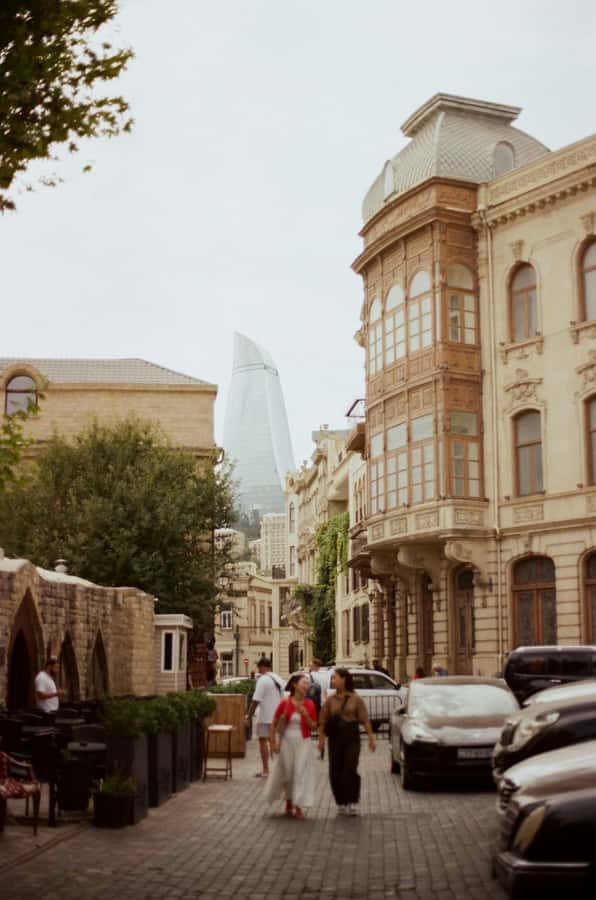
The ancient walls bring the defensive story into view. Your guide explains Baku’s strategic past and how the city changed under Persian, Ottoman, and Russian influence.
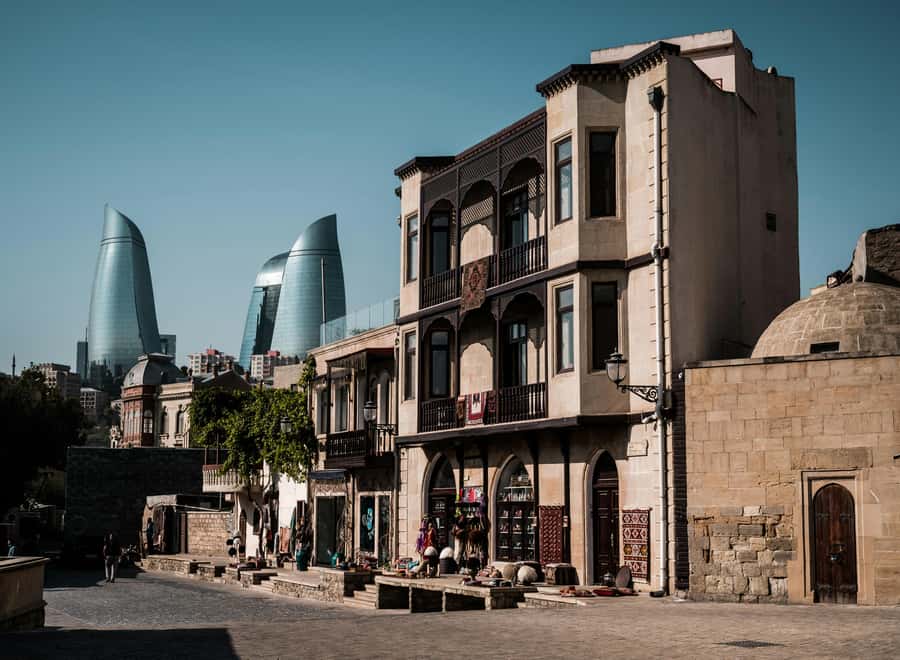
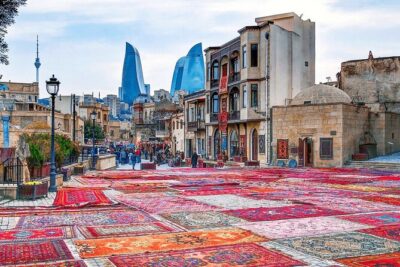
I like ending with a broad view rather than finishing in another narrow lane. From the walls and other viewing points, you can see the contrast between the historic Old City and Baku’s modern skyline. That visual contrast is the clearest reminder that this is not a preserved stage set. It is an old center inside a rapidly changing capital.
The panoramic views are included in the experience, and they add real value to the $30 price. You get more than a sequence of monuments. You get a way to read the city from above and understand how the old quarter relates to the newer streets beyond it.
Some guides may extend the conversation beyond the walled quarter. Magsud, who receives repeated praise, has taken people toward places such as Nizami Street and Baku Boulevard, and has offered practical suggestions for the rest of a stay. Do not assume every tour will follow the same extended route, but it is worth asking if time and group plans permit.
What makes the guide important
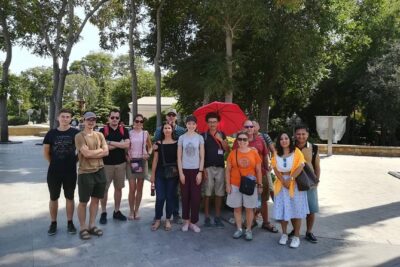
The guide is the heart of this experience. Magsud is praised for his energy, warmth, humor, historical detail, and ability to keep the conversation personal. Several people also mention his singing and music, which can add an unexpected local touch to the walk.
That praise is unusually consistent. You can expect more than names and dates if Magsud leads your tour. He has answered individual questions, explained customs, and helped people feel more at ease in Baku. One person even continued for food and tea after the scheduled tour, but that was an informal personal extension, not something included in the advertised experience.
Because guides can vary, the guaranteed details are the live guide and the available languages: English, Turkish, and Azerbaijani. If you want the most personal experience, choose a small-group departure and come ready to ask questions.
Is $30 good value for two hours?
At $30 per person, this is a fair price for a two-hour small-group walk in central Baku. You receive a local guide, a route through the UNESCO-listed Old City, major landmarks, cultural stops, and panoramic views.
The value is strongest if you are new to Baku. A good guide can help you understand the Old City quickly, show you places you might pass without noticing, and offer useful ideas for the rest of your trip. Several people described the tour as an excellent way to begin a stay.
The price is less compelling if you prefer to explore at your own pace or spend a long time inside one monument. The route covers many stops, so some visits are brief. You are paying for interpretation and orientation as much as for sightseeing.
Flexible booking improves the deal. You can reserve now and pay later, and you can cancel up to 24 hours ahead for a full refund. Check the available starting times before booking, since the tour lasts two hours and departure times can vary.
Practical details before you go
The tour is listed as wheelchair accessible, though you should still contact the provider if you need precise information about individual streets, courtyards, or monument entrances. The route is a walking tour, so comfortable footwear is sensible.
Bring water. One guest specifically appreciated being offered a bottle, but I would not rely on that detail for every departure. Sun protection may also be useful, depending on the season and starting time.
Alcohol and drugs are not allowed. The experience is not suitable for people over 95, according to the stated conditions.
The tour finishes back at Gosha Gala Gapysy. That makes it easy to continue exploring the Old City, return to a hotel, or head toward other central Baku sights after the guide says goodbye.
Who should book Baku Old City Wonders?
I would choose this tour if you want a friendly, story-led introduction to Baku rather than a formal lecture. It suits first-time visitors, couples, solo visitors, and anyone who wants local context before exploring independently.
It is especially useful at the beginning of a trip. You can learn the layout, identify places worth revisiting, and ask about customs, food, streets, and other parts of the city.
I would think twice if you have limited mobility and need a guarantee about every surface, or if your main goal is an in-depth visit to Shirvanshah’s Palace or the Maiden Tower. The pace is praised, but two hours still requires a compact route.
For most visitors, I would book it. The combination of major sights, less obvious corners, a personal guide, and skyline views gives you a sensible first look at Baku for $30. If Magsud leads your walk, expect an especially warm and entertaining introduction, but the route itself remains worthwhile even if another guide handles the language and stories.
FAQ
How long does Baku Old City Wonders last?
The walking tour lasts two hours.
How much does the tour cost?
The price is $30 per person.
Where does the tour meet?
The meeting point is in front of Gosha Gala Gapysy, also called the Double Gates, at the main entrance to Baku’s Old City.
Where does the tour finish?
The tour returns to Gosha Gala Gapysy, the Double Gates.
Which landmarks are included?
The route includes the Old City, Shirvanshah’s Palace, the Miniature Book Museum, the Aliaga Vahid park and monument, and the Maiden Tower. It also covers the city walls, Juma Mosque, and a historic caravansarai as part of the Old City experience.
What languages are available?
Live guiding is available in English, Turkish, and Azerbaijani.
Is this a private tour?
No. It is described as a small-group experience, designed to provide a more personal walk than a large group tour.
Is the tour wheelchair accessible?
Yes, the activity is listed as wheelchair accessible.
Can I cancel for a refund?
Yes. You can cancel up to 24 hours in advance for a full refund.
Do I have to pay when I book?
No. The reserve-now, pay-later option lets you book without paying immediately.
Newest Baku write-ups
- Wine Tour Baku★ 5.0 · 4 reviews
- Wine Crawl Baku★ 5.0 · 2 reviews
- Traditional Azerbaijani Cuisine Workshop★ 5.0 · 5 reviews
- The Magnificent Baku Night Tour★ 5.0 · 3 reviews
- Small-Group Day Trip to Gobustan, Mud Volcanoes, Ateshgah & Yanar Dagh★ 4.5 · 3 reviews
- 2 days tour to Sheki★ 5.0 · 2 reviews
- Sheki tour with overnight★ 5.0 · 5 reviews
- Azerbaijan tour in 2 days/Sheki+Lahij+Gabala up to Georgia Border★ 4.5 · 6 reviews
Old City Tours, compared.

Guba Khinalug & Candy Cane Mountains tour (by Old City Tours)
Read our review →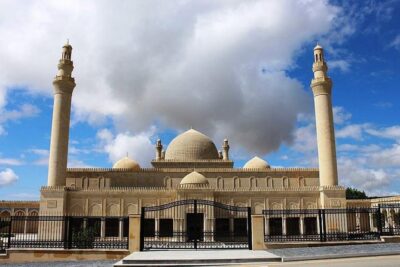
Baku Old City Tour (officially by Old City Tours)
Read our review →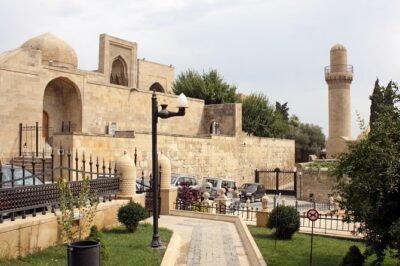
Browse the lists this tour appears in