
Reviewed · GOBUSTAN TOURS
Baku: Gobustan, Mud Volcanoes, Ateshgah, and Yanardag Tour
Fire, ancient art, and bubbling mud await. This nine-hour private tour from Baku brings together four of Azerbaijan’s most unusual sights, from prehistoric carvings at Gobustan to the natural flame of Yanardag. I especially like the mix of archaeology and living geology, and the private vehicle gives you a more flexible day than a large group outing.
I also like the guide-led visits, since the carvings, fire worship, and mud volcanoes make far more sense with context. The main consideration is cost: at $99 per person, you must also pay $24 in entrance fees, lunch is extra, and the day includes a lot of time on foot in open, sunny terrain.
In This Review
- Key points to know before booking
- Why this full-day route works from Baku
- Gobustan Museum makes the ancient carvings easier to read
- Gobustan rock art: six thousand drawings across the hills
- Mud volcanoes bring an earthy change of pace
- Lunch is a useful pause, but not part of the price
- Ateshgah Fire Temple explains Azerbaijan’s fire connection
- Yanardag is a natural flame, not a staged attraction
- The guide can make or break a history-heavy day
- Is $99 per person good value?
- Who should book this tour?
- Final verdict: a strong introduction to Azerbaijan beyond Baku
- FAQ
- How long does the tour last?
- Where does the tour start?
- Where does the tour finish?
- Is the tour private?
- What language does the guide speak?
- Are entrance tickets included?
- Is lunch included?
- What should I bring?
- Is the tour suitable for wheelchair users?
- Can I cancel the tour?
Key points to know before booking
- Gobustan combines an interactive museum with ancient rock art, making the first stop useful for both context and close-up viewing.
- Azerbaijan has about 350 of the world’s 800 mud volcanoes, and this tour takes you close to active craters.
- Ateshgah Fire Temple connects Azerbaijan with Zoroastrian and Hindu worship, with former worshippers’ cells and archaeological displays.
- Yanardag is a natural gas flame on a hillside, not a man-made fire show.
- The private format includes Baku hotel pickup and drop-off, plus an English-speaking guide and private transportation.
- The listed price excludes $24 in entrance fees and lunch, so plan for a higher total.
Why this full-day route works from Baku
Baku is a modern capital with an old center, but some of Azerbaijan’s most distinctive sights sit beyond the city. Gobustan lies southwest of Baku, while Ateshgah and Yanardag are on the Absheron Peninsula. Putting them together makes practical sense if you want to see several major sites in one day.
The route also has a pleasing change of subject. You begin with prehistoric people and their carvings, move to mud and underground gases, then finish with sacred and natural fire. That gives the day more shape than a simple list of monuments.
You will spend about nine hours out, with guided visits at each main stop. Because the group is private, you are not sharing the vehicle with a large crowd. That matters on a long day, especially if you want to ask questions or need a little extra time at one stop.
Pickup and drop-off are available at hotels or other locations in Baku. The tour ends at Fountain Square, which is convenient if you want to continue into central Baku for dinner or an evening walk.
More Gobustan rock-art trips from Baku:
- Baku: Gobustan, Mud Volcano, Fire Mount, Temple Lunch Entry
★ 4.9 · 3,246 reviews - BEST Gobustan, Volcanoes & Absheron Fire Tour (Group or Private)
★ 5.0 · 1,254 reviews - Gobustan and Absheron tour (All inclusive)
★ 5.0 · 1,014 reviews
Gobustan Museum makes the ancient carvings easier to read
The Gobustan visit begins at an interactive museum, and this is a smart first step. Without some background, the rock drawings can look like scattered lines on stone. The museum helps you understand what you are seeing before you reach the outdoor site.
Touch screens and 3D panoramas show how people lived in the region between roughly 5,000 and 20,000 years ago. Displays cover the area’s natural setting, population, cultural development, and archaeological work. You can also see objects dating from about the fourth to second millennium BC.
I like this part because it gives the outdoor visit a clear frame. You are not simply looking at old marks. You are thinking about hunting, daily life, movement, customs, and the way early communities represented the world around them.
The museum visit is guided and lasts within the larger two-hour Gobustan segment. If you prefer a quick photo stop, the museum may feel more detailed than necessary. If you enjoy archaeology, it is one of the day’s most useful sections.
Gobustan rock art: six thousand drawings across the hills
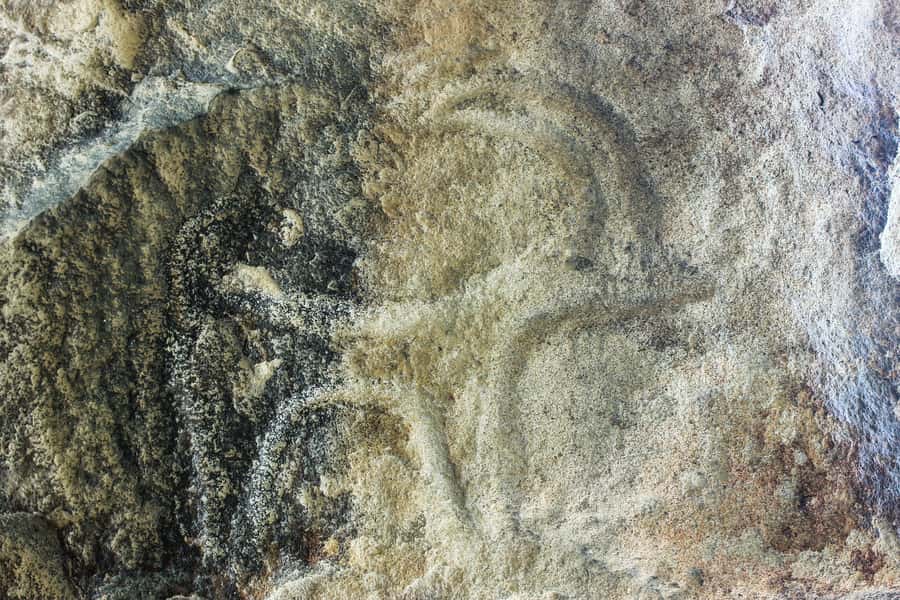
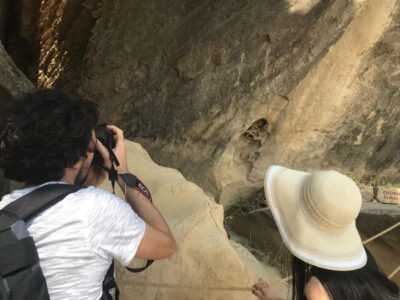
After the museum, you continue to the Gobustan rocks. The site contains more than 6,000 rock drawings and caves, with carvings from different periods. Scientists first identified the petroglyphs in the 1930s, and they have helped explain much about the people who lived here.
Your guide points out the drawings and discusses their possible connection to ancient customs, beliefs, and daily activities. The value of having a guide is clear here. You gain a way to separate important images from ordinary cracks and weathering.
The site is outdoors, so comfortable shoes are important. Bring water, sunscreen, and a camera. The supplied information does not give a detailed account of the walking surface, but the tour does involve visiting caves and rock areas, and the day is not suitable for wheelchair users.
This is one of the stops where you should resist rushing. You are looking at evidence left by people thousands of years ago, not a polished monument built for easy sightseeing. The drawings are the attraction, but the quiet setting and sense of time are part of the experience too.
Mud volcanoes bring an earthy change of pace
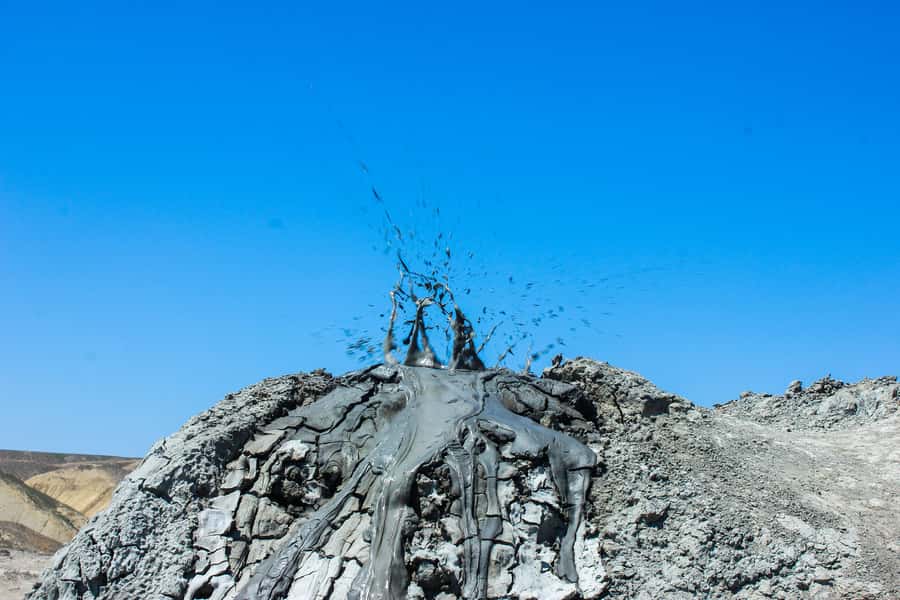
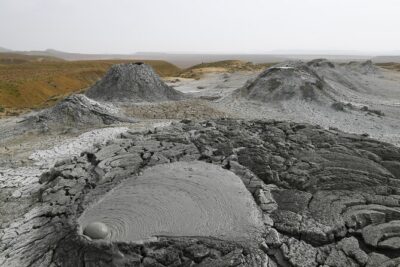
The mud volcano visit lasts about 40 minutes, and it is one of the more unusual stops around Baku. Azerbaijan has about 350 of the world’s 800 mud volcanoes, giving the country an important place in this strange form of geology.
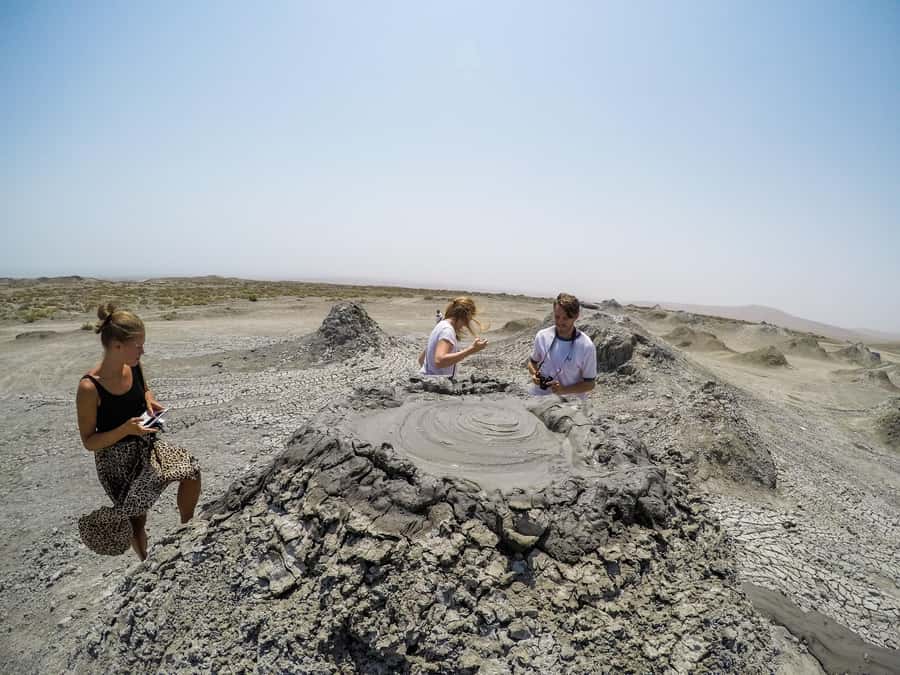
These volcanoes do not produce the kind of fiery lava associated with famous volcanic areas. Instead, mud, clay, and gases rise from below, creating bubbling craters and low cones. The tour lets you climb the active mud volcanoes and see the craters up close.
That closeness is the reason to include the stop. From a distance, a mud volcano can look like a lump of gray earth. Near the crater, the bubbling and movement make the geology easier to understand.
You will also hear about the practical uses of the mud and clay. The material is used in chemical and construction industries and in pharmacology. Volcanic clay and mud are also used in treatments connected with the nervous system, skin conditions, and rheumatism.
Treat the health information as part of the region’s traditional and modern use of local materials, not as a medical recommendation. The tour does not include medical treatment, and you should not assume that handling or applying the mud is part of the visit.
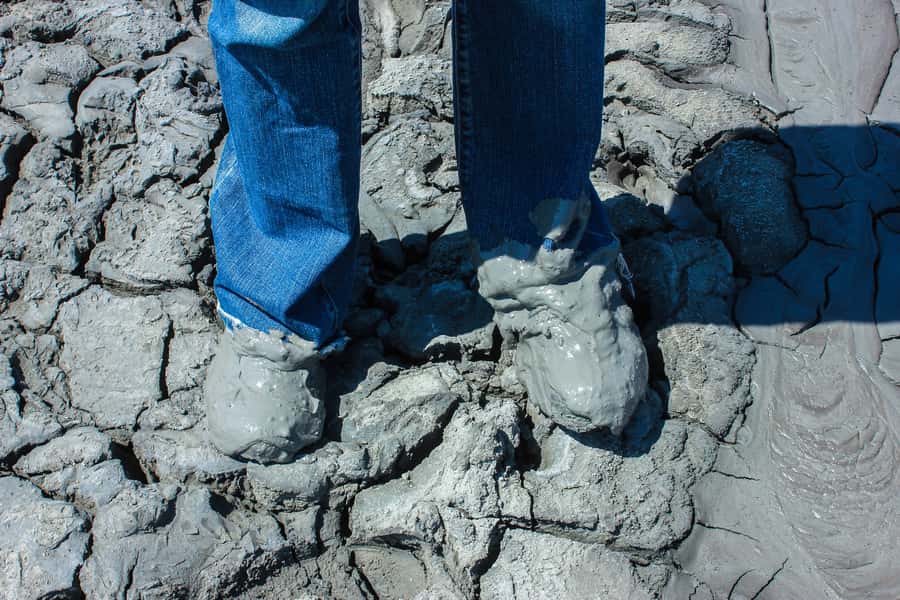
The mud volcanoes can be messy and exposed. Wear shoes you do not mind taking home dusty, and do not skip water or sun protection. The $9 entrance fee is separate from the tour price.
Other mud volcano runs out of Baku:
- Baku:Gobustan Mud Volcanoes Temple & Entry tickets included
★ 4.8 · 178 reviews - Baku: Half-Day Gobustan and Mud Volcanoes Tour with Entry
★ 4.7 · 144 reviews - Mud Volcanoes & Gobustan tour (Group & Private)
★ 4.5 · 59 reviews - Gobustan & Mud Volcanoes Tour (tickets included)
★ 5.0 · 58 reviews
Lunch is a useful pause, but not part of the price
After the first part of the tour, you stop for lunch in Baku city center. Lunch is not included, so you should budget separately. The details do not specify a particular restaurant or menu, which gives the stop less certainty than the scheduled sights.
Still, a meal break is welcome. Gobustan, the mud volcanoes, and the later fire sites make for a full day, and you will appreciate sitting down before continuing. If you have dietary needs, ask the guide or provider in advance, since no special arrangements are stated.
Ateshgah Fire Temple explains Azerbaijan’s fire connection
The next major stop is Ateshgah, often called the Fire Temple of Baku. It was used as a place of Hindu and Zoroastrian worship, and the first mention of the temple dates to the seventh century AD.
The temple complex includes cells where fire worshippers lived or stayed, along with historical exhibits found during archaeological excavations. The layout helps you picture the site as a working place of worship rather than just a stone courtyard for photographs.
This is where the guide’s role becomes especially useful. The temple’s story involves religious traditions, pilgrimage, trade, and the natural gas that once made flames appear in the area. Without explanation, the buildings can seem simple. With context, the site becomes a key part of Azerbaijan’s long connection with sacred fire.
The guided visit lasts about an hour. That is enough time for a proper look without turning the stop into a long academic lecture. If religious history interests you, you will probably want to listen carefully here.
The entrance fee for Ateshgah and Yanardag is listed together at $9. Confirm the exact payment arrangement when booking, since the tour price does not include either admission.
Yanardag is a natural flame, not a staged attraction
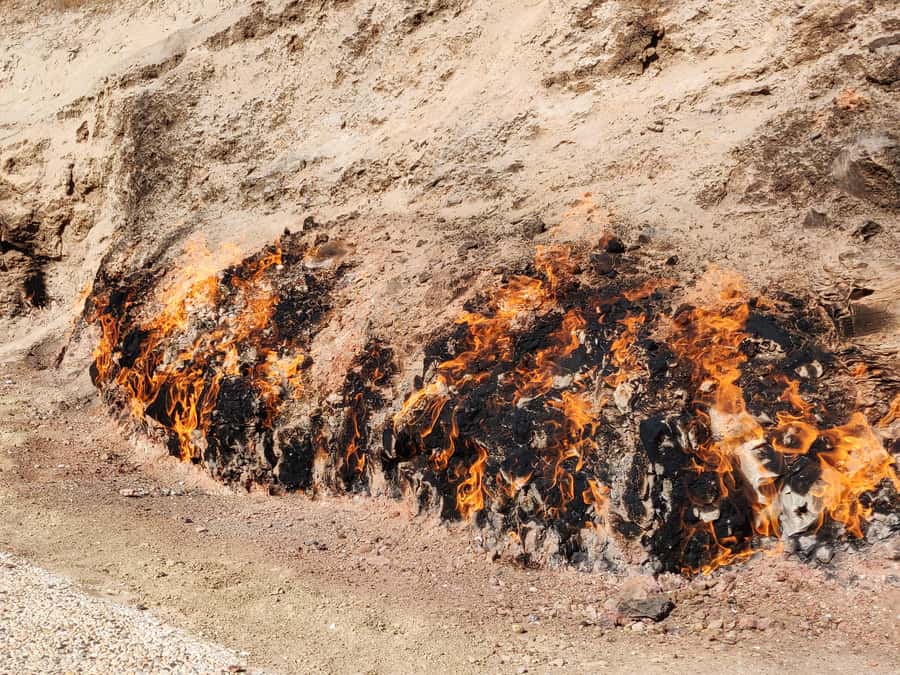
Yanardag means Burning Mountain, and the name describes exactly what you see: a natural gas flame burning on a hillside near Baku. The fire has continued since ancient times, linking this modern viewing site with the same fire traditions explored at Ateshgah.
The visit lasts about 40 minutes. You will see the flame along the hillside and learn why the site has religious importance. Pilgrims from Iran and India still come to visit the sacred burning mountain, so Yanardag is not only a geological curiosity.
I find this stop most rewarding when you connect it with Ateshgah. At the temple, fire was part of organized worship. At Yanardag, the natural flame itself is the focus. Together, the two sites explain why fire became such a powerful symbol in this part of Azerbaijan.
Yanardag is also an easy place to misunderstand. The tour does not present it as an enormous mountain covered in fire. It is a natural gas flame on a hillside, and the attraction is the fact that it burns naturally and has drawn pilgrims for centuries.
The guide can make or break a history-heavy day
The tour is offered with an English-speaking accredited guide. The clearest praise attached to the experience concerns the guiding, especially the historical explanations and communication in English.
Mushfiq received particularly strong praise for his passion and command of Azerbaijan’s past. He also helped extend the day in Baku by escorting one couple toward the Old Town and pointing out good places for dinner. That is a nice example of the personal help a private guide can provide, though you should not assume that every extra stop is guaranteed.
Another strong point is the clear organization. The main visits follow the planned route, and the guide is expected to explain the history rather than simply drive you from one gate to another. Michaela from Austria also specifically praised the guide’s English and the way the day matched expectations.
A private tour does not automatically mean a better guide, but here the guide is central to the experience. Ask questions. Gobustan’s carvings, Ateshgah’s religious background, and the medical claims around mud volcanoes all deserve clarification.
Is $99 per person good value?
The advertised price is $99 per person. That includes pickup and drop-off in Baku, private transportation, an accredited English-speaking guide, and visits to Gobustan, the mud volcanoes, Ateshgah, and Yanardag.
You must add $6 for Gobustan, $9 for the mud volcanoes, and $9 for Ateshgah and Yanardag. That brings the known cost to $123 per person before lunch, drinks, and personal expenses.
That is not the cheapest way to see the area. A lower-cost group excursion may suit you if price matters most. The private format earns its value through convenience, a dedicated guide, and the ability to ask questions throughout a long day.
I would consider the price fair for couples, families, or small groups who want transport handled from Baku and do not want to organize four separate stops. For a solo visitor, the total may feel high. For several people sharing the private format, the day becomes easier to justify.
Who should book this tour?
I would recommend it to anyone with one full day in Baku who wants more than city sights. It is especially good for people interested in archaeology, ancient religion, unusual geology, and the cultural meaning of fire.
You should also be comfortable with outdoor conditions, some walking, and a long schedule. Comfortable shoes, water, sunscreen, and a camera are specifically recommended. The tour is not suitable for wheelchair users.
This is less ideal if you want a slow day with long meals and plenty of unplanned wandering. The route covers a lot of ground, and each stop has a set visit time. It is also not the best choice if you only want a short excursion from the city.
The option to cancel up to 24 hours in advance for a full refund and reserve now while paying later gives you useful flexibility. Still, check the available starting times before you commit, since the experience lasts nine hours.
Final verdict: a strong introduction to Azerbaijan beyond Baku
I like this tour because its stops are genuinely different. Gobustan gives you ancient human art, the mud volcanoes show Azerbaijan’s unusual geology, Ateshgah explains fire worship, and Yanardag brings the story into the natural world.
The biggest strength is the guide-led private format. A good guide turns a long list of sights into a connected story, and Mushfiq’s praised help with history and Baku dining suggests the personal service can be a real advantage.
Book it if you want an efficient, information-heavy day and are happy to pay the entrance fees and lunch separately. Skip it if you prefer independent travel, dislike outdoor walking, or need a wheelchair-accessible route.
FAQ
How long does the tour last?
The tour lasts nine hours, including pickup from Baku, the four main visits, lunch time, and return to Baku.
Where does the tour start?
Pickup is available from a hotel or another location in Baku.
Where does the tour finish?
The tour returns to Baku and ends at Fountain Square.
Is the tour private?
Yes. The experience is offered for a private group with private transportation.
What language does the guide speak?
The live tour guide speaks English.
Are entrance tickets included?
No. Gobustan costs $6, the mud volcanoes cost $9, and admission to Ateshgah and Yanardag is listed as $9. These fees are separate from the tour price.
Is lunch included?
No. Lunch in Baku city center is not included in the price.
What should I bring?
Bring comfortable shoes, a camera, sunscreen, and water.
Is the tour suitable for wheelchair users?
No. The tour is not suitable for wheelchair users.
Can I cancel the tour?
You can cancel up to 24 hours in advance for a full refund. The reserve-now, pay-later option also lets you hold your plans without paying immediately.
More Fire Temple & Ateshgah in Baku
- Gobustan-Mud Volcan-Fire Temple and Mountain Tour/Entrance inc
★ 5.0 · 267 reviews - Ateshgah Fire temple and Burning mountain tour
★ 4.5 · 42 reviews - Baku: Gobustan, Mud Volcanoes, Fire Temple, & Yanar Dag Tour
★ 4.8 · 36 reviews - Baku: Atashgah Fire Temple & Burning Mountain Half-Day Tour
★ 4.0 · 35 reviews
More Yanardag Burning Mountain in Baku
- Baku: Gobustan, Volcanoes, Fire Temple and Yanardag Day Trip
★ 4.7 · 433 reviews - Gobustan & Mud, Fire Temple, Burning Mountain (Group & Private)
★ 4.5 · 418 reviews - Gobustan, Mud volcanoes, Fire temple, Fire mountain PRIVATE TOUR
★ 5.0 · 47 reviews - Gobustan & Mud, Fire Temple, Burning Mountain, H.A. Center
★ 4.6 · 46 reviews
Newest Baku write-ups
- Wine Tour Baku★ 5.0 · 4 reviews
- Wine Crawl Baku★ 5.0 · 2 reviews
- Traditional Azerbaijani Cuisine Workshop★ 5.0 · 5 reviews
- The Magnificent Baku Night Tour★ 5.0 · 3 reviews
- Small-Group Day Trip to Gobustan, Mud Volcanoes, Ateshgah & Yanar Dagh★ 4.5 · 3 reviews
- 2 days tour to Sheki★ 5.0 · 2 reviews
- Sheki tour with overnight★ 5.0 · 5 reviews
- Azerbaijan tour in 2 days/Sheki+Lahij+Gabala up to Georgia Border★ 4.5 · 6 reviews
Gobustan Tours, compared.
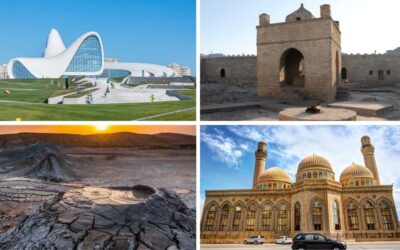
Gobustan, Mud Volcano, Fire Mount, Temple Lunch Entry
Read our review →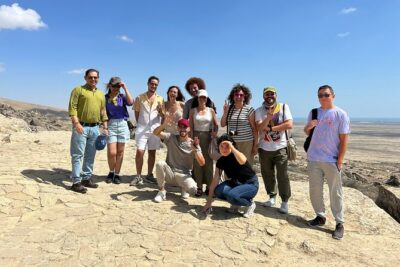
BEST Gobustan, Volcanoes & Absheron Fire Tour (Group or Private)
Read our review →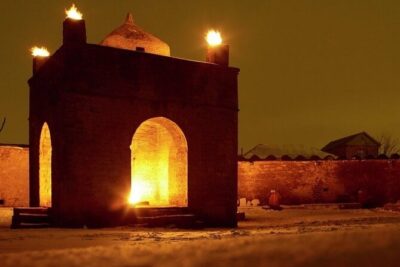
Gobustan, Volcanoes, Fire Temple and Yanardag Day Trip
Read our review →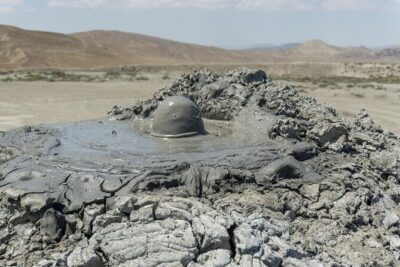
Gobustan & Mud, Fire Temple, Burning Mountain (Group & Private)
Read our review →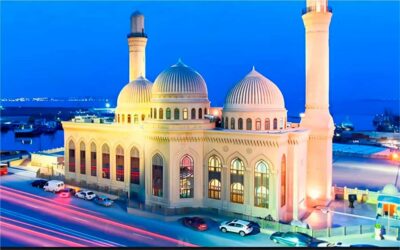
Mud Volcan-Fire Temple and Mountain Tour/Entrance inc
Read our review →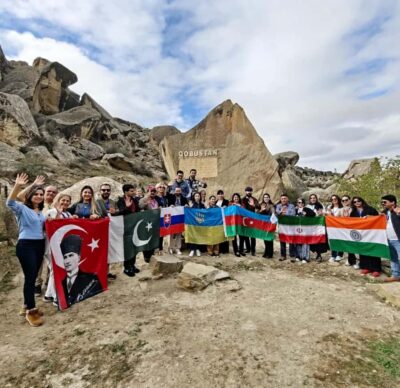
Gobustan Mud Volcanoes Temple & Entry tickets included
Read our review →Browse the lists this tour appears in