
Reviewed · KHINALIQ TOURS
Khinalig tour – the highness mountain village of Azerbaijan
High mountains, old faiths, and a village apart. This private day trip from Baku brings together Guba’s Mountain Jewish community, the Guba Genocide Memorial, Beshbarmaq Mountain, and Khinalig, an ancient settlement set at 2,100 to 2,200 meters. I like the mix of culture and mountain scenery, and I like that a private guide and driver handle the long northern journey. The main drawback is the schedule: seven to eight hours is tight for so many stops, especially when Khinalig is about 65 kilometers from Guba on mountain roads.
I also appreciate the practical setup: pickup from Nizami Street, an air-conditioned vehicle, bottled water, and taxes included. The experience has earned praise for professional service and for delivering what was promised, while Khinalig’s hospitable residents add a human touch that no viewpoint can match. Still, this is not a relaxed village stay. You need moderate fitness, steady walking ability, and tolerance for a full day on the road.
In This Review
- Key points to know before booking
- Leaving Baku for Guba and the northern mountains
- Beshbarmaq Mountain, a sacred place on the route
- Guba’s Juma Mosque and the old bath houses
- Red Settlement and the Mountain Jewish community
- The Guba Genocide Memorial Complex
- The mountain road to Khinalig
- Khinalig’s tightly packed houses and original language
- What the private format adds to the day
- Is $137 a fair price?
- Who should book this Khinalig excursion?
- Practical advice for a smoother day
- Should you book the Khinalig tour?
- FAQ
- Where does the Khinalig tour start?
- Where does the tour end?
- How long does the tour last?
- Is the tour private?
- What is included in the price?
- Are meals included?
- What happens if bad weather cancels the tour?
Key points to know before booking
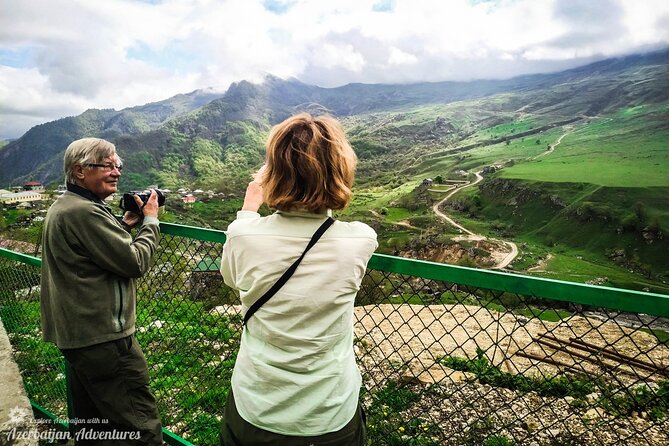
- Khinalig sits at 2,100 to 2,200 meters, giving the day its high mountain character and making weather an important factor.
- Red Settlement is a rare cultural stop, a Mountain Jewish community across the Kudyal River from Guba.
- The private format matters, since only your group participates and the route can feel more personal than a large coach excursion.
- Khinalig’s houses form a remarkable hillside pattern, with one home’s roof serving as the courtyard of the house above.
- Beshbarmaq Mountain adds a sacred local stop, not just another photo break.
- Lunch is not included, so you need to plan around the long drive and active sightseeing.
Leaving Baku for Guba and the northern mountains
The tour begins at 8:30 am on Nizami Street in central Baku and returns there at the end of the day. Pickup is offered, but the listed meeting point is Nizami Street, so confirm the exact arrangement when you book.
The first major destination is Guba, north of Baku. The drive changes the rhythm of the day. You leave the capital behind and head toward a region known for mountain communities, religious sites, and older forms of local life. Since the full experience lasts only about seven to eight hours, the road time is a significant part of the outing, not a minor transfer between attractions.
That can be either a strength or a weakness. I like long regional drives when they lead to a place that feels genuinely different from the capital. If you want a quick collection of Baku highlights, this is the wrong choice. If you want to see how quickly Azerbaijan changes outside its main city, the journey earns its place.
The air-conditioned vehicle is especially useful here. The route reaches high ground, and the weather can shift. Bottled water is included, but lunch and dinner are not, so you should ask how food will be handled before setting out.
Other ways up to Khinaliq:
- Baku: Candy Cane, Guba, Khinaliq village with Homemade Lunch
★ 4.9 · 519 reviews - Baku: Guba Khinalig & Candy Cane Tour with Homemade Lunch
★ 4.9 · 447 reviews - Guba and Khinaliq Village Tour including Homemade Lunch
★ 4.5 · 241 reviews
Beshbarmaq Mountain, a sacred place on the route
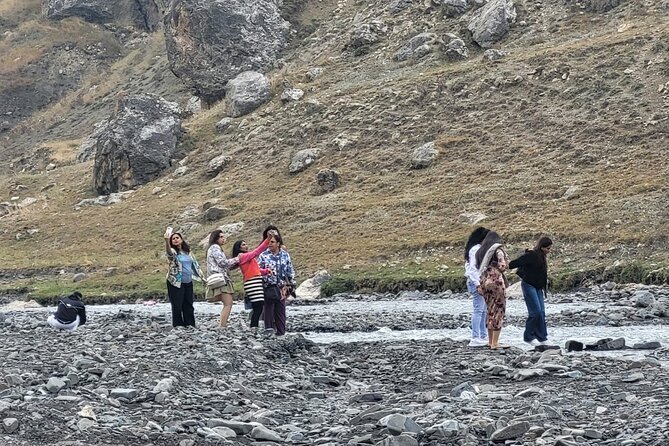
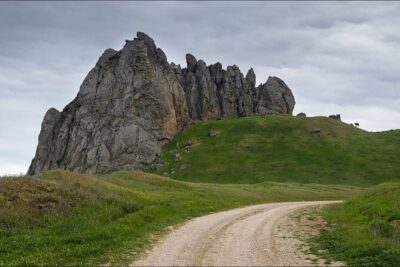
Beshbarmaq Mountain is described as a sacred place and a popular destination for local people. It gives the tour a spiritual stop before the cultural visits in Guba and the remote mountain village farther north.
The name is commonly associated with five fingers, and the mountain’s unusual shape helps explain why it has attracted attention. The important point for your visit is that this is not presented simply as a scenic roadside stop. It has meaning for people in the region, and your guide can help explain that local importance.
The supplied details do not specify how long you stop here or how much walking is involved. That makes the guide’s timing important. You might find it is a short viewing stop, or you may have time to look around more carefully. Either way, wear shoes suitable for uneven ground and bring a layer for changing conditions.
Guba’s Juma Mosque and the old bath houses
In Guba, the route includes the Juma Guba Mosque, associated with the old bath houses. This stop adds an architectural and religious note to a day that could otherwise become all about mountains.
The mosque helps you see Guba as a living regional center rather than merely a gateway to Khinalig. The mention of old bath houses also points to the older urban fabric of the town, where religious buildings and public facilities once formed part of everyday community life.
The available details do not promise an extended interior visit or a formal religious tour. Dress respectfully and listen to the guide’s instructions. The value here is not only the building itself, but the chance to connect Guba’s present-day streets with its earlier civic life.
Red Settlement and the Mountain Jewish community
Across the Kudyal River from Guba lies Red Settlement, also called Krasnaya Sloboda. It is described as the largest Mountain Jewish settlement in the former Soviet Union, and as the only entirely Jewish settlement outside Israel and the United States. It is also known as the last surviving shtetl.
Those claims make this one of the day’s most unusual stops. You are not just visiting another old quarter. You are seeing a community shaped by Mountain Jewish traditions, with roots in the Caucasus stretching back thousands of years.
Mountain Jews follow a form of Judaism that combines the Old Testament with traditional practices and some mysticism. They also speak Judeo-Tat, or Juhuri, their own language. Even if your stop is brief, those details give the place a clear cultural identity.
I find this part of the tour especially valuable because it broadens the usual picture of Azerbaijan. The country is often reduced to oil wealth, grand Baku architecture, and mountain scenery. Red Settlement shows another side, one tied to language, faith, and a distinct local community.
The details say admission is free, which keeps the price focused on transport, guiding, and the broader route rather than entrance tickets. Do not expect a museum-style visit unless your guide confirms one. The appeal is the settlement itself and the chance to understand its place in the region.
A few more Baku trips worth lining up next to this one
- Baku: Gobustan, Mud Volcano, Fire Mount, Temple Lunch Entry
★ 4.9 · 3,246 reviews - Baku: Guba, Shahdag, Laza & Lunch w/ Free City & Night Tour
★ 4.8 · 1,455 reviews - BEST Gobustan, Volcanoes & Absheron Fire Tour (Group or Private)
★ 5.0 · 1,254 reviews - Gobustan and Absheron tour (All inclusive)
★ 5.0 · 1,014 reviews
The Guba Genocide Memorial Complex
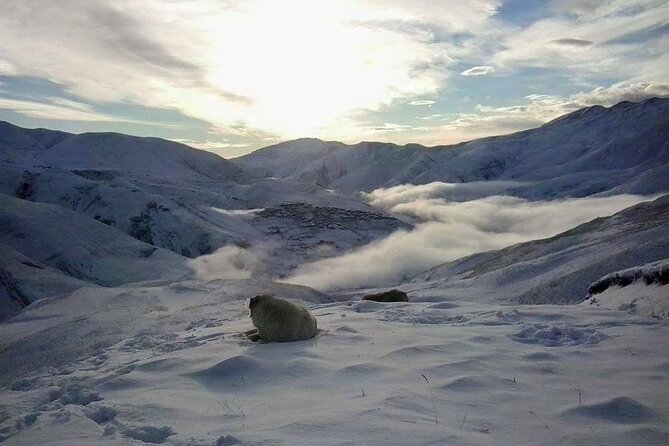
The Guba Genocide Memorial Complex is another stop in the Guba area. It brings a serious historical subject into the day and gives you a chance to reflect on the human cost of conflict.
The supplied tour details do not explain the full scope of the memorial, its exhibits, or the time allotted there. I would treat this as a meaningful stop rather than a quick photograph. Memorial sites deserve attention, and the guide’s explanation will shape how much you take away.
This part may feel emotionally heavier than the mosque, Red Settlement, or mountain viewpoints. That contrast is useful. The tour is not built only around attractive scenery. It also asks you to consider difficult chapters in the region’s past.
The mountain road to Khinalig
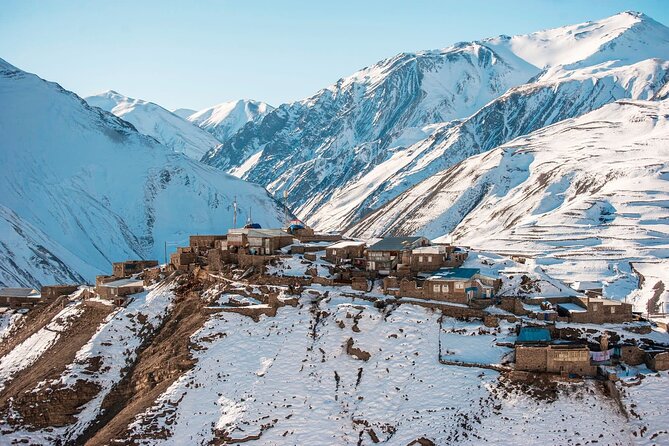
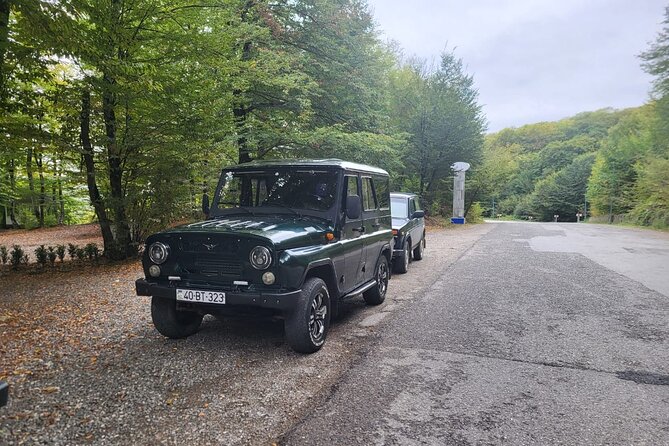
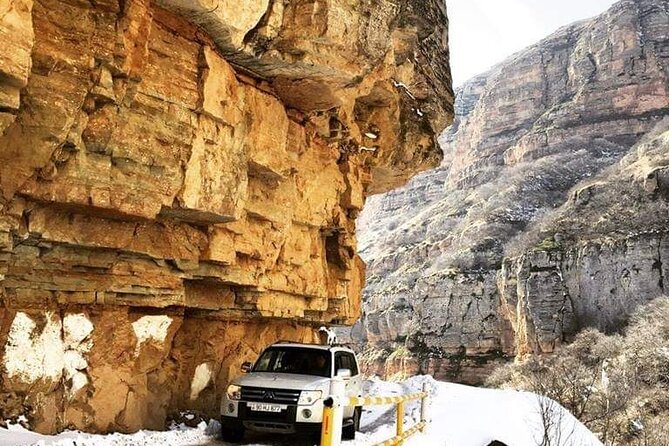
From Guba, you drive about 65 kilometers to Khinalig. On a map, that distance may look modest. In the mountains, it represents a substantial part of the day, and the journey helps explain why Khinalig has preserved such a distinct way of life.
Khinalig is in one of the northern regions of Azerbaijan and is protected as a state historical, architectural, and ethnographic reserve. It is often compared to an open-air museum because traditional architecture and local customs remain visible in the village.
The road itself is part of the experience, but it also creates the day’s biggest practical limitation. With Guba, Red Settlement, the mosque, the memorial, Beshbarmaq, and Khinalig all included, stops may be shorter than you would prefer. You should book this tour for the range of places it connects, not for long, unhurried time at every one.
The altitude also matters. Khinalig sits between 2,100 and 2,200 meters above sea level, much higher than Baku. You may notice cooler air and different weather. The operator states that good weather is required, and poor conditions can lead to a different date or a full refund.
Khinalig’s tightly packed houses and original language
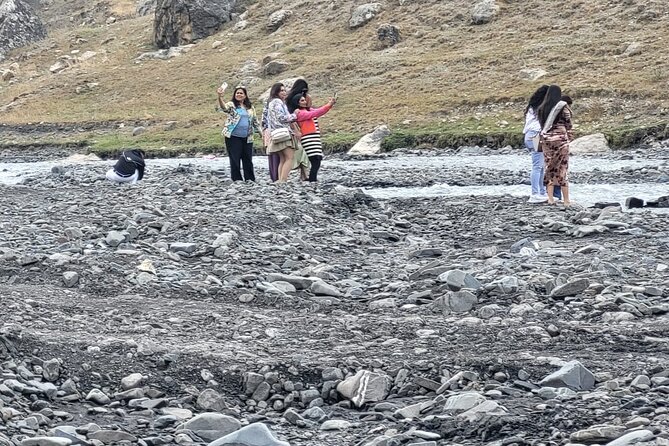
Khinalig is the reason most people choose this tour. About 380 houses, many said to be 200 to 300 years old, are packed onto steep slopes. The arrangement is practical and striking: the roof of one house functions as the courtyard for the home above it.
That design tells you a great deal about village life. The houses are not spread across broad plots. They are pressed together because the terrain is steep, and the settlement has adapted to the mountain rather than trying to flatten it.
Khinalig’s residents are described as descendants of Albanian tribes, and they speak a completely original language. Ethnologists from around the world study the language, which makes the village important well beyond its scenery.
For you, the best part may be the contact with an old community that still has its own speech and traditions. The tour description highlights local hospitality, and the previous feedback specifically praised the people as very hospitable. That is a strong reason to approach the village with respect and curiosity rather than treating it as a backdrop for photographs.
The village is also connected with a Noah legend. According to the story, Noah saw the tall, flat terrain, dropped anchor, and told everyone to leave the Ark. It is a local tradition, not something the tour presents as established fact, but it adds another layer to Khinalig’s identity.
There is also a playful local claim that Bigfoot has been seen in the area. Treat that as folklore and a bit of mountain humor. The real attraction is the village’s altitude, architecture, language, and survival in a remote setting.
What the private format adds to the day
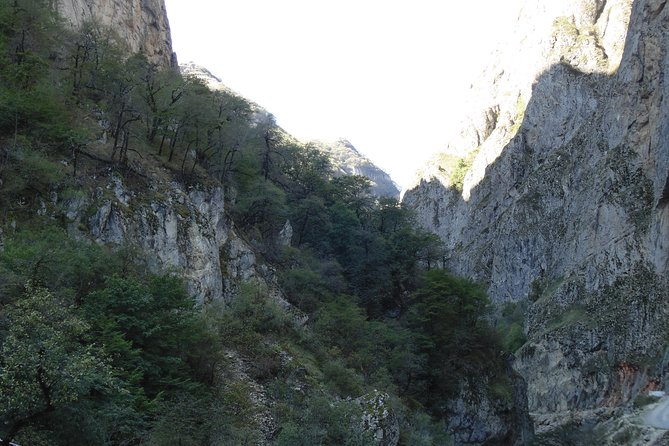
This is a private activity, so only your group participates. That changes the feel of a demanding day. You can ask questions about the Mountain Jewish community, the memorial, local traditions, or the road to Khinalig without trying to catch a guide’s explanation from the back of a large bus.
The service has been praised for professional guiding and driving, with the experience described as memorable and delivered as promised. Those comments matter most on a route like this, where safe driving, clear timing, and dependable coordination affect the whole day.
There are no guide names provided, so you cannot choose a particular guide in advance. Still, the private arrangement gives you a better chance of discussing what interests you most. If you care about architecture, religion, languages, or mountain life, say so early.
The tour is also suitable for people who want a focused regional excursion without arranging a rental car. Transport, taxes, and water are included, reducing the number of small costs to manage. The tradeoff is that you have less freedom than with a multi-day trip, and you may not get as much time in Khinalig as you would by staying overnight.
Is $137 a fair price?
At $137 per person, this is not a cheap half-day outing. It is a full northern Azerbaijan circuit with a private vehicle, driver, guide service, and several distinct stops. The value improves when you are sharing the cost with family or friends, since group discounts are offered and private transport is included.
You are paying for access to a difficult route as much as for admission. Red Settlement is free, and the tour does not list paid entry tickets as a major part of the cost. The expense lies in covering the distance from Baku to Guba and then onward to Khinalig, with the return to the capital included.
I would call the price reasonable for a small private group that wants convenience and a broad range of experiences in one day. It is less attractive if you mainly want to wander Khinalig slowly. In that case, a longer independent stay may offer better value, but it would require arranging transport and accommodation separately.
Lunch and dinner are excluded. That does not automatically make the tour poor value, but it is an important budget and timing point. Ask your provider about meal arrangements, or plan to carry something suitable for the road.
Who should book this Khinalig excursion?
I would recommend it to you if you want to see rural Azerbaijan beyond Baku, especially if you are interested in minority cultures, religious communities, traditional buildings, and high mountain settlements.
It also suits a private group that values a professional driver and guide more than complete schedule freedom. The private format can make a long day easier, particularly when several people share the cost.
You should think twice if you have walking problems, limited physical fitness, or difficulty with steep and uneven terrain. The experience is not recommended for disabled visitors or people who struggle to walk. Service animals are allowed, and the route is near public transportation, but the mountain village itself remains the central physical challenge.
This is also not the best pick for anyone who dislikes long drives. Khinalig’s remote location is the point, but reaching it takes time. The more you appreciate the journey and the cultural stops, the more satisfying the day will feel.
Practical advice for a smoother day
Start with comfortable shoes and clothing that can handle changing mountain weather. The altitude at Khinalig is significant, and good weather is required for the excursion to operate.
Keep your schedule flexible. The route includes several stops, and the exact time at each one is not specified. A private tour gives you some conversational flexibility, but it does not remove the limits of daylight, road conditions, and the return trip to Baku.
Bring extra food or confirm meal plans before departure. Water is supplied, but lunch and dinner are not. Since the tour begins at 8:30 am and lasts most of the day, this is not a detail to leave until the morning.
Cancellation is free if you cancel at least 24 hours before the start time. Cancellations or changes made within 24 hours are not refunded, and bad weather may lead to a new date or a full refund.
Should you book the Khinalig tour?
Book it if your Azerbaijan plans include Baku but you also want a serious look at the country’s northern communities. The strongest parts are the rare visit to Red Settlement, the powerful contrast of the Guba memorial, and Khinalig’s high, tightly built village with its own language and traditions.
Skip it if you want a slow day, dislike mountain roads, or need easy access and minimal walking. For everyone else, $137 buys a demanding but unusual private route, and the professional service, hospitable local contact, and remarkable setting make it a strong choice for seeing a side of Azerbaijan that is far from the capital’s polished center.
FAQ
Where does the Khinalig tour start?
The tour starts at 8:30 am on Nizami Street in Baku, Azerbaijan. Pickup is offered, so confirm the exact pickup arrangement when booking.
Where does the tour end?
The activity ends back at the meeting point on Nizami Street in Baku.
How long does the tour last?
The tour lasts approximately seven to eight hours.
Is the tour private?
Yes. Only your group participates in this private activity.
What is included in the price?
An air-conditioned vehicle, all fees and taxes, and bottled water are included.
Are meals included?
No. Lunch and dinner are not included, and alcoholic beverages are also excluded.
What happens if bad weather cancels the tour?
The experience requires good weather. If it is canceled because of poor weather, you can choose a different date or receive a full refund.
Newest Baku write-ups
- Wine Tour Baku★ 5.0 · 4 reviews
- Wine Crawl Baku★ 5.0 · 2 reviews
- Traditional Azerbaijani Cuisine Workshop★ 5.0 · 5 reviews
- The Magnificent Baku Night Tour★ 5.0 · 3 reviews
- Small-Group Day Trip to Gobustan, Mud Volcanoes, Ateshgah & Yanar Dagh★ 4.5 · 3 reviews
- 2 days tour to Sheki★ 5.0 · 2 reviews
- Sheki tour with overnight★ 5.0 · 5 reviews
- Azerbaijan tour in 2 days/Sheki+Lahij+Gabala up to Georgia Border★ 4.5 · 6 reviews
Khinaliq Tours, compared.
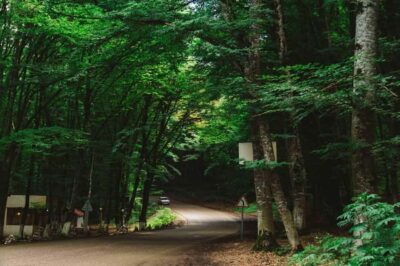
Candy Cane, Guba, Khinaliq village with Homemade Lunch
Read our review →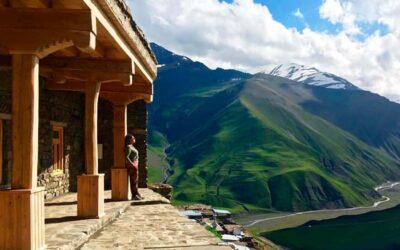
Guba Khinalig & Candy Cane Tour with Homemade Lunch
Read our review →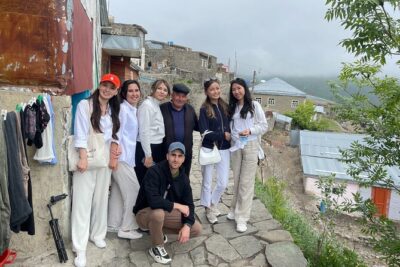
Guba and Khinaliq Village Tour including Homemade Lunch
Read our review →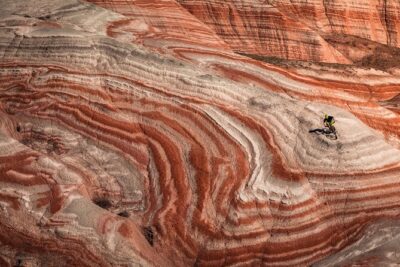
Guba Khinalug & Candy Cane Mountains tour (by Old City Tours)
Read our review →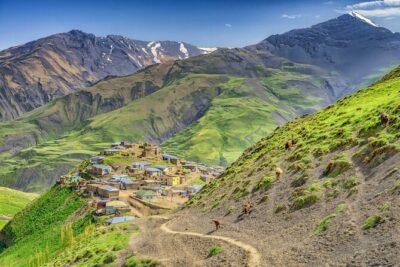
Guba and Khinaliq trip with HOMEMADE lunch (Group or Private)
Read our review →
Guba & Khinalug with HOMEMADE lunch (Group or Private)
Read our review →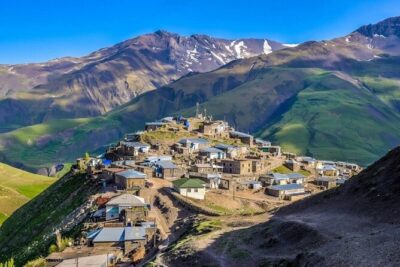
Browse the lists this tour appears in