
Reviewed · GOBUSTAN TOURS
Gobustan-Absheron Tour
Ancient marks, living fire, and bubbling earth make this day trip memorable. I like the way this small-group outing links Gobustan’s prehistoric carvings with Absheron’s fire sites, and I like the chance to see Azerbaijan’s famous mud volcanoes without arranging several separate rides. The main drawback is the long day, with nine to eleven hours on the road, and the lunch and entrance-fee details need checking before you pay.
The tour is capped at 18 people, though some departures may be much smaller. Guides such as Nazpəri Həsənzadə, known as Naz, and Nazef have earned especially warm praise for clear explanations and flexible pacing. Still, one poor guide can change the mood, so the quality of your particular guide matters.
In This Review
- Key points to know before booking
- Why Gobustan and Absheron belong in the same day
- The first oil well and Azerbaijan’s petroleum story
- Mud volcanoes: Azerbaijan’s moonlike countryside
- Gobustan’s rock art and the people behind it
- The museum adds a useful second view of Gobustan
- Lunch in Baku and the tour’s biggest paperwork question
- Ateshgah, the fire temple and caravanserai
- Yanar Dag, where the hillside burns
- Transport, group size, and the long-day tradeoff
- Who will get the most from this tour
- Price, admissions, and what to confirm
- My verdict on the Gobustan-Absheron day
- FAQ
- How long does the Gobustan-Absheron tour last?
- Where does the tour start and finish?
- What attractions are included in the route?
- Is lunch included in the price?
- Are entrance tickets included?
- Can I request vegetarian food?
- How many people can join the tour?
Key points to know before booking
- A full day beyond Baku: You visit Gobustan and the Absheron Peninsula in one outing, with a morning start and a late return.
- Mud volcanoes need a rougher ride: The final approach may use old four-wheel-drive vehicles, which adds fun but may not suit everyone.
- Gobustan has two layers: You see both the modern museum and the open-air petroglyph area.
- Fire worship and natural flame: Ateshgah explains the religious past, while Yanar Dag gives you the striking sight of flames rising from the ground.
- Lunch information is inconsistent: The tour description presents a traditional meal, but the included-items section says lunch and several entrance tickets are extra.
- Guiding makes the difference: The strongest praise goes to guides who connect ancient life, oil production, fire worship, and modern Azerbaijan.
Why Gobustan and Absheron belong in the same day
Baku can feel polished and modern, but the land around it tells a far older and stranger story. This trip takes you from the world’s early oil industry to prehistoric rock art, then onward to sacred fire and a natural flame that still burns on a hillside.
That sequence gives the day a useful shape. You are not simply ticking off four unrelated sights. You see how oil, gas, fire, trade, faith, and human survival have shaped this part of Azerbaijan.
At $29 per person, the price is attractive for a nine to eleven-hour excursion, especially if transport and guiding are handled well. The value depends on what is actually covered at the time of booking, since the details supplied for lunch and admission fees do not match. I would ask for the current total before departure.
The meeting point is at 1 Azərbaycan Prospekti in central Baku, near public transport. The activity returns to that same meeting point, so you do not need to arrange a separate ride home from the countryside.
More Gobustan rock-art trips from Baku:
- Baku: Gobustan, Mud Volcano, Fire Mount, Temple Lunch Entry
★ 4.9 · 3,246 reviews - BEST Gobustan, Volcanoes & Absheron Fire Tour (Group or Private)
★ 5.0 · 1,254 reviews - Gobustan and Absheron tour (All inclusive)
★ 5.0 · 1,014 reviews
The first oil well and Azerbaijan’s petroleum story
The first short stop introduces a subject that helps explain Baku’s place in world history: oil. The well shown here was drilled in 1846 and first produced oil on July 14, 1848. That date places Azerbaijan at an important early point in modern oil production.
You will also pass Soviet-era pumpjacks, some of which are still working. This is a quick stop, only about 15 minutes, so do not expect a full oil museum visit. Its value is mainly in giving you context before the stranger sights ahead.
I like this opening because it shows that Azerbaijan’s oil story is not just about modern wealth or dramatic city buildings. It is tied to the ground itself, to old wells, working machinery, and the long effort to turn underground fuel into an industry.
Mud volcanoes: Azerbaijan’s moonlike countryside
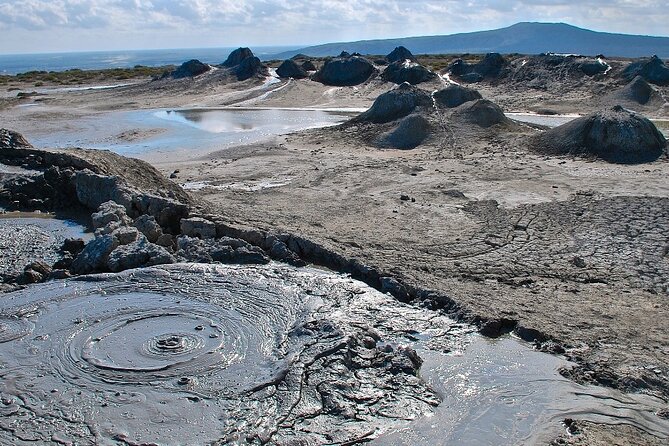
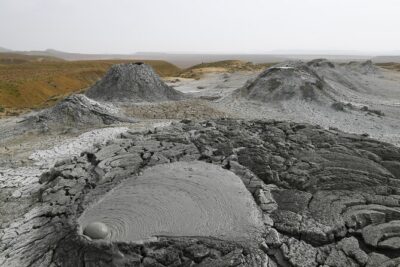
The mud volcanoes are likely to be one of the day’s most unusual stops. Instead of hot lava, these formations push up mud and gases, creating low cones, cracked earth, and small bubbling pools. The result can look almost lunar, especially when the ground is bare and the sky is wide.
You spend roughly an hour here. The approach may include a short trail and, according to one especially useful detail, a ride in older four-wheel-drive vehicles. That rough vehicle transfer is part of the appeal, but it also tells you to wear practical shoes and expect an uneven ride.
The site is not polished like a city attraction. That is exactly why it feels distinctive. You are looking at a raw geological area rather than a carefully arranged display. Keep your footing, follow the guide’s instructions, and do not wander close to bubbling mud without permission.
The supplied details say admission to the Mud Volcanoes Complex is not included, even though another part of the tour description lists the volcano admission as included. This is worth confirming in writing. A small extra charge may not change the overall value, but surprise costs are easy to avoid.
Gobustan’s rock art and the people behind it
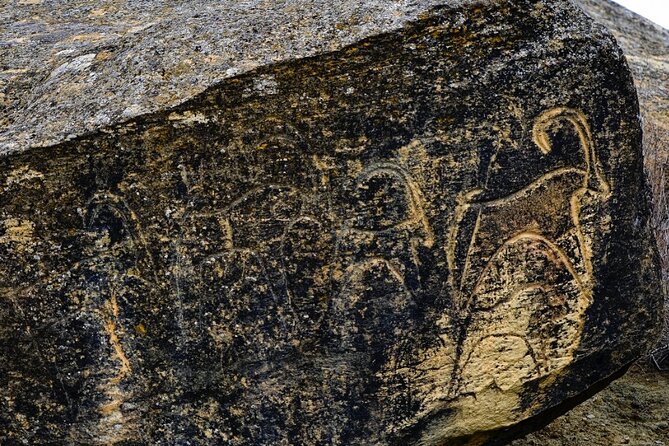
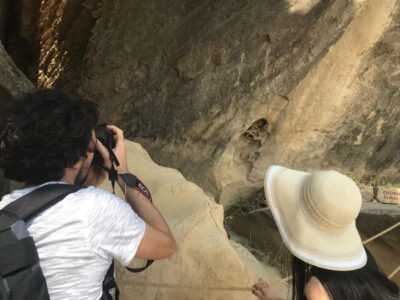
Gobustan’s petroglyphs give the day its strongest human connection. The carvings record people, animals, hunting scenes, movement, and daily life across the rock surfaces. A guide can help you notice details that you could easily miss on your own.
The open-air portion takes about an hour. You should expect some walking and time outdoors as you move among the carved rocks. The point is not only to look at ancient images, but to consider what they reveal about survival, social order, work, and the changing life of early humans.
The best guiding feedback centers on this kind of explanation. Naz, or Nazpəri Həsənzadə, has been praised for linking the sites to wider historical ideas while keeping the day enjoyable. Nazef has also been singled out for bringing the past to life and adjusting the material to suit a group’s interests.
That personal approach matters here. Without explanation, petroglyphs can become a series of weathered lines on stone. With a good guide, you begin to see them as records of people trying to understand and manage a demanding world.
More of the Absheron peninsula:
- Baku: Gobustan Absheron Tour Entry Tickets included
★ 4.9 · 329 reviews - Baku: Gobustan-Absheron Tour with Hotel PICK UP and DROP OFF
★ 4.8 · 170 reviews - Baku: Gobustan/Absheron guided tour with lunch and tickets
★ 4.8 · 158 reviews - Gobustan and Absheron peninsula ( Group or Private ) TOUR ( All inclusive )
★ 5.0 · 130 reviews
The museum adds a useful second view of Gobustan
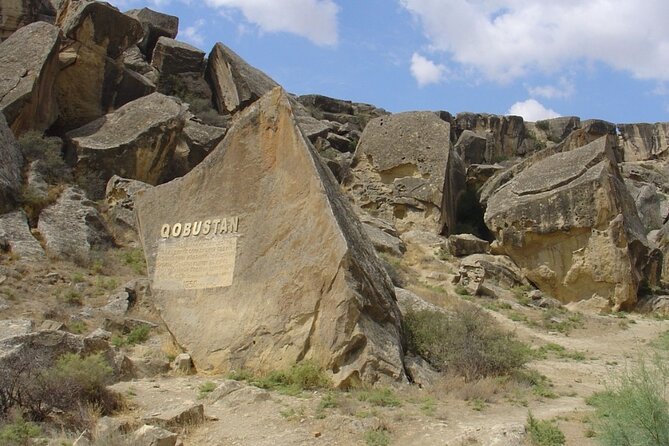
The Gobustan visit is split between the outdoor rock art and a modern museum. That is a smart arrangement. The museum can give you a basic framework before you study the actual carvings, including information about early human life and the history of the area.
The second Gobustan stop is listed at about an hour. You may hear the site described as an early Cro-Magnon settlement, but keep your expectations sensible. The main experience is the combination of museum displays, interpretation, and outdoor archaeological remains, not a preserved village with rooms you can walk through.
Admission to the open-air museum and the natural history exhibition is listed separately from the tour transport and guide service. Again, check the current ticket arrangement before setting out.
I find this two-part visit more useful than seeing the rock art alone. The museum gives you images, objects, and background. The outdoor portion then lets you place that information on the actual ground where people lived and marked their world.
Lunch in Baku and the tour’s biggest paperwork question
After Gobustan, the group returns to Baku for a traditional meal at Baku Restaurant, described as being in one of the city’s parks. The meal is presented as a three-course Azerbaijani lunch with tea, and a vegetarian option can be requested at booking.
This break matters. By this point, you have been outdoors, riding between sites, and listening to several hours of explanation. A proper meal gives you time to rest before the second half at Ateshgah and Yanar Dag.
There is one important catch: the supplied tour information conflicts on lunch. The overview and highlights describe lunch as part of the experience, and the itinerary describes a three-course meal. Yet the included-items section says lunch is not included. One review also praised the meal, while another described slow service.
I would not assume the meal is free simply because it appears in the itinerary. Ask whether lunch is included in the $29 price, what the set menu contains, and whether drinks beyond tea cost extra. If you need vegetarian food, state that when booking rather than waiting until the restaurant.
Ateshgah, the fire temple and caravanserai
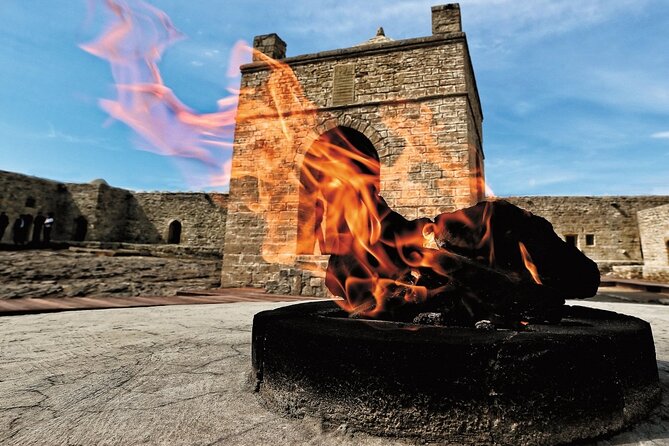
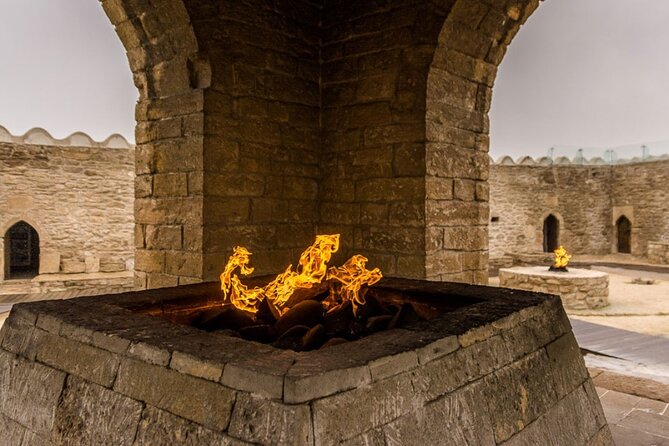
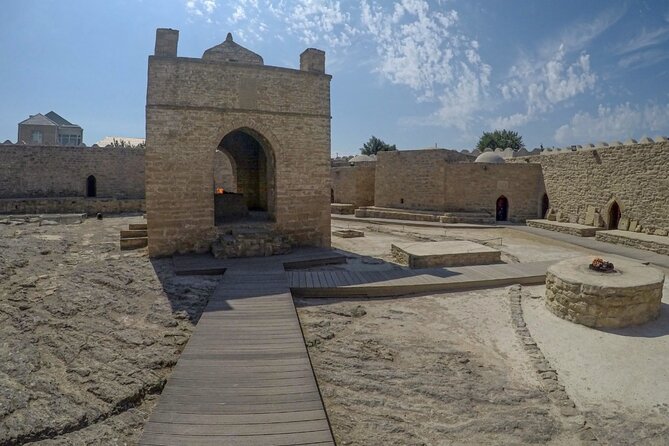
Ateshgah is one of Absheron’s most distinctive historic sites. The temple is linked to the region’s natural flames and to traditions of fire worship associated with Zoroastrians and Hindu visitors. The site also reflects Azerbaijan’s position on old trade routes.
The tour explains that a caravanserai once provided shelter for merchants crossing the peninsula. That detail gives the temple more depth. You are not only seeing a religious building, but also a place shaped by trade, travel, and contact among different cultures.
The stop lasts around 30 minutes, which is fairly short for a site with religious and architectural background. You will need to listen closely and keep an eye on the schedule. The entrance fee is listed as extra.
Ateshgah is a built historic site, so it contrasts nicely with the open rock art and mud volcanoes. The temple offers walls, courtyards, and a human response to the flames below. The setting helps explain why this part of Azerbaijan gained its reputation as a land of fire.
Yanar Dag, where the hillside burns
Yanar Dag means Burning Mountain, and the name tells you what to expect. Flames rise from the ground on the side of a hill, fed by natural gas beneath the surface. The fire is most striking when you can clearly see the flame against the earth and air around it.
You spend about an hour here, including time to view the fire and the surrounding area. The site gives you a final image that is easy to remember: a hillside that appears to burn without a campfire, torch, or visible fuel source.
Yanar Dag is a natural phenomenon rather than a grand archaeological monument. Keep that in mind. The visit may be relatively simple, but its unusual character makes it a fitting final stop after Ateshgah.
The entrance fee is listed as not included. Since the tour covers several paid sites, these small additions can affect the final cost. Ask for the combined ticket total before booking if you are comparing this outing with another Baku day trip.
Transport, group size, and the long-day tradeoff
The tour uses air-conditioned transport and includes an English and Russian-speaking guide. The group limit is 18, which is small enough to make questions possible, though the experience will not feel private at full capacity.
Some departures may have very few participants. One particularly good outcome described a scheduled group becoming a private tour because only one party was booked, while the operator still ran the outing. You should not count on that result, but it shows the company may keep a departure operating even with low numbers.
The schedule can stretch to 11 hours. That includes the drive from Baku, the stops, the lunch break, and the return. I would treat this as a serious full-day commitment, not a casual half-day outing.
The strongest practical advantage is convenience. You do not need to arrange separate transport to remote mud volcanoes, Gobustan, Ateshgah, and Yanar Dag. The cost is that you follow the group timetable and spend a large part of the day in transit.
The guide and driver also matter. One critical experience described a guide who rushed the group, gave repeated orders, and spoke in a dull tone. That was an isolated low score within an otherwise strong record, but it is a useful reminder that a fixed itinerary can feel tiring when the guide is impatient.
Who will get the most from this tour
I would recommend this outing if you want to see the major sights beyond Baku in one day and prefer a guide to explain what you are seeing. It suits first-time visitors especially well because the route covers several defining subjects: early oil, prehistoric life, mud volcanoes, fire worship, and natural gas flames.
It also works for people who value convenience over a slow, independent pace. The air-conditioned vehicle, central meeting point, and return to the same location simplify a day that would otherwise require several transport arrangements.
You may want another plan if you dislike long outings, rough roads, or group schedules. The mud volcano approach can be bumpy, the stops are timed, and the total day may run from morning into late evening.
This is also not the right choice if you want every attraction explored at length. Ateshgah receives about 30 minutes, and the oil well stop is only 15 minutes. The tour gives you breadth, with enough explanation to connect the sights, rather than long study at one site.
Price, admissions, and what to confirm
The advertised price of $29 per person is low for a full-day route with transport and a professional guide. It becomes particularly good value if the traditional lunch and the major entrance fees are included as described in the overview.
But the included-items section lists lunch and tickets for the open-air museum, fire temple, Yanar Dag, natural history exhibition, and Mud Volcanoes Complex as extra. That conflict is the most important practical issue in the booking information.
Before you commit, confirm these points:
- Is lunch included in the $29 price?
- Which entrance tickets must you pay separately?
- Is the three-course menu fixed?
- Is tea included?
- Can a vegetarian meal be arranged?
The tour offers free cancellation up to 24 hours before the start time. Changes or cancellations inside that 24-hour window are not accepted for a refund, and the cut-off uses local Baku time.
My verdict on the Gobustan-Absheron day
You should book this tour if you want an efficient introduction to the strange and important places outside Baku. The mud volcanoes, Gobustan carvings, Ateshgah, and Yanar Dag are quite different from one another, and seeing them together gives you a better sense of Azerbaijan than visiting only the capital.
I especially like the route’s range and the chance to have a strong guide, such as Naz or Nazef, connect the sites into one story. The value is good even before considering the convenience, provided the extra ticket and lunch charges are clear.
I would hesitate only if you need a relaxed pace, dislike uneven rides, or expect a private experience. Confirm the food and admission costs, prepare for a long day, and choose this outing for its broad view of Gobustan and Absheron rather than for extended time at any single stop.
FAQ
How long does the Gobustan-Absheron tour last?
The tour lasts about nine to eleven hours. It starts in the morning and returns to the meeting point in Baku late in the day.
Where does the tour start and finish?
It starts at 1 Azərbaycan Prospekti, Bakı 1005, Azerbaijan. The activity ends back at the same meeting point.
What attractions are included in the route?
The route includes the world’s first oil well, mud volcanoes, Gobustan rock art, the Gobustan museum and cultural area, lunch in Baku, Ateshgah Fire Temple, and Yanar Dag.
Is lunch included in the price?
The supplied information is inconsistent. The tour description presents a traditional three-course lunch with tea, but the included-items section says lunch is not included. Confirm this before booking.
Are entrance tickets included?
The information says transport and guide service are included, while tickets for the open-air museum, Fire Temple, Yanar Dag, natural history exhibition, and Mud Volcanoes Complex are listed as extra. Confirm the current ticket policy.
Can I request vegetarian food?
Yes. A vegetarian option is available, but you should advise the provider when booking.
How many people can join the tour?
The tour has a maximum of 18 participants. Some departures may have fewer people, and one reported departure operated as a private tour when only one group was booked.
Newest Baku write-ups
- Wine Tour Baku★ 5.0 · 4 reviews
- Wine Crawl Baku★ 5.0 · 2 reviews
- Traditional Azerbaijani Cuisine Workshop★ 5.0 · 5 reviews
- The Magnificent Baku Night Tour★ 5.0 · 3 reviews
- Small-Group Day Trip to Gobustan, Mud Volcanoes, Ateshgah & Yanar Dagh★ 4.5 · 3 reviews
- 2 days tour to Sheki★ 5.0 · 2 reviews
- Sheki tour with overnight★ 5.0 · 5 reviews
- Azerbaijan tour in 2 days/Sheki+Lahij+Gabala up to Georgia Border★ 4.5 · 6 reviews
Gobustan Tours, compared.
Gobustan, Mud Volcano, Fire Mount, Temple Lunch Entry
Read our review →
BEST Gobustan, Volcanoes & Absheron Fire Tour (Group or Private)
Read our review →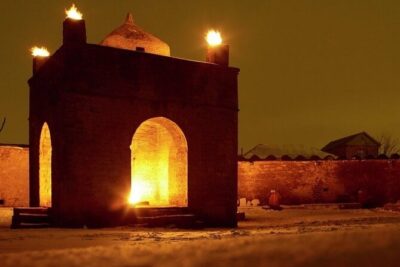
Gobustan, Volcanoes, Fire Temple and Yanardag Day Trip
Read our review →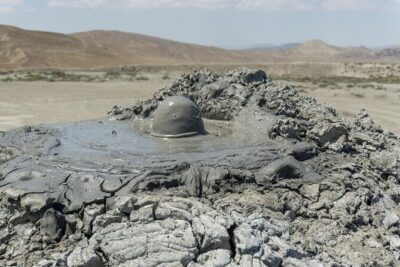
Gobustan & Mud, Fire Temple, Burning Mountain (Group & Private)
Read our review →
Mud Volcan-Fire Temple and Mountain Tour/Entrance inc
Read our review →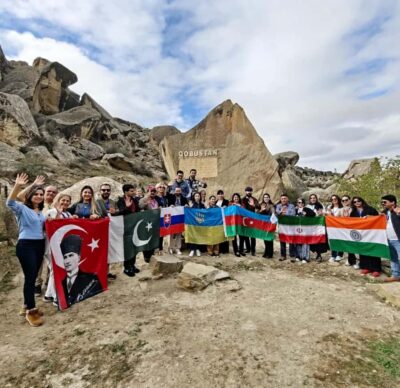
Gobustan Mud Volcanoes Temple & Entry tickets included
Read our review →Browse the lists this tour appears in