Reviewed · BAKU TOURS
Baku’s Ancient Heart
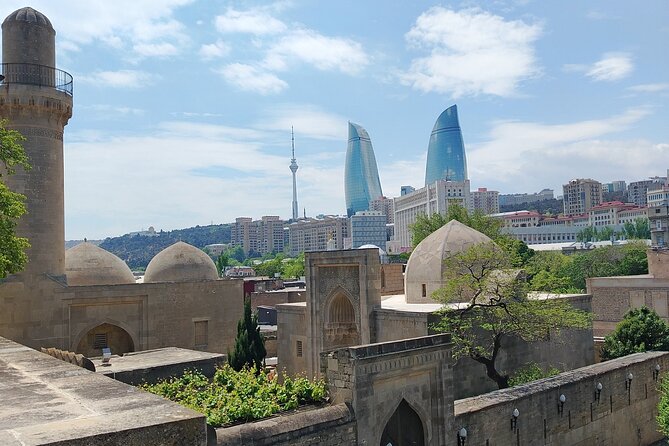
Old stones, lively stories, and a maze of lanes. Baku’s Old City packs centuries of Azerbaijani history into a compact walking route, with the Maiden Tower, Shirvanshah palace, old bathhouses, mosques, caravanserais, artists’ studios, and small museums all close together. I like the way this tour connects famous monuments with everyday details, such as wine shops, local legends, and the surviving hammam.
I also like the guide-led approach. Heydar is praised for his clear explanations, humor, patience, and ability to adjust the pace for families and teenagers. The main consideration is time: the advertised tour lasts about two hours, but the route includes 17 stops, and one account describes a walk that lasted about four hours. Palace entry is not included, and the walk only allows a short outside look at that major sight.
In This Review
- Key points to know before you go
- Why Baku’s Old City works so well on foot
- Maiden Tower and the old Silk Road market
- Two caravanserais and the merchants of Baku
- Legends, khans, and an underground bathhouse
- Street art, miniature books, and a poet’s tree of life
- Music, wine, and everyday culture
- The Shirvanshah palace and Baku’s historic mosques
- What the guiding style adds
- Who should book this $25 walk
- Should you book Baku’s Ancient Heart?
- FAQ
- Where does the tour begin and end?
- How long does the tour last?
- What is included in the $25 price?
- Are attraction admission tickets included?
- Does the tour go inside the Palace of the Shirvanshahs?
- Is there an elevator in the Maiden Tower?
- Is wine tasting included?
- What languages does the guide speak?
- How large can the group be?
- Can I cancel for a full refund?
Key points to know before you go
- Maiden Tower begins the story: Learn why this unusual stone tower became one of Azerbaijan’s main symbols, with optional paid access to the top.
- Silk Road traces are everywhere: The open-air museum and Multani and Bukhara caravanserais show how merchants once used Baku as a trading stop.
- Heydar’s guiding style is a major strength: His storytelling combines history, humor, current culture, and time for questions.
- The route covers more than monuments: You’ll pass a miniature-book museum, a jazz memorial, artist Ali Shamsi’s workshop, and a pomegranate wine shop.
- The Palace of the Shirvanshahs is viewed from outside: You can return later to spend at least an hour inside the large complex.
- The walk is inexpensive but not all-inclusive: The $25 price covers the guided walk, but tips, optional admissions, and any tasting are extra.
Why Baku’s Old City works so well on foot
I like Baku’s Old City because it is easy to read as you walk. A narrow street opens onto a mosque. A stone passage leads to a former merchant lodging house. A modern art gallery appears beside walls that have seen rulers, traders, worshippers, and film crews.
The area is a UNESCO World Heritage Site, including the Maiden Tower and Palace of the Shirvanshahs. That label matters, but the tour is not just a march between official monuments. You also hear about the old city as a lived-in quarter, where bathhouses, shops, places of worship, music, and local stories remain part of the experience.
The route begins and ends at 16 Asəf Zeynallı küç. It is a walking tour, so you should wear comfortable shoes and expect narrow cobblestone streets. The group can include up to 15 people, which is small enough for questions without making the experience a private tour.
The price is $25 per person. That is good value if you want a historical orientation and a guide who can explain what you are seeing. It is less of a bargain if you expect entry to every major sight, because the walk itself is the only included service. Admission to the top of the Maiden Tower is optional, the Shirvanshah palace is not entered during the tour, and tips are not included.
A few more Baku trips worth lining up next to this one
- Baku: Gobustan, Mud Volcano, Fire Mount, Temple Lunch Entry
★ 4.9 · 3,246 reviews - Baku: Guba, Shahdag, Laza & Lunch w/ Free City & Night Tour
★ 4.8 · 1,455 reviews - BEST Gobustan, Volcanoes & Absheron Fire Tour (Group or Private)
★ 5.0 · 1,254 reviews
Maiden Tower and the old Silk Road market
The Maiden Tower is the natural opening point. It is one of the best-known sights in Azerbaijan, but its purpose and date of construction remain central questions in the tour’s storytelling. You can expect Heydar to explain the main theories and legends rather than give you only a date and a label.
A ticket may be purchased if you want to climb to the top. There is no elevator, and the staircase is narrow, so the climb requires some care. The reward is a view across the Old City and toward newer parts of Baku, along with a sense of how the old defensive structure fits into the wider city.
The stop is listed at about 15 minutes, with admission to the tour area free. If you decide to go inside the tower, allow extra time. The short scheduled visit is enough for an introduction, but not necessarily enough for an unhurried climb and extended viewing.
Next comes the open-air museum beside the tower and the remains of Saint Bartholomew Chapel. More than 50 grave stones were found here. Local tradition connects the area with a former marketplace used by merchants along the Great Silk Road, giving you a useful link between archaeology and commerce.
This is a brief five-minute stop, so treat it as a story point rather than a full museum visit. The value is in understanding that the Old City was not only a royal or religious center. It was also a place where goods, people, and beliefs crossed paths.
Two caravanserais and the merchants of Baku
The Multani Caravanserai is a small fortress-like building where merchants from Multan, a city in present-day Pakistan, once stayed. In the era of the Silk Road, secure lodging mattered as much as a bed. Traders needed protection for themselves and their goods, and caravanserais supplied that practical service.
The nearby Bukhara Caravanserai brings another place name into the Old City. Its name points toward Bukhara in modern Uzbekistan and the broad Central Asian connections that shaped this part of Baku. The explanation also touches on the period of Mongol expansion and the later influence of Timur, known here as Tamerlane.
Both stops last about five minutes. You should not expect long interior visits or a full architectural lecture at each one. Their real purpose is to help you picture Baku as a crossroads, not an isolated city at the edge of the Caspian Sea.
The guide’s stories are especially useful here. A stone building can look simple until you know why it was built, who slept there, and what dangers faced a merchant on the road. That human angle keeps the Silk Road from becoming a vague schoolbook phrase.
Legends, khans, and an underground bathhouse
The Monument to Lovers and Cats is one of the more unusual stops. It comes with several local legends, including sad tales and stories linked to love. This is the kind of pause that gives the walk a personal tone. You are not only studying dynasties and dates, you are hearing the stories people attach to familiar corners.
The House of the Baku Khans shifts the focus to local rule. From 1747 to 1806, Baku’s khans lived in this building, before Azerbaijan was annexed by the Russian Empire in the early 19th century. The house helps explain the Old City as a city within a city, with its own ruling family and political life.
The Yeraltı hamam, or underground bathhouse, sits near the main entrance and the Double Gates. It dates to the 17th century and shows how bathing was built into urban life long before modern hotels and private bathrooms.
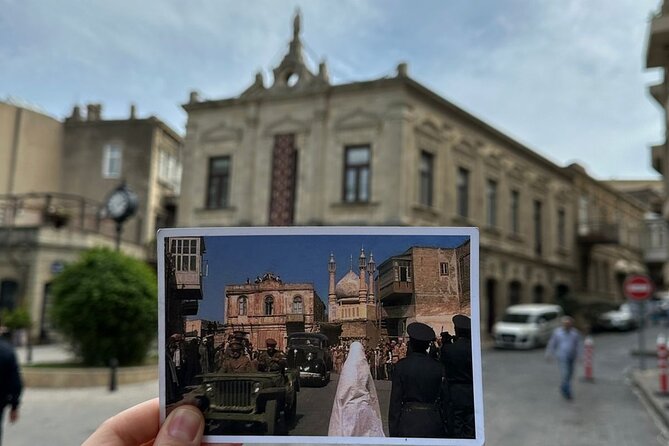
The route also passes the Aptek Museum and another historic bathhouse. One part of the site is linked to the Soviet comedy film Brilliant Hand, including the scene remembered by Russian-speaking audiences as the Damn it location. Of the old bathhouses in the Old City, one still functions as a hammam, continuing a tradition that reaches back to the 18th century.
These stops are short, generally about five minutes each. The advantage is variety. The drawback is that you may want more time at the bathhouse or film location than the schedule allows.
A completely different kind of day out in Azerbaijan:
- Gobustan and Absheron tour (All inclusive)
★ 5.0 · 1,014 reviews - Shamakhi And Gabala Tour (All inclusive)
★ 5.0 · 815 reviews - From Baku: Gabala and Shamakhi Tour (Free Baku City Tour)
★ 4.8 · 695 reviews - Baku: Candy Cane, Guba, Khinaliq village with Homemade Lunch
★ 4.9 · 519 reviews
Street art, miniature books, and a poet’s tree of life
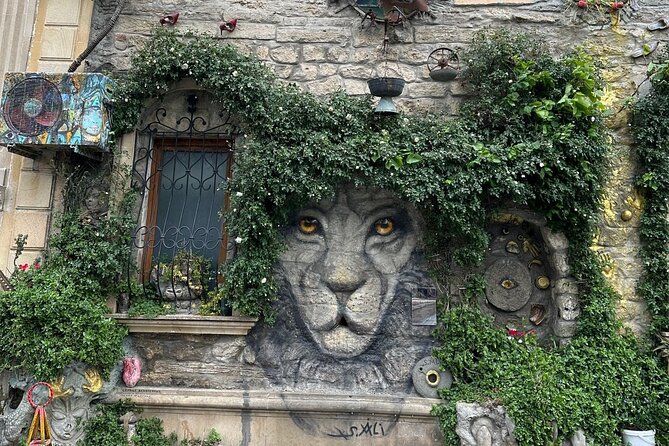
A large lion’s head painted on a wall marks the workshop and gallery of Ali Shamsi. You may notice people pausing beside the artwork before you even know what they are looking at. The five-minute stop offers a quick look at the artistic side of the Old City, where contemporary work shares space with old stone walls.
The Baku Museum of Miniature Books is another small but memorable stop. Its collection includes books as small as a fingernail, and it entered the Guinness World Records in 2014 as the largest collection of miniature books. One especially striking item is a 17th-century miniature Holy Koran.
This museum is a good example of the tour’s strength. You can spend a morning seeing major monuments in many cities, but a tiny museum often becomes the detail you remember later. If you want a longer look at the collection, ask about returning after the guided walk.
The Vahid Monument honors Azerbaijani poet Aliagha Vahid, known for his contribution to satirical poetry. The statue is called the Tree of Life, with the beginning and end of life represented in the poet’s head. It is a compact introduction to an important Azerbaijani cultural figure, even if poetry is not usually your first reason for booking a city tour.
Music, wine, and everyday culture
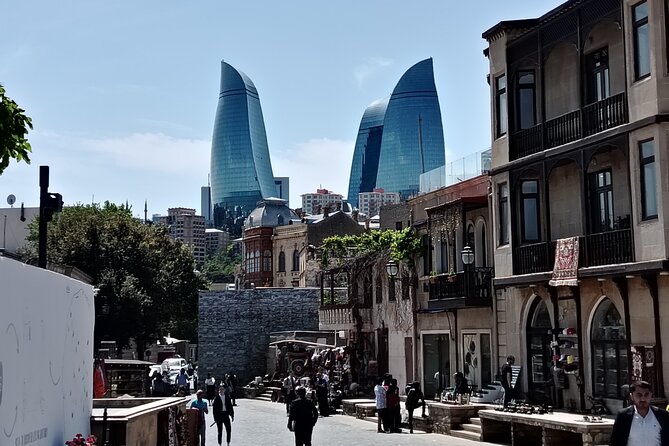
The House Museum of Vagif Mustafazadeh introduces one of Azerbaijan’s best-known musical figures. Mustafazadeh had a short life, but became known internationally for combining Azerbaijani mugam, a traditional musical form, with American jazz.
This stop adds a modern cultural layer to a route otherwise filled with medieval buildings and old religious sites. It also helps you see that Azerbaijani identity is not frozen in the past. The Old City is a place where old forms and outside influences continue to meet.
At the Absheron Sharab wine shop, you may have the option to taste pomegranate wine. Azerbaijan is noted for this style of wine, but the tasting is not part of the $25 walking-tour price. Ask the guide or shop staff about the terms before ordering, since the supplied information does not specify a tasting fee.
I like that the route includes this kind of stop, but it will not suit everyone. If you do not drink wine, you can treat it as a quick cultural and commercial stop rather than a required part of the walk.
The Shirvanshah palace and Baku’s historic mosques
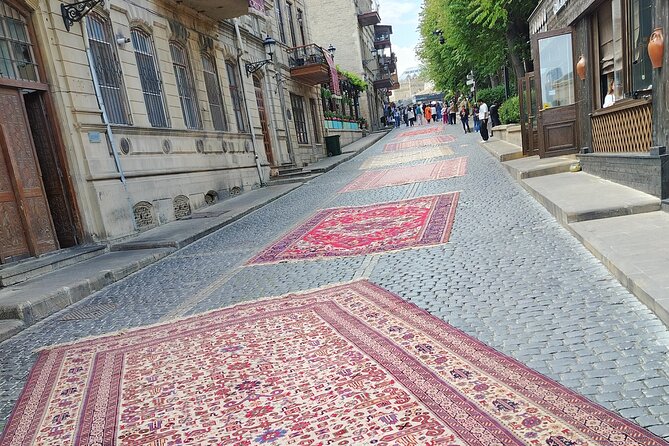
The Palace of the Shirvanshahs is the grandest historical complex on the route. Built between the 12th and 15th centuries, it served as the residence of the medieval rulers of Shirvan, along with their servants. The site suffered damage more than once and was restored in 2004.
The palace, Maiden Tower, and Old City entered the UNESCO World Heritage list in 2000. During this walking tour, you do not go inside the palace. The complex covers more than a hectare, and a proper visit requires at least another hour.
This arrangement has both a benefit and a drawback. You receive the historical setting and an exterior explanation without turning a two-hour walk into a long museum visit. But if the palace is your main reason for coming to the Old City, plan a separate visit and budget extra time for it.
The Muhammad Mosque is described as the oldest mosque in the Old City, dating to the 11th century. It may have been built on the site of an earlier Zoroastrian fire temple, based on traces of fire and spiritual objects found beneath the prayer hall. Local people also know it as the Broken Tower, a name whose story Heydar explains during the walk.
The Juma Mosque is the largest mosque in the Old City and dates to the 12th century, with restoration carried out in the early 20th century. It is also identified as the only mosque in the Old City where women are permitted to pray inside. As with any religious site, follow the guide’s directions and behave respectfully.
The Lezgi Mosque was built in the 12th century by Ibrahim Ashur, also known as the Lezgian mosque. It is under reconstruction, so you may see less of the building than at the other mosques. Its presence still helps explain the density of religious buildings in the old quarter. The city once had 28 mosques, while only some can now be visited or even clearly seen.
What the guiding style adds
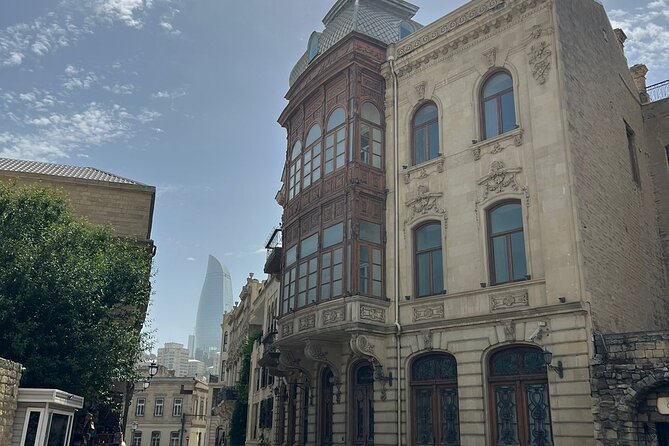
The strongest reason to choose this tour is the guide, Heydar. His approach is described as patient, conversational, and easy to follow. He mixes historical explanation with present-day cultural details, and he is willing to answer questions instead of delivering a fixed speech.
That matters on a route with many five-minute stops. Without a good guide, the caravanserais, bathhouses, mosques, and monuments could blur together. With clear transitions, each stop contributes to a larger picture of Baku as a center of trade, faith, local power, art, and music.
Heydar’s humor is another plus. The tour has serious subjects, including imperial annexation, damaged monuments, old burial stones, and religious change. A light touch can make those subjects easier to absorb, especially for families and teenagers.
The pace also seems adaptable. The walk has worked well for families, and an account of one visit describes the experience as more of a conversation than a lecture. At the same time, do not assume every departure will last only two hours. The route can stretch when questions, photos, a tower climb, or a relaxed pace are added.
Who should book this $25 walk
I would choose this tour if you are visiting Baku for the first time and want a clear introduction to the Old City. It is also a good fit if you enjoy local stories, historic buildings, and cultural details that are easy to miss when you walk alone.
Families may appreciate the variety. Teenagers have more to look at than a sequence of formal monuments, including cats, street art, miniature books, film history, music, and legends. The maximum group size of 15 keeps the walk personal enough for questions.
This is less suitable if you want long interior visits at every sight. The tour is mainly an orientation walk, and the palace is viewed from outside. You should also be comfortable walking on cobblestones and using narrow stairs if you choose to climb the Maiden Tower.
The tour requires good weather and a minimum number of participants. Confirmation is provided at booking, and service animals are allowed. It is near public transportation, and most people can take part.
Free cancellation is available up to 24 hours before the start time for a full refund. Within 24 hours, cancellations and changes are not accepted for a refund. If bad weather or an insufficient number of participants cancels the activity, you are offered another date or experience, or a full refund.
Should you book Baku’s Ancient Heart?
Book it if you want Baku’s Old City explained rather than simply photographed. The $25 cost is fair for a licensed English- and Russian-speaking guide, a compact route through major landmarks, and the chance to ask questions along the way.
Go in with the right plan. Treat the walk as a strong first look, not a complete tour of every interior. Add time for the Maiden Tower if you want the view, and return separately to the Palace of the Shirvanshahs for at least an hour.
For a first day in Baku, this is a practical choice. Heydar’s patient style, humor, and mix of ancient history with living culture give the old quarter a human voice.
FAQ
Where does the tour begin and end?
The tour begins at 16 Asəf Zeynallı küç in Baku, Azerbaijan. It ends back at the same meeting point.
How long does the tour last?
The stated duration is approximately two hours. The walk may last longer if the group asks questions, moves at a slower pace, or adds optional experiences.
What is included in the $25 price?
The price includes the walking tour and a licensed English- and Russian-speaking guide.
Are attraction admission tickets included?
No. The walking tour itself is included, but admission tickets are not included. You may buy a ticket to climb the Maiden Tower if you wish.
Does the tour go inside the Palace of the Shirvanshahs?
No. The tour does not enter the palace complex. The site covers more than a hectare and requires at least an additional hour to visit properly.
Is there an elevator in the Maiden Tower?
No. The tower has narrow stairs and no elevator.
Is wine tasting included?
No tasting is included in the tour price. The route may include an optional visit to the Absheron Sharab wine shop to taste pomegranate wine.
What languages does the guide speak?
The tour is led by a licensed guide who speaks English and Russian. The guide associated with this experience is Heydar.
How large can the group be?
The tour has a maximum group size of 15 people.
Can I cancel for a full refund?
Yes, if you cancel at least 24 hours before the experience begins. Cancellations or changes made less than 24 hours before the start time are not refunded. If poor weather or an insufficient number of participants cancels the tour, you are offered another date or a full refund.
Newest Baku write-ups
- Wine Tour Baku★ 5.0 · 4 reviews
- Wine Crawl Baku★ 5.0 · 2 reviews
- Traditional Azerbaijani Cuisine Workshop★ 5.0 · 5 reviews
- The Magnificent Baku Night Tour★ 5.0 · 3 reviews
- Small-Group Day Trip to Gobustan, Mud Volcanoes, Ateshgah & Yanar Dagh★ 4.5 · 3 reviews
- 2 days tour to Sheki★ 5.0 · 2 reviews
- Sheki tour with overnight★ 5.0 · 5 reviews
- Azerbaijan tour in 2 days/Sheki+Lahij+Gabala up to Georgia Border★ 4.5 · 6 reviews
Baku Tours, compared.

Gobustan, Mud Volcano, Fire Mount, Temple Lunch Entry
Read our review →
Guba, Shahdag, Laza & Lunch w/ Free City & Night Tour
Read our review →
BEST Gobustan, Volcanoes & Absheron Fire Tour (Group or Private)
Read our review →
Candy Cane, Guba, Khinaliq village with Homemade Lunch
Read our review →